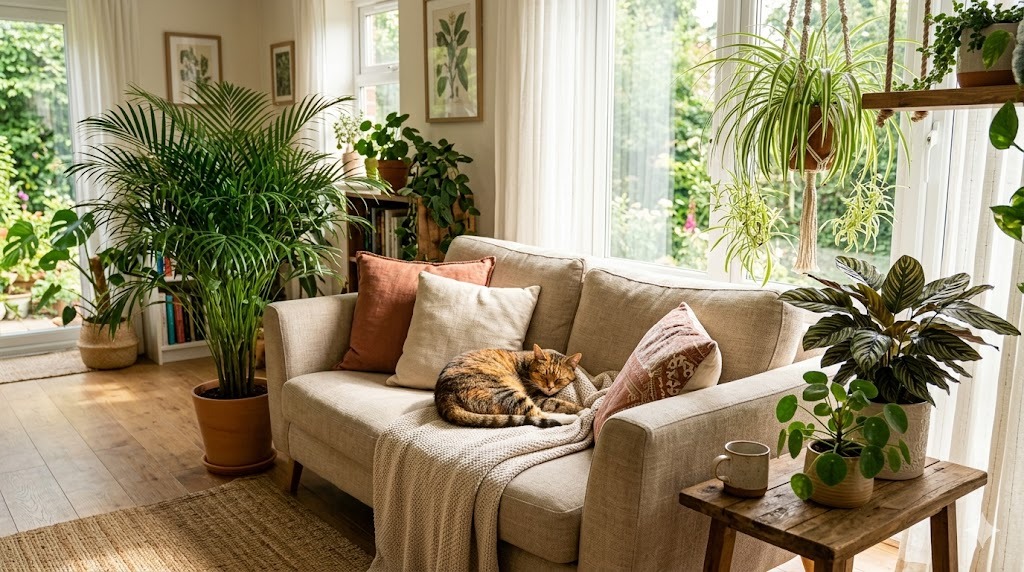
15 Pet-Safe Houseplants
A vet-checked list of 15 houseplants that are non-toxic to cats and dogs - plus the common plants you should keep out of a pet home.

If you share your home with a cat or dog, a houseplant isn’t just decor - it’s something your pet might chew. Cats in particular nibble foliage, and some of the most popular houseplants (pothos, peace lily, philodendron, dieffenbachia) are mildly to seriously toxic.
The good news: you don’t have to choose between greenery and a safe pet. The 15 plants below are all classified as non-toxic to cats and dogs by the ASPCA. They cover every style - trailing vines, palms, statement plants, even flowering ones.
A note on “non-toxic”: it means the plant won’t poison your pet. It does not mean a pet can eat unlimited amounts with no effect - any plant matter can cause mild stomach upset or vomiting in quantity. Non-toxic means safe, not edible.
At a Glance: 15 Pet-Safe Plants
| Plant | Type | Light | Difficulty |
|---|---|---|---|
| Spider Plant | Trailing | Medium-bright | Very easy |
| Boston Fern | Fern | Medium, humid | Easy |
| Areca Palm | Palm | Bright indirect | Easy |
| Parlour Palm | Palm | Low-medium | Very easy |
| Calathea | Foliage | Medium | Moderate |
| Prayer Plant | Trailing | Medium | Moderate |
| Peperomia | Compact | Medium-bright | Very easy |
| Hoya | Vine | Bright indirect | Easy |
| Bird’s Nest Fern | Fern | Medium, humid | Easy |
| Friendship Plant | Compact | Medium | Easy |
| African Violet | Flowering | Bright indirect | Easy |
| Phalaenopsis Orchid | Flowering | Bright indirect | Moderate |
| Polka Dot Plant | Compact | Bright indirect | Easy |
| Money Tree (Pachira) | Tree | Bright indirect | Easy |
| Ponytail Palm | Succulent-like | Bright | Very easy |
The Best Pet-Safe Plants by Category
Easiest overall: Spider Plant
The spider plant is the perfect pet-home plant - non-toxic, nearly impossible to kill, and happy in a hanging basket out of reach of curious paws. Cats are often drawn to its dangling baby plantlets, which is harmless but can leave the plant looking nibbled. Hang it high.
Best trailing plants: Hoya & Prayer Plant
For shelves and hanging pots, the hoya (wax plant) offers thick, waxy leaves and, eventually, clusters of star-shaped flowers. The prayer plant (Maranta) folds its patterned leaves up at night and is safe to trail where a pet might bat at it.
Best palms: Areca & Parlour Palm
Many “indoor palms” sold in shops are toxic - but the areca palm and parlour palm are both pet-safe. They bring height and a soft, tropical look with no risk. (Avoid the toxic sago palm, which is not a true palm and is dangerous to pets - see below.)
Best ferns: Boston Fern & Bird’s Nest Fern
True ferns are pet-safe across the board. The Boston fern and bird’s nest fern both love a humid bathroom and add lush greenery with zero toxicity worry.
Best for colour: Calathea, Polka Dot Plant, African Violet
If you want pattern and colour without toxic risk, calatheas offer dramatically patterned leaves, the polka dot plant brings pink-speckled foliage, and the African violet flowers happily indoors - all pet-safe.
Best statement plant: Money Tree (Pachira aquatica)
The braided money tree is a genuine pet-safe tree - a handsome floor plant that won’t harm a cat or dog. The ponytail palm, with its bulbous base and fountain of thin leaves, is another safe, sculptural choice.
Common Houseplants to AVOID in a Pet Home
These popular plants are toxic to cats and/or dogs. They’re not on the safe list - keep them out of reach or out of the house:
- ❌ Lilies (true lilies) - extremely dangerous to cats: even pollen or vase water can cause fatal kidney failure. Never keep true lilies in a cat home.
- ❌ Sago palm - severe liver toxicity; often fatal if eaten. One of the most dangerous plants for dogs.
- ❌ Pothos, philodendron, monstera, dieffenbachia - contain calcium oxalate crystals; cause painful mouth irritation, drooling, and vomiting.
- ❌ Peace lily - same calcium oxalate irritation (not as deadly as a true lily, but still unpleasant).
- ❌ ZZ plant, snake plant - mildly toxic; cause stomach upset if chewed.
- ❌ Aloe vera - toxic to pets despite being useful for humans.
- ❌ English ivy - toxic; causes vomiting and diarrhoea.
If you love a toxic plant, you can still keep it - just site it where your pet genuinely cannot reach it (a tall shelf, a hanging pot, a closed room).
How to Keep Plants and Pets Apart
- Hang trailing plants high - out of jumping range for cats.
- Use heavy or wall-mounted pots so a dog can’t knock plants over.
- Give cats their own greens - a tray of cat grass often satisfies the urge to chew and protects your other plants.
- Make soil unappealing - a layer of large pebbles on top deters digging and litter-box behaviour.
- Know the emergency number. Save your vet and a pet poison helpline; if a pet eats an unknown plant, identify it and call.
Frequently Asked Questions
What houseplants are completely safe for cats?
The spider plant, Boston fern, areca palm, parlour palm, calathea, prayer plant, peperomia, hoya, and African violet are all non-toxic to cats per the ASPCA.
Is the snake plant safe for pets?
No - the snake plant is mildly toxic. It causes nausea, vomiting, and drooling if chewed. It won’t be fatal, but it’s not pet-safe.
My cat ate a non-toxic plant - should I worry?
A non-toxic plant won’t poison your cat, but eating a lot of any plant can cause mild vomiting or an upset stomach. Watch for ongoing symptoms and call your vet if anything seems serious.
Which plant is most dangerous for cats?
True lilies (Lilium and Hemerocallis) are the most dangerous - even tiny exposures can cause fatal kidney failure in cats. Never bring them into a cat household.
Are succulents pet-safe?
Some are, some aren’t. Aloe vera and jade plant are toxic; haworthia and the ponytail palm are safe. Always check the specific species.
🛒 Recommended Gear on Amazon
- Calathea (live) - browse current options and reviews on Amazon.
- Spider plant (live) - browse current options and reviews on Amazon.
- Boston fern (live) - browse current options and reviews on Amazon.
As an Amazon Associate, we earn from qualifying purchases - at no extra cost to you. This helps us keep producing free, in-depth guides.