Fiddle Leaf Fig (Ficus lyrata)
The Fiddle Leaf Fig is the supermodel of houseplants - tall, sculptural, and impossibly photogenic, with huge violin-shaped leaves that turned it into the defining interior-design plant of the last decade.
🗓️ Last reviewed: June 2026
Overview
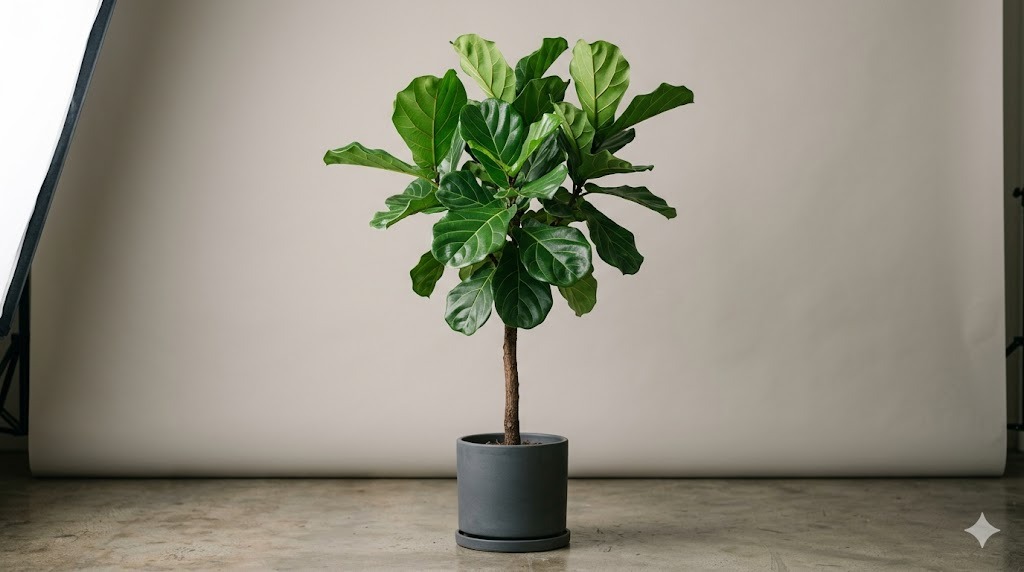
The Fiddle Leaf Fig is the supermodel of houseplants - tall, sculptural, and impossibly photogenic, with huge violin-shaped leaves that turned it into the defining interior-design plant of the last decade. It is also the plant with the worst reputation for being difficult. The truth sits in between: the Fiddle Leaf Fig is not hard, it is fussy about consistency. It dislikes change, hates being moved, and sulks dramatically when conditions shift. Give it a bright, stable spot and a steady routine, and it becomes a stunning, long-lived indoor tree.
Origin & Natural Habitat
The Fiddle Leaf Fig is native to the tropical lowland rainforests of western Africa, from Cameroon to Sierra Leone. In the wild it is a large tree that can reach 12-15 m, often starting life as an epiphyte high in another tree and sending roots down to the ground. It grows in warm, humid, bright conditions with stable temperatures year-round - and that stability is the key to understanding it. The plant simply did not evolve to cope with sudden change, which is why a move across the room or a cold draft can make it drop leaves.
Appearance
The Fiddle Leaf Fig is unmistakable: large, leathery, glossy leaves shaped like a violin (a "fiddle"), with prominent pale veins, held on an upright woody trunk.
Forms sold indoors:
- Tree form - a single or branched trunk topped with foliage, the classic statement piece, 1.5-3 m indoors.
- Bush form - multiple stems, leaves from the base up, fuller and shorter.
- 'Bambino' - a compact dwarf cultivar with smaller leaves, easier in tight spaces.
Indoors it grows slowly to steadily and can become a genuine indoor tree over years.
Why People Love It - Qualities & Benefits
- Designer statement: nothing else delivers the same architectural, tree-in-the-room drama. It is the centerpiece plant of modern interiors.
- Big, bold foliage: the huge sculptural leaves photograph beautifully and fill vertical space.
- Long-lived: with stable care it becomes a permanent fixture, growing into a true indoor tree you can keep for decades.
- Shapeable: it can be pruned and notched to branch, so owners can sculpt their own tree shape over time.
- Greenery and presence: a healthy Fiddle Leaf Fig anchors a room and adds the calming, mood-lifting effect of a large living plant.
Care
Light
This is the most important factor. The Fiddle Leaf Fig needs lots of bright light - ideally a spot right by the brightest window in the home, with some gentle direct morning sun being welcome. Insufficient light is the most common reason it declines: weak growth, leaf drop, no new leaves. Once acclimated it can take a few hours of direct sun. Rotate the plant occasionally so it grows evenly.
Watering
Consistency matters more than frequency. Water thoroughly when the top 5 cm of soil is dry, until water drains freely, then empty the saucer. Typically that is roughly weekly in summer, less in winter. Both overwatering (soggy roots, root rot) and underwatering (limp leaves, dry crispy edges) cause problems - aim for a steady rhythm, not extremes.
Soil & Potting
Use a rich but well-draining mix - quality potting soil with added perlite and a little bark. Drainage holes are essential. The Fiddle Leaf Fig dislikes sitting in waterlogged soil.
Humidity & Temperature
Prefers moderate to high humidity (around 40-60%) and warm, stable temperatures of 18-27 °C. It is sensitive to cold drafts, heating vents, air-conditioning blasts, and sudden temperature swings - keep it away from doors and vents.
Feeding
Feed every 2-4 weeks during spring and summer with a balanced liquid fertilizer (or a fertilizer formulated for Ficus). Stop in winter.
Repotting
Repot every 1-2 years in spring, moving up one pot size. As it becomes a large tree, instead of repotting you can simply top-dress - replace the top few centimeters of soil with fresh mix each year.
Pruning & Cleaning
Prune the top to encourage branching and control height. Notching (a small cut above a node) can trigger a new branch at a chosen spot. Wipe the large leaves with a damp cloth every couple of weeks - dust blocks light and the leaves are big enough to collect a lot of it.
Propagation
Propagate from stem-tip cuttings: cut a section with one or two leaves, place it in water or moist soil, keep it warm and bright, and roots form over several weeks (it can be slow and is not always reliable). Larger branch cuttings can also be air-layered for a faster, sturdier new plant. The milky sap that bleeds from cuts is a mild irritant - wipe it and wash your hands.
Common Problems & Pests
- Brown spots: the classic FLF problem. Dark brown spots at the leaf center/veins often indicate root rot from overwatering; brown crispy edges and tips usually mean underwatering or low humidity; pale tan/bleached patches suggest sunburn.
- Leaf drop: almost always a reaction to change - being moved, a cold draft, a sudden shift in light or watering. Stabilize conditions and stop fussing.
- No new growth: usually not enough light, or it needs feeding.
- Leggy with a bare lower trunk: natural with age, or low light; prune to encourage branching.
- Pests: spider mites, mealybugs, and scale. Inspect regularly and treat promptly with insecticidal soap or neem oil.
Toxicity & Safety
Toxic to cats and dogs, and irritating to humans. The leaves and the milky white sap contain irritant compounds; chewing causes mouth irritation, drooling, and vomiting, and the sap can irritate skin and eyes. Keep it away from pets and children, and wash your hands after pruning.
Pros & Cons
Pros
- Stunning, dramatic, designer statement plant.
- Grows into a long-lived indoor tree.
- Big, sculptural, photogenic foliage.
- Can be pruned and shaped to taste.
Cons
- Fussy about consistency - sulks and drops leaves after any change.
- Needs lots of bright light; struggles in dim rooms.
- Prone to brown spots if watering is inconsistent.
- Toxic to pets; sap irritates skin.
- Not a true beginner plant.
Best Suited For
- Plant owners ready for a moderate challenge and a routine.
- Bright rooms with a large window and floor space.
- People who want one dramatic statement tree.
- Stable homes without big temperature swings.
Not ideal for dark rooms, drafty spots, frequent rearrangers, absolute beginners, or pet households with leaf-chewers.
FAQ
Why is my Fiddle Leaf Fig dropping leaves? Almost always a reaction to change - you moved it, a cold draft hit it, or its light or watering shifted. Fiddle Leaf Figs hate change. Put it in one good bright spot, set a steady routine, and stop relocating it.
What do the brown spots mean? It depends where they are. Dark spots at the center and along veins usually mean overwatering and root rot. Crispy brown edges and tips mean underwatering or dry air. Pale bleached patches mean sunburn. Match the fix to the spot.
How much light does it really need? A lot. Place it right beside your brightest window. Gentle direct morning sun is fine and welcome. Insufficient light is the single most common reason a Fiddle Leaf Fig slowly fails.
Is the Fiddle Leaf Fig hard to keep alive? It is not hard so much as fussy. It punishes inconsistency and change, not effort. Bright light, a steady watering rhythm, no drafts, and leaving it in one place - get those right and it is reliable.
How do I get it to branch instead of growing as one tall stick? Prune the top growing tip, or notch the trunk just above a node. Both encourage the plant to push out side branches, letting you shape a fuller tree.