Allium (Ornamental)
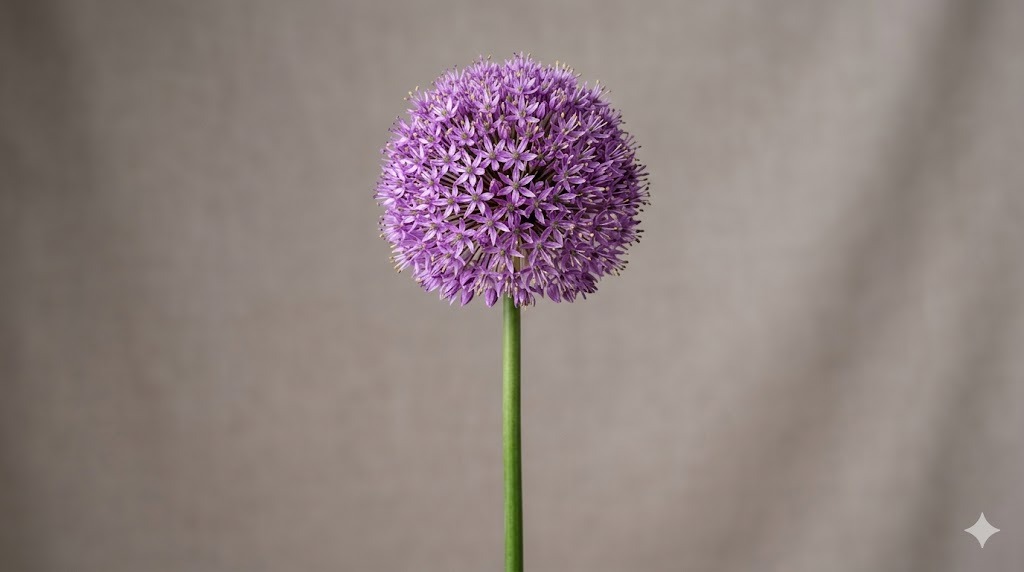
Ornamental alliums are among the most striking and architectural plants in the garden - perfect spheres of tiny star-shaped flowers, held aloft on tall, slender, leafless stems like purple lollipops floating above the early-summer border.
🗓️ Last reviewed: June 2026
Overview
Ornamental alliums are among the most striking and architectural plants in the garden - perfect spheres of tiny star-shaped flowers, held aloft on tall, slender, leafless stems like purple lollipops floating above the early-summer border. They bridge the gap between the spring bulbs and the high-summer perennials, they are loved by bees, and their dried seed heads remain a sculptural feature for months afterward. Alliums are ornamental relatives of the onion and garlic, and that family connection brings real benefits: they are easy, hardy, drought-tolerant, and - because of their oniony scent - left almost entirely alone by deer, rabbits, and rodents.
Origin & Natural Habitat
The genus Allium - which also contains onions, garlic, leeks, and chives - has hundreds of species spread across the Northern Hemisphere, with many of the showy ornamental kinds native to the dry mountains and steppes of central Asia. These wild origins, in sunny, well-drained, often stony ground with hot dry summers and cold winters, define their care: alliums want full sun, sharp drainage, and a dry summer dormancy.
Appearance
Ornamental alliums grow from bulbs. Each produces a tuft of strap-shaped leaves and, typically, a single tall, bare, rigid flower stem topped by a rounded umbel - a globe made of dozens to hundreds of small star-shaped flowers. The effect ranges from golf-ball size to spectacular grapefruit-and-larger heads on stems 1 m or more tall. Most are purple or violet, but white, pink, blue, and yellow species exist. After flowering, the seed heads dry to a beige, skeletal sphere that holds its shape for weeks or months. A quirk worth knowing: the leaves of many large alliums look tatty and yellow even as the flowers open.
Why People Grow It - Qualities & Benefits
- Bold architectural form: unmistakable floating spheres add structure and rhythm.
- Bridges the seasons: flowers in late spring/early summer, between bulbs and perennials.
- Long-lasting interest: flowers, then dried seed heads that persist for months.
- Excellent for bees: the flower globes are alive with pollinators.
- Pest-resistant: the onion scent deters deer, rabbits, and rodents.
- Easy and hardy: undemanding, drought-tolerant, and reliable.
- Striking in design: brilliant dotted through borders or planted in bold groups; good cut and dried flowers.
Care
Light & Position
Full sun is essential for sturdy stems and good flowering. Alliums grow weak and lean in shade.
Soil
Well-drained soil - this is critical. Like other bulbs from dry regions, alliums rot in heavy, wet ground, especially over their summer dormancy. On clay, improve drainage with grit or grow them in raised beds or pots.
Planting Time & Depth
Plant bulbs in autumn, at roughly two to three times the bulb's height deep, pointed end up. Larger bulbs go deeper.
Watering
Usually little needed - autumn and spring rainfall suffices, with watering only in prolonged drought during growth. Alliums need a dry summer dormancy after flowering; soggy summer soil rots the bulbs.
Feeding
Light feeding - a balanced bulb fertilizer at planting or in spring is plenty.
The Tatty-Foliage Issue
A well-known quirk: the strap-shaped leaves of many large ornamental alliums yellow and look untatty by the time the flowers open. This is normal and unavoidable. The standard solution is design-based - plant alliums among or behind leafy perennials and grasses that hide the fading foliage while the flower globes rise above.
After Flowering
Leave the dried seed heads standing for their long-lasting sculptural effect, or cut them for dried arrangements. Let the foliage die down naturally before removing it, as with other bulbs.
Hardiness & Winter Care
Most ornamental alliums are hardy, commonly to around USDA zone 4-5, and need no winter protection. They require winter cold for good flowering.
Planting & Propagation
Plant bulbs in autumn in full sun and well-drained soil. Alliums propagate by offset bulbs around the parent, gradually forming clumps; many species also self-seed freely from the dried heads. Lift and divide congested clumps, or remove seed heads before they shed if you want to limit self-seeding.
Common Problems & Pests
- Bulb rot: the main problem - caused by wet, heavy, poorly drained soil, especially in summer. Sharp drainage is the cure.
- Floppy or weak stems: too much shade.
- Yellow, tatty foliage at flowering: normal for many large alliums - disguise it with surrounding planting rather than treating it as a fault.
- Self-seeding: some alliums seed around enthusiastically and can become weedy - deadhead before seed sheds if this is unwanted.
- Allium leaf miner & onion-family pests/diseases: can occasionally affect ornamental alliums, as with their edible relatives.
Toxicity & Safety
Alliums are toxic to pets - this is an important point. As members of the onion and garlic family, ornamental alliums contain the same compounds (organosulfides) that make onions and garlic dangerous to animals. Ingestion by cats, dogs, and horses can damage red blood cells and cause anemia, with vomiting, weakness, and lethargy; cats and dogs are particularly vulnerable. In humans the plants are far less of a concern (the family includes our food crops), but ornamental allium bulbs are not intended for eating. Keep pets from grazing on alliums and from accessing the bulbs.
Pros & Cons
Pros
- Bold, architectural, unmistakable flower globes.
- Bridge the gap between spring bulbs and summer perennials.
- Long interest - flowers then long-lasting dried seed heads.
- Easy, hardy, drought-tolerant; deer-, rabbit-, and rodent-resistant; great for bees.
Cons
- Foliage of large types yellows and looks tatty at flowering.
- Rot readily in wet, heavy soil.
- Toxic to cats, dogs, and horses (onion-family compounds).
- Some species self-seed and can become weedy.
Best Suited For
- Sunny, well-drained borders; gravel and Mediterranean-style gardens.
- Mixed borders, dotted among perennials and grasses that hide the foliage.
- Pollinator gardens; cut- and dried-flower growing.
- Gardens troubled by deer, rabbits, or rodents.
Not ideal for heavy wet shady soils, or - given the toxicity - gardens where pets graze freely on plants and might reach the bulbs.
FAQ
Why does my allium foliage look yellow and tatty when it flowers? This is completely normal for many large ornamental alliums - the leaves naturally fade and yellow just as the flower globes open. It is not a disease or a care failure. The standard solution is to plant alliums among or behind leafy perennials and grasses that hide the foliage while the flowers rise above.
Why did my allium bulbs rot? Almost always wet, heavy, poorly drained soil - especially over the summer dormancy. Alliums come from dry regions and need sharp drainage and a dry summer rest. Improve drainage, or grow them in raised beds or pots.
Are alliums safe for pets? No - ornamental alliums are part of the onion and garlic family and contain the same compounds that are toxic to pets. Eating them can damage red blood cells and cause anemia in cats, dogs, and horses. Keep pets from grazing the plants and from reaching the bulbs.
Should I cut off the allium flower heads after blooming? You can leave them - the dried seed heads are a sculptural feature that lasts for weeks or months, and they can be cut for dried arrangements. If you want to limit self-seeding, cut the heads off before they shed their seed.
Do alliums come back every year? Yes - most ornamental alliums are hardy perennials that return each year and slowly multiply by offset bulbs, and many also self-seed. Give them full sun and sharp drainage for the best longevity.