Astilbe
Astilbe is the answer to one of gardening's most common problems: how to bring color and softness to damp shade.
🗓️ Last reviewed: June 2026
Overview
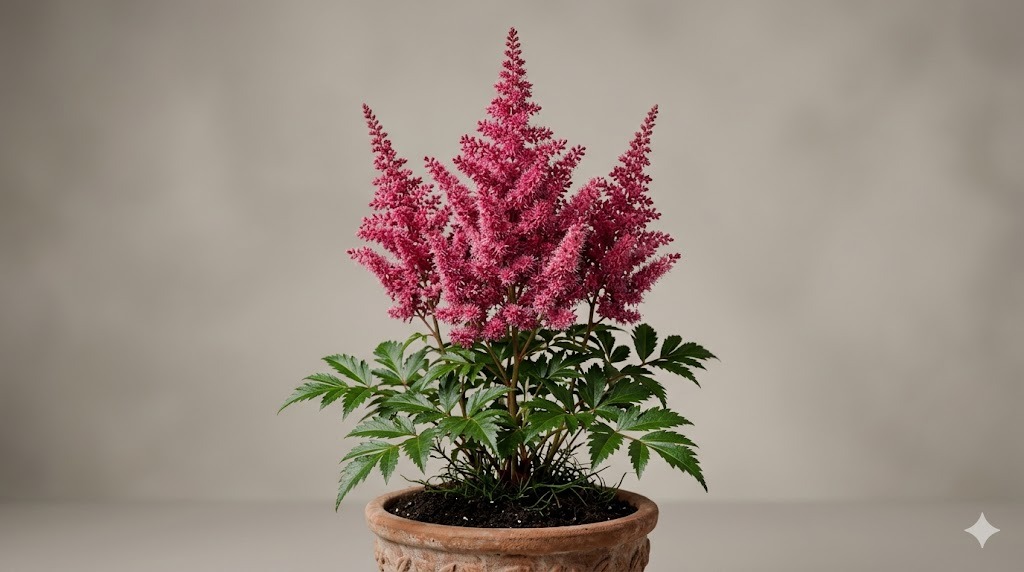
Astilbe is the answer to one of gardening's most common problems: how to bring color and softness to damp shade. Where many plants either need sun or simply tolerate shade dully, astilbe positively shines there - sending up tall, feathery, plume-like flower heads in white, pink, red, lilac, and peach above mounds of handsome, ferny, often bronze-tinted foliage. It is hardy, long-lived, and low-maintenance, asking for essentially one thing: moisture. Astilbe must not dry out. Give it consistently damp soil in part shade and it is one of the easiest and most graceful perennials you can grow.
Origin & Natural Habitat
Astilbe is native to East Asia (China, Japan, Korea) and parts of North America. In the wild it grows in moist woodlands, along stream banks and ravines, and in damp mountain clearings - cool, shaded, reliably moist ground rich in leaf litter. Every aspect of its care follows directly from this habitat: shade or part shade, cool damp humus-rich soil, and shelter. Astilbe is, above all, a plant of the moist woodland edge.
Appearance
Astilbe is a clump-forming herbaceous perennial, typically 30-120 cm tall depending on variety. The foliage is a major asset - divided, ferny, often glossy, frequently flushed with bronze or copper, forming an attractive mound even out of flower. In early-to-midsummer it produces its signature feature: erect, branching, plume-shaped flower panicles made of countless tiny flowers, giving a soft, fluffy, almost smoky texture. The faded plumes hold their shape and remain decorative - many gardeners leave them standing into winter.
Why People Grow It - Qualities & Benefits
- Color for damp shade: one of the best plants for a difficult, common situation.
- Feathery, elegant flowers: soft plumes add texture and lightness.
- Handsome foliage: ferny, often bronze-tinted leaves look good all season.
- Long-lasting interest: flowers fade gracefully and dried plumes give winter structure.
- Hardy and low-maintenance: reliable, long-lived, and largely pest-free.
- Pollinator-friendly: the flowers attract bees and butterflies.
- Versatile in shade: borders, woodland gardens, pond and stream edges, containers.
Care
Light & Position
Part shade is ideal - dappled light, or morning sun with afternoon shade. Astilbe tolerates fuller shade (flowering a little less) and will take more sun only if the soil is reliably wet. In dry sun it scorches and fails. Shelter from drying wind.
Soil
Cool, moist, fertile, humus-rich soil that retains moisture. Astilbe dislikes hot, dry, or thin soils. Improve the ground generously with compost or leaf mould before planting.
Watering - the make-or-break factor
Astilbe must not dry out. This is the single most important point. Drought stress causes the foliage to brown and crisp at the edges, the plumes to wither, and - if severe or repeated - the plant to decline or die. Keep the soil consistently moist, water through every dry spell, and mulch generously to lock in moisture. Astilbe is genuinely happy in soil too wet for many other perennials.
Feeding
Feed in spring with a balanced fertilizer or a generous compost mulch. Astilbe is moderately hungry and rewards feeding with strong foliage and plumes.
Seasonal Care
The faded flower plumes can be left for winter interest or cut back for tidiness. Cut old foliage down in late autumn or early spring. As clumps mature, the woody crown can rise slightly above soil level - top-dress with compost, or divide.
Hardiness & Winter Care
Astilbe is very hardy - commonly to around USDA zone 3-4 - and needs no winter protection. It dies back fully and re-emerges reliably each spring.
Planting & Propagation
Plant in spring or autumn in moist, improved soil in part shade. Propagate by division in spring or autumn - lift the clump every few years and split it, which also rejuvenates older plants whose crowns have become woody and congested. Division is easy and the main way to make more plants.
Common Problems & Pests
- Brown, crispy leaf edges and shrivelled plumes: the classic symptom of the soil drying out - astilbe's number-one problem. Water and mulch; move to a moister spot if needed.
- Poor flowering / weak growth: too dry, too much deep shade, an old congested clump needing division, or too hot a position.
- Crown rising above soil: mature clumps push the woody crown upward - top-dress or divide.
- Pests/disease: remarkably trouble-free; powdery mildew or wilt may occasionally occur. Astilbe is also generally resistant to deer and rabbits.
Toxicity & Safety
Astilbe is generally regarded as non-toxic / low-toxicity and is considered safe for cats, dogs, horses, and humans - it is not a recognized poisoning hazard and is widely grown in family gardens. A good, pet-friendly choice for shady and damp-garden planting.
Pros & Cons
Pros
- Brings color and elegance to damp shade - a difficult, common spot.
- Feathery flowers plus handsome ferny foliage; winter structure.
- Hardy, long-lived, low-maintenance, and pest-free.
- Pet-friendly; deer- and rabbit-resistant.
Cons
- Must not dry out - drought-intolerant and unforgiving on this point.
- Fails in hot, dry, sunny positions.
- Needs dividing as clumps age and crowns rise.
- Bloom period is moderate; out of flower it relies on foliage.
Best Suited For
- Damp, shady, and part-shaded borders.
- Woodland gardens; pond, stream, and bog margins.
- North-facing beds and underplanting trees and shrubs.
- Gardeners wanting easy color in a difficult moist-shade spot.
Not ideal for hot dry sunny gardens, thin droughty soil, or anyone who cannot keep the soil reliably moist.
FAQ
Why are my astilbe leaves turning brown and crispy? Almost always because the soil dried out. Astilbe is highly sensitive to drought - dry soil browns the leaf edges and shrivels the plumes. Keep the soil consistently moist, mulch generously, and if the spot is too dry, move the plant somewhere damper.
Can astilbe grow in sun? Only if the soil is reliably wet. In moist or boggy ground astilbe tolerates more sun; in ordinary or dry soil it needs part shade, and in dry sun it scorches and fails. Part shade with damp soil is the safest combination.
Why isn't my astilbe flowering well? Common causes: the soil is too dry, the position is too hot or in too-deep shade, or the clump is old and congested and needs dividing.
Is astilbe safe for pets? Yes - astilbe is generally considered non-toxic to cats, dogs, and horses.
How do I make more astilbe plants? By division - lift an established clump in spring or autumn and split it into pieces, each with crown and roots. This is easy, reliable, and also rejuvenates old clumps whose crowns have become woody.