Bearded Iris
The bearded iris is one of the most striking and architectural flowers in the garden - tall, elegant stems carrying large, intricate blooms in an unrivalled range of colors, including shades found in almost no other hardy plant: smoky browns, near-blacks, true blues, apricots, and endless ruffled bicolors.
🗓️ Last reviewed: June 2026
Overview
The bearded iris is one of the most striking and architectural flowers in the garden - tall, elegant stems carrying large, intricate blooms in an unrivalled range of colors, including shades found in almost no other hardy plant: smoky browns, near-blacks, true blues, apricots, and endless ruffled bicolors. Named for the fuzzy "beard" of hairs on its lower petals, it flowers in late spring and early summer above bold fans of sword-shaped grey-green foliage. Bearded iris is hardy, drought-tolerant, and genuinely easy - provided you understand its single unusual rule: the rhizome must be planted at the surface and baked by the sun.
Origin & Natural Habitat
Bearded irises are hybrids derived mainly from species native to Europe and the Mediterranean region, where their wild ancestors grow on dry, sunny, rocky hillsides and open stony ground. They are plants of hot, bright, well-drained habitats - and their thick horizontal rhizomes are storage organs that evolved to be sun-baked. This is the key to all their care: full sun, sharp drainage, and a rhizome left exposed at the soil surface, never buried.
Appearance
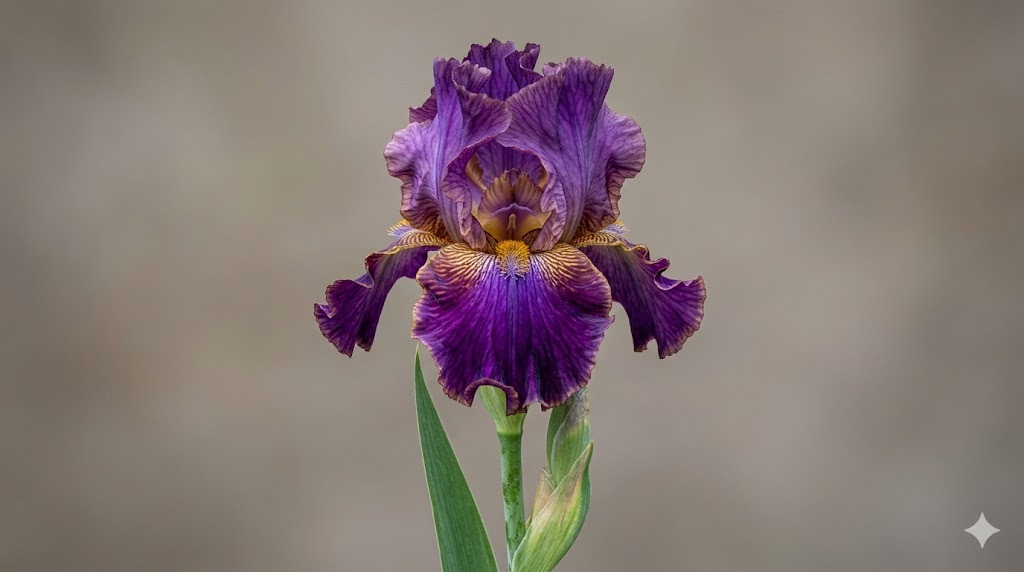
Bearded irises grow from thick, fleshy, horizontal rhizomes that sit at the soil surface. From these rise fans of broad, upright, sword-shaped grey-green leaves, 30-90 cm tall. In late spring to early summer, sturdy flower stems carry several of the famous blooms - each with three upright petals ("standards") and three drooping ones ("falls"), the falls bearing a furry "beard." Sizes range from dwarf bearded irises only 20 cm tall to tall bearded irises over a metre. The color range is extraordinary, and many are also fragrant; some modern varieties rebloom later in the year.
Why People Grow It - Qualities & Benefits
- Spectacular, architectural flowers: few hardy plants are so dramatic.
- Unmatched color range: including blues, browns, blacks, and bicolors rare elsewhere.
- Fragrance: many varieties are sweetly scented.
- Hardy and drought-tolerant: tough, sun-loving, and undemanding once placed right.
- Bold foliage: the upright sword-leaf fans give structure long after flowering.
- Long-lived and easy to multiply: clumps bulk up and divide readily.
- Excellent cut flowers for the late-spring vase.
Care
Light & Position
Full sun - at least six hours a day, ideally more. Bearded irises flower poorly in shade, and the rhizomes need direct sun on them to ripen and trigger flowering. Choose an open, unshaded spot.
Soil
Well-drained, neutral-to-slightly-alkaline soil. Sharp drainage is essential; the fleshy rhizomes rot in heavy, wet ground. Lean soil is fine - bearded iris does not need richness.
Watering
Water new plantings to establish; after that, bearded iris is markedly drought-tolerant and needs little watering. Avoid overwatering, which encourages rhizome rot.
Feeding
Modest needs. A light feed of a low-nitrogen fertilizer in early spring and after flowering is plenty. Avoid high-nitrogen feeds and do not mulch over the rhizomes - both encourage soft growth and rot.
Planting Depth - the critical rule
This is the make-or-break detail. The rhizome must be planted at the soil surface, with its top exposed to the air and sun, and only the roots below ground. A bearded iris rhizome that is buried will produce healthy leaves but few or no flowers, and is far more likely to rot. Keep the rhizome uncovered and sun-baked - this single rule prevents the great majority of "my iris won't flower" problems.
Seasonal Care & Dividing
Remove spent flower stems after blooming. Tidy away dead or diseased leaves. Bearded iris clumps become congested after 3-4 years, flowering less from the crowded centre - lift and divide them in mid-to-late summer (about 6 weeks after flowering) to restore vigor.
Hardiness & Winter Care
Bearded irises are very hardy - most are reliable to around USDA zone 3-4 - and need no winter protection. The foliage dies back partially in cold winters; the rhizomes overwinter at the surface.
Planting & Propagation
Plant or divide in mid-to-late summer, after flowering, when the plant is semi-dormant. Set the rhizome at the surface, roots spread below, top exposed. Propagate by division: lift a congested clump, cut the rhizomes into pieces - each with a leaf fan and roots - discard the old worn-out central portions, and replant the vigorous young outer pieces. Trim the leaf fans to about 15 cm at replanting to reduce wind-rock.
Common Problems & Pests
- No flowers: the classic problem - most often the rhizome was planted too deep or has been buried by soil or mulch; also too much shade, or an old congested clump that needs dividing.
- Rhizome rot (soft rot): a foul-smelling mushy decay of the rhizome, caused by wet, heavy soil, buried rhizomes, or damage - cut out affected tissue, improve drainage, replant shallow.
- Iris borer: a serious pest in some regions - caterpillars tunnel into the rhizome (often followed by rot); good hygiene and removing old foliage helps.
- Leaf spot: fungal spotting of the foliage - remove affected leaves; tidy clumps.
- Slugs/snails: can damage flowers and young growth.
Toxicity & Safety
Bearded iris is regarded as toxic if eaten - the rhizomes especially, but also the leaves, contain irritant compounds that can cause vomiting, diarrhea, and drooling in cats, dogs, and horses, and stomach upset in humans. The sap can also irritate sensitive skin. Serious poisoning is uncommon, and iris is widely grown in family gardens, but pets and children should be discouraged from chewing the plant - particularly the rhizomes.
Pros & Cons
Pros
- Spectacular, architectural, fragrant flowers.
- Unrivalled color range; bold structural foliage.
- Hardy, drought-tolerant, and easy once correctly planted.
- Long-lived and simple to multiply by division.
Cons
- Will not flower if the rhizome is planted or buried too deep.
- Rhizomes rot readily in wet, heavy soil.
- Bloom season is relatively short.
- Needs dividing every few years; toxic if eaten; iris borer in some regions.
Best Suited For
- Hot, sunny, well-drained borders and gravel gardens.
- Mediterranean-style and dry gardens.
- Mixed and cottage borders wanting architectural late-spring flowers.
- Cutting gardens; gardeners who enjoy the color range.
Not ideal for shady gardens, heavy wet soils, or anyone wanting a long flowering season from a single plant.
FAQ
Why won't my bearded iris flower? The number one reason is planting depth - the rhizome must sit at the soil surface, exposed to the sun, not buried. A buried rhizome grows leaves but few or no flowers. Other causes: too much shade, or an old congested clump that needs dividing. Lift buried rhizomes and replant them shallow, in full sun.
How deep do I plant a bearded iris? You do not plant it deep at all - set the rhizome at the surface, with its top exposed to the air and sun, and only the roots below ground. Sun on the rhizome is what triggers flowering.
When and how do I divide bearded irises? Divide congested clumps every 3-4 years, in mid-to-late summer after flowering. Lift the clump, cut the rhizomes into pieces each with a leaf fan and roots, discard the worn-out old centres, trim the leaves to about 15 cm, and replant the young outer pieces at the surface.
Why has my iris rhizome gone soft and smelly? That is soft rot, caused by wet, heavy soil, a buried rhizome, or physical damage. Cut away all the affected mushy tissue, let the cut surfaces dry, improve drainage, and replant the healthy portions shallowly in full sun.
Are bearded irises safe for pets? No - iris is toxic if eaten, especially the rhizomes, and can cause vomiting and stomach upset in cats, dogs, and horses; the sap may irritate skin. Discourage pets and children from chewing it.