Blueberry
The blueberry is one of the most desirable fruit bushes for the home garden - productive, healthy, beautiful, and increasingly easy to fit into any space, because it grows so well in containers.
🗓️ Last reviewed: June 2026
Overview
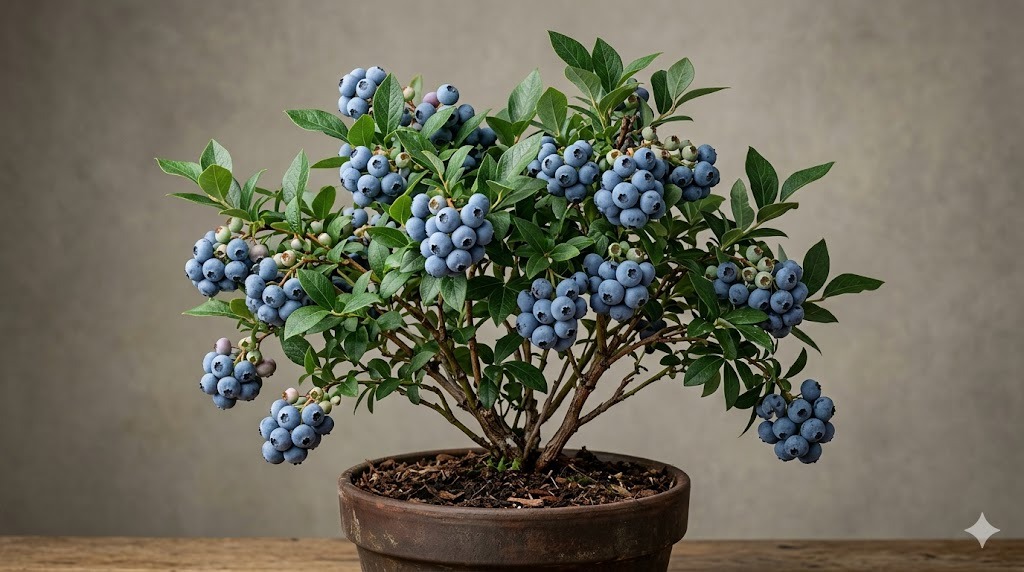
The blueberry is one of the most desirable fruit bushes for the home garden - productive, healthy, beautiful, and increasingly easy to fit into any space, because it grows so well in containers. The fruit needs no introduction: sweet, juicy, antioxidant-rich berries, expensive in the shops and far better picked sun-warmed and fully ripe at home. And the plant earns its place beyond the harvest: dainty spring flowers, neat foliage that often turns fiery red in autumn, and an attractive form. The blueberry has just one strict, non-negotiable requirement, and the entire success of growing it hinges on it: blueberries must have acidic soil.
Origin & Natural Habitat
Blueberries (Vaccinium species) are native largely to North America, where they grow wild in woodlands, heaths, bogs, and mountain areas - habitats with one thing in common: acidic, moist, humus-rich soil. The cultivated garden blueberry is derived chiefly from American species (highbush, lowbush, and rabbiteye types). This origin in acidic, peaty, woodland-and-heath ground is the entire basis of blueberry care - it is a member of the same broad family as rhododendrons, heathers, and cranberries, all of them lime-hating, acid-loving plants.
Appearance
Blueberries are deciduous shrubs, generally 1-2 m tall (dwarf and compact varieties are smaller, ideal for pots), with a neat, twiggy, upright-to-rounded habit. They have small, oval green leaves that frequently colour brilliantly - red, orange, crimson - in autumn, making the bush genuinely ornamental. In spring they bear clusters of small, white or pink-tinged, urn-shaped (bell-like) flowers, attractive and good for pollinators. These are followed in summer by the familiar round berries, ripening from green through reddish to the dusky blue, often with a silvery "bloom," of the ripe fruit.
Why People Grow It - Qualities & Benefits
- Delicious, healthy fruit: sweet berries, far better and cheaper than shop-bought.
- Ornamental year-round: spring flowers, summer fruit, and fiery autumn foliage.
- Container-friendly: grows superbly in pots - which also solves the acid-soil problem.
- Compact and tidy: a neat bush suitable for small gardens.
- Long-lived and productive: crops well for many years once established.
- Good for pollinators: the spring flowers attract bees.
- Largely pest-free compared with many fruit (other than birds).
Care
Light & Position
Full sun for the best crop and sweetest fruit, though blueberries tolerate light shade with a somewhat reduced harvest. A sheltered position protects the spring flowers from frost.
Soil - the make-or-break factor
Blueberries must have acidic soil - a pH of roughly 4.5 to 5.5. This is absolute. In neutral or alkaline soil, blueberries cannot take up iron and other nutrients; the leaves yellow (chlorosis), growth falters, and the plant slowly fails. The soil must also be moist, humus-rich, and free-draining. Crucially: if your garden soil is not naturally acidic, do not try to grow blueberries in the open ground - grow them in containers filled with ericaceous (acidic) compost. This is the standard, reliable solution and the reason blueberries have become so popular.
Watering
Keep the soil consistently moist - blueberries have shallow, fibrous roots that dry out fast and dislike both drought and waterlogging. Use rainwater wherever possible: tap water in hard-water areas is alkaline and will, over time, raise the soil pH and undo your acidic growing medium. Mulch (with an acidic mulch such as composted bark or pine needles) to retain moisture.
Feeding
Feed in spring with a fertilizer formulated for ericaceous (acid-loving) plants. Avoid ordinary fertilizers and never add lime or mushroom compost, which raise the pH.
Pollination
Many blueberries crop more heavily with cross-pollination, so growing two or more different varieties together usually improves yield and berry size - worth doing where space allows.
Pruning
Young blueberries need little pruning. From a few years old, prune in late winter while dormant: remove dead, weak, and crossing growth, and take out a proportion of the oldest, least productive branches to encourage vigorous new wood, which carries the best fruit.
Protecting the Fruit
As the berries ripen, netting is essential - birds are extremely fond of blueberries and will strip a bush.
Hardiness & Winter Care
Blueberries are hardy (varying by type - highbush types commonly to around USDA zone 4-5), deciduous, and need no special winter protection in moderate climates; they do require a period of winter cold for good cropping.
Planting & Propagation
Plant in autumn or spring into acidic soil or, far more commonly and reliably, into containers of ericaceous compost. Choose two or more varieties for cross-pollination. Propagate from softwood or hardwood cuttings, or by layering - though most gardeners simply buy named plants.
Common Problems & Pests
- Yellowing leaves (chlorosis): the classic symptom that the soil is not acidic enough, or that hard tap water has raised the pH. Correct with ericaceous compost, an acid-plant feed, rainwater, and (if needed) acidifying treatments such as sulphur.
- Poor growth and decline: almost always the wrong soil pH - blueberries simply will not thrive in neutral or alkaline ground.
- Birds stripping the fruit: a major issue - netting the ripening crop is essential.
- Drying out: the shallow roots dry quickly, especially in pots - keep them consistently moist.
- Few pests/diseases otherwise: blueberries are relatively trouble-free, though waterlogging causes root problems and some fungal issues can occur.
Toxicity & Safety
The blueberry is non-toxic and entirely safe - the fruit is a celebrated, healthy food, and the plant is considered safe for cats, dogs, horses, and humans. It is not a poisoning hazard and is an excellent, family- and child-friendly fruit bush. (The ripe berries are, of course, delicious and good for everyone - and children love picking them.)
Pros & Cons
Pros
- Delicious, healthy fruit - far better and cheaper than shop-bought.
- Ornamental in every season - flowers, fruit, fiery autumn foliage.
- Grows beautifully in containers; compact and tidy.
- Long-lived, productive, largely pest-free, and non-toxic/child-friendly.
Cons
- Must have acidic soil - impossible in neutral/alkaline ground without pots.
- Hard tap water gradually raises pH and causes problems - rainwater needed.
- Birds will strip the fruit - netting essential.
- Shallow roots dry out quickly; cross-pollination needed for best yields.
Best Suited For
- Gardens with naturally acidic soil - in the open ground.
- Containers of ericaceous compost - the universal solution, suiting any garden, patio, or balcony.
- Sunny, sheltered positions.
- Small gardens, family gardens, and anyone wanting healthy, ornamental home fruit.
Not ideal for open-ground planting in neutral or alkaline soil, gardens with only hard tap water and no rainwater (more difficult), or anyone unwilling to net against birds.
FAQ
Why are my blueberry leaves turning yellow? This is chlorosis, and it is the classic sign that the soil is not acidic enough - or that you have been watering with hard tap water, which raises the pH over time. Blueberries need acidic soil (pH around 4.5-5.5) to take up nutrients. Use ericaceous compost, feed with an acid-plant fertilizer, water with rainwater, and acidify the growing medium if needed.
Can I grow blueberries if my soil isn't acidic? Yes - but not in the open ground. The reliable solution, and the reason blueberries are now so popular, is to grow them in containers filled with ericaceous (acidic) compost. This works in any garden, on any patio or balcony, regardless of your native soil.
Do I need more than one blueberry plant? It is strongly recommended. Many blueberries crop more heavily and produce larger berries when cross-pollinated, so growing two or more different varieties together usually improves the harvest noticeably.
Why should I water blueberries with rainwater? In hard-water areas, tap water is alkaline, and using it over time gradually raises the pH of the soil or compost - undoing the acidic conditions blueberries depend on. Rainwater is naturally soft and keeps the growing medium acidic. Collecting rainwater is well worth it for blueberries.
Are blueberries safe for pets and children? Yes - blueberries are completely non-toxic and safe. The fruit is a healthy food enjoyed by people, and the plant poses no hazard to cats, dogs, or children. It is an excellent, family-friendly fruit bush.