Camellia
The camellia is the aristocrat of the shade garden - a glossy, evergreen shrub that flowers when almost nothing else does, from late winter into spring.
🗓️ Last reviewed: June 2026
Overview
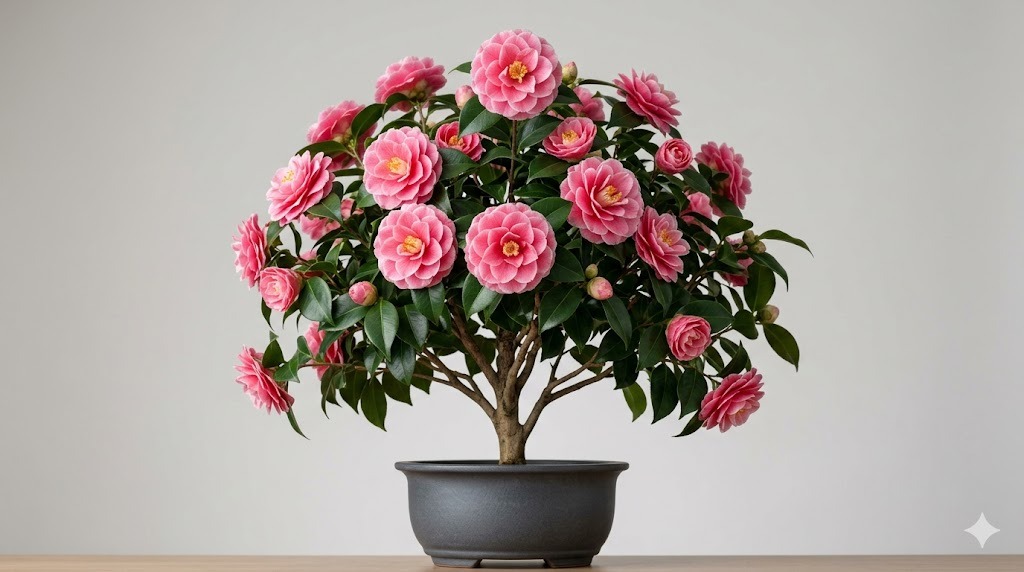
The camellia is the aristocrat of the shade garden - a glossy, evergreen shrub that flowers when almost nothing else does, from late winter into spring. Its blooms are extraordinarily elegant: rose-like, peony-like, or simple and open, in white, pink, red, and bicolors, set against deep, polished, year-round foliage. Camellias are long-lived, hardy enough for many gardens, and surprisingly low-maintenance - but they share the rhododendron's one strict demand: acidic soil. Their other quirk is timing - the flowers open in cold weather, and a hard frost can spoil them, so where you plant a camellia matters as much as how you grow it.
Origin & Natural Habitat
Camellias come from the woodlands of East and South Asia - especially China, Japan, and Korea. (One species, Camellia sinensis, is the tea plant.) In the wild they grow as understory shrubs in cool, moist, acidic, humus-rich forest soil, in dappled shade beneath the canopy. This origin explains their care entirely: acid soil, moisture, shelter, and protection from harsh sun and wind.
Appearance
Camellias are evergreen shrubs or small trees, typically 1.5-4 m, with a dense, upright-to-rounded habit. The leaves are their year-round asset - thick, glossy, dark green, and handsome in every season. The flowers, 5-12 cm across, range from single (open, with a boss of golden stamens) through semi-double to fully double "formal" blooms resembling roses. The main garden groups:
- Camellia japonica: the classic large-flowered type, flowering late winter to spring; needs the most shelter.
- Camellia x williamsii: very free-flowering and reliable; drops its faded flowers cleanly.
- Camellia sasanqua: autumn-to-winter flowering, often lightly scented, more sun-tolerant.
Why People Grow It - Qualities & Benefits
- Off-season flowers: bloom in winter and early spring, when the garden is bare.
- Evergreen elegance: glossy foliage gives structure and good looks all year.
- Beautiful blooms: some of the most refined flowers in any garden.
- Shade tolerance: thrive where many flowering shrubs struggle.
- Long-lived: can flourish for decades, even a century.
- Container-friendly: ideal in pots, which also solves alkaline-soil gardens.
Care
Light & Position
Dappled shade or partial shade, sheltered from cold winds. Crucially, avoid an east-facing spot that catches early-morning sun - when frosted flowers thaw too fast in morning sun, the petals turn brown and mushy. A position that warms gently (north- or west-facing, with shelter) protects the blooms. C. sasanqua tolerates more sun than japonica.
Soil
Acidic soil (pH roughly 5.5-6.5), moist, humus-rich and well-drained. Like rhododendrons, camellias are calcifuges and will yellow on alkaline soil. On chalky ground, grow them in pots of ericaceous (acidic) compost.
Watering
Keep the soil consistently moist, especially in summer and early autumn - this is when next year's flower buds form. Drought stress in late summer is the main cause of bud drop the following winter. Use rainwater where possible; mulch to conserve moisture.
Feeding
Feed in spring after flowering with an ericaceous (acid-plant) fertilizer. Avoid feeding late in the season. Mulch with leaf mould or composted bark.
Pruning
Camellias need little pruning. After flowering, lightly shape the plant and remove dead or weak stems if needed. They tolerate harder pruning to restrict size or rejuvenate an old plant, also done right after flowering - never prune in summer or autumn, when the flower buds have already formed.
Hardiness & Winter Care
Many camellias are hardy to around USDA zone 7 (some to zone 6); sasanqua and some japonica are less hardy. The plant itself usually survives cold well - it is the open flowers that are frost-tender. Shelter and the right aspect (no early-morning sun) protect the bloom. In containers, protect the roots from hard freezes.
Planting & Propagation
Plant in autumn or spring, setting the root ball shallowly in acidic, humus-rich soil, and mulch. Camellias are slow-growing and patient. Propagate from semi-ripe cuttings in late summer or by layering - both are slow but reliable. Named varieties do not come true from seed.
Common Problems & Pests
- Bud drop (buds form but fall before opening): the classic problem - usually drought stress the previous summer/autumn when buds were forming; keep the plant watered in late summer.
- Brown, mushy flowers: frost damage, worsened by morning sun thawing frosted petals too fast - fix by repositioning.
- Yellowing leaves (chlorosis): soil not acidic enough, or hard water - correct as for rhododendrons.
- Camellia petal blight: a fungus turning whole flowers brown - remove and destroy affected blooms and fallen petals.
- Sooty mould / scale & aphids: scale insects produce honeydew on which black sooty mould grows.
Toxicity & Safety
Camellias are generally regarded as non-toxic and safe for cats, dogs, horses, and humans - a pet-friendly evergreen flowering shrub. The related tea plant (C. sinensis) is the source of caffeinated tea, but ornamental garden camellias are not a poisoning hazard.
Pros & Cons
Pros
- Flowers in winter and early spring, off-season.
- Glossy evergreen foliage all year.
- Elegant, refined blooms; long-lived.
- Pet-safe; excellent in containers.
Cons
- Require acidic soil - impossible on chalk in the ground.
- Open flowers are frost-tender; aspect matters.
- Bud drop if stressed by summer drought.
- Slow-growing; petal blight can spoil flowers.
Best Suited For
- Acidic-soil gardens with dappled or partial shade.
- Sheltered positions away from early-morning sun.
- Woodland gardens, shady borders, and north/west walls.
- Containers of ericaceous compost (the answer for alkaline gardens).
Not ideal for chalky soil in the ground, exposed frost-pocket or east-facing spots, hot full sun, or gardeners who want fast growth.
FAQ
Why do my camellia's buds fall off before opening? Bud drop is usually caused by drought stress the previous summer and autumn, when the buds were forming. Keep the plant well watered through late summer and early autumn to prevent it.
Why do my camellia flowers turn brown? Either frost damage - especially if the plant catches early-morning sun, which thaws frosted petals too quickly - or camellia petal blight, a fungal disease. For frost, reposition the plant; for blight, remove and destroy affected flowers and fallen petals.
Can I grow a camellia in alkaline soil? Not in the ground - it will yellow and decline. But camellias grow very well in pots of ericaceous (acidic) compost, watered with rainwater.
Are camellias safe for pets? Yes - ornamental camellias are considered non-toxic to cats, dogs, and horses.
When should I prune a camellia? Right after flowering, if at all - camellias need little pruning. Never prune in summer or autumn, when the flower buds have already formed.