Clematis
Clematis is, by common consent, the queen of the garden climbers - a vast and varied group of vines that can drape a wall, fence, arch, or pergola in flowers, scrambling through shrubs and roses or tumbling down a bank.
🗓️ Last reviewed: June 2026
Overview
Clematis is, by common consent, the queen of the garden climbers - a vast and varied group of vines that can drape a wall, fence, arch, or pergola in flowers, scrambling through shrubs and roses or tumbling down a bank. The flower range is enormous: from huge, flat, saucer-sized blooms in jewel colors, through nodding bells and stars, to froths of tiny, sweetly scented flowers, across a season that - by combining types - can stretch from late winter to autumn. Clematis has a reputation for being complicated, and that reputation rests almost entirely on one thing: pruning. Different clematis are pruned at different times, and getting it wrong means losing the flowers. Learn the simple pruning groups, and clematis becomes one of the most rewarding plants you can grow.
Origin & Natural Habitat
Clematis is a large genus of around 300 species found across the temperate Northern Hemisphere - woodlands, hedgerows, scrub, and rocky places - with a great concentration of garden parentage from China and Japan, as well as Europe and North America. In the wild, clematis typically scrambles up through shrubs and trees: its roots in cool, shaded, moist soil at the woodland floor, its growing tips reaching up into the sun. This habit gives rise to the single most famous piece of clematis advice: "head in the sun, feet in the shade."
Appearance
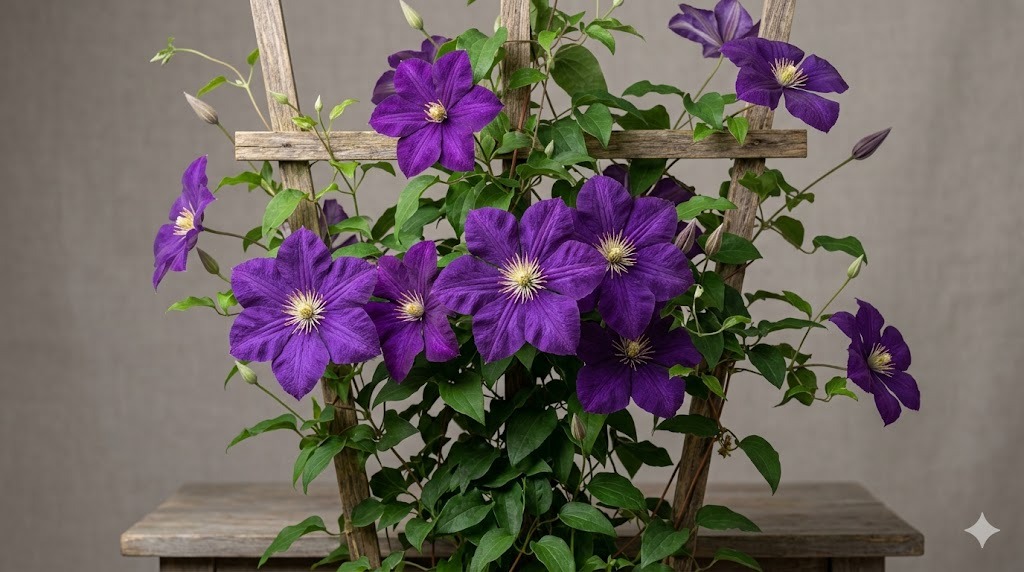
Most garden clematis are deciduous (some are evergreen) woody or semi-woody climbers, climbing by twisting their leaf stalks around supports - which means they need thin supports or netting to grip, not thick posts. Size ranges from compact 1-2 m types suitable for pots to vigorous species covering large walls. The flowers vary dramatically: large-flowered hybrids with broad, flat blooms 10-20 cm across; small-flowered species with masses of bells, stars, or tiny scented flowers. Many are followed by ornamental, fluffy, silvery seed heads.
Why People Grow It - Qualities & Benefits
- Vertical color: clothes walls, fences, arches, pergolas, and obelisks in flower.
- Enormous variety: flower size, form, color, and bloom time for every situation.
- A very long season possible: combining early, mid, and late types gives flowers most of the year.
- Versatile: trains on supports, scrambles through shrubs and roses, trails down banks, or grows in pots.
- Ornamental seed heads: many types add fluffy silver seed heads after flowering.
- Fragrance: several species and varieties are sweetly scented.
- Pollinator value: open and species types attract bees.
Care
Light & Position
"Head in the sun, feet in the shade." Clematis flowers best with its top growth in good sun (most need at least half a day; some tolerate part shade), but the roots must be kept cool and shaded - achieved by shading the base with low planting, a stone slab, or a generous mulch.
Soil
Fertile, humus-rich, moist but well-drained soil. Clematis are hungry, thirsty plants that dislike both drought and waterlogging. Improve the planting area generously with compost.
Planting
A key planting rule for the large-flowered hybrids: plant clematis deep - setting the crown about 5-8 cm below the soil surface. This deep planting helps the plant recover if it is struck by clematis wilt, by allowing it to reshoot from below ground.
Watering & Feeding
Water well, especially while establishing and in dry spells - clematis are thirsty. Feed in spring and during the growing season with a balanced or rose/clematis fertilizer to support the abundant flowering. Mulch generously (keeping mulch off the stems) to feed, retain moisture, and cool the roots.
Pruning - the three groups
This is the heart of clematis care. Clematis fall into three pruning groups:
- Group 1 (early-flowering): flower in late winter/spring on the previous year's growth (e.g. C. montana, C. armandii). Prune little or not at all - only tidy or reduce them just after flowering.
- Group 2 (large-flowered hybrids, early summer): flower on the previous year's growth, often with a second flush on new growth. Prune lightly in late winter/early spring - remove dead growth and shape, without cutting away all the old wood that carries the first flowers.
- Group 3 (late-flowering): flower in summer/autumn on the current year's growth (e.g. C. viticella, late large-flowered, C. tangutica). Prune hard in late winter/early spring - cut the whole plant down to a low pair of strong buds.
Knowing your clematis's group is essential; pruning Group 1 or 2 hard in spring removes that year's flowers.
Hardiness & Winter Care
Most garden clematis are hardy (commonly to around USDA zone 4-6, varying by type) and need no winter protection. Evergreen types are less hardy and prefer a sheltered spot.
Planting & Propagation
Plant deep (as above) in autumn or spring in improved soil, with the base shaded. Propagate by layering (easy and reliable - pin a stem to the soil until it roots) or from softwood/semi-ripe cuttings (clematis cuttings can be tricky). Species types can be grown from seed.
Common Problems & Pests
- Clematis wilt: the most feared problem - a fungal disease in which a stem (or the whole plant) suddenly wilts, blackens, and collapses, often just before flowering. It mainly affects large-flowered hybrids. Cut affected growth right back to healthy tissue or below ground; deep planting allows the plant to reshoot. Established and small-flowered species clematis are far less affected.
- No flowers / poor flowering: very commonly pruning at the wrong time for the group; also too much shade, a young plant still establishing, or lack of feeding.
- Dry, struggling plants: roots too hot/dry, or insufficient watering - shade and mulch the base.
- Slugs and snails: devour the soft young spring shoots.
- Powdery mildew and aphids: can affect some clematis, especially in dry or crowded conditions.
Toxicity & Safety
Clematis is regarded as toxic / mildly toxic - all parts contain irritant compounds (protoanemonin) and can cause drooling, vomiting, and diarrhea in cats, dogs, and horses if eaten, and the sap can irritate skin and mucous membranes in people. The plant has a bitter, acrid taste that usually deters animals from eating much, so serious poisoning is uncommon, and clematis is widely grown in family gardens - but pets should be discouraged from chewing it, and gloves are sensible when pruning.
Pros & Cons
Pros
- The premier flowering climber - vast variety of form, color, and bloom time.
- A very long season possible by combining the pruning groups.
- Versatile - walls, arches, obelisks, through shrubs and roses, or in pots.
- Ornamental seed heads; many fragrant; good for pollinators.
Cons
- Pruning is group-specific - getting it wrong loses the flowers.
- Clematis wilt can suddenly collapse large-flowered hybrids.
- Hungry and thirsty; roots must be kept cool and shaded.
- Mildly toxic; soft spring shoots are slug-prone.
Best Suited For
- Clothing walls, fences, arches, pergolas, and obelisks.
- Scrambling through shrubs, roses, and trees; trailing down banks.
- Mixed and cottage gardens; small gardens (compact types in pots).
- Gardeners willing to learn the simple pruning groups.
Not ideal for deep shade, hot dry root runs, or gardeners unwilling to identify the pruning group of their plant.
FAQ
How do I know when to prune my clematis? Clematis fall into three pruning groups. Group 1 (early spring-flowering, on old wood) - prune little, just after flowering. Group 2 (early-summer large-flowered hybrids) - prune lightly in late winter/early spring. Group 3 (late summer/autumn-flowering, on new wood) - prune hard in late winter/early spring. Identify which group your variety belongs to - it is usually on the label - and prune accordingly. Pruning Group 1 or 2 hard removes that year's flowers.
What is the "head in the sun, feet in the shade" rule? It is the golden rule of clematis: the top growth flowers best in good sun, but the roots must be kept cool and shaded. Shade the base of the plant with low planting, a stone slab, or a thick mulch.
Why did my clematis suddenly wilt and collapse? This is likely clematis wilt - a fungal disease that mainly strikes large-flowered hybrids, causing a stem or the whole plant to wilt and blacken suddenly, often before flowering. Cut the affected growth back to healthy tissue or below ground. Because clematis should be planted deep, the plant can often reshoot from below the soil and recover.
Why won't my clematis flower? The most common reason is pruning at the wrong time for its group - cutting off the wood that carries the flowers. Other causes: too much shade, a plant still too young and establishing, or a lack of feeding.
Are clematis safe for pets? Clematis is mildly toxic - it contains irritant compounds and can cause vomiting and drooling in cats, dogs, and horses if eaten. Its bitter taste usually deters animals, so serious poisoning is uncommon, but discourage pets from chewing it.