Climbing & Rambling Roses
Climbing and rambling roses take the most beloved flower in the world and send it skyward - clothing walls, arches, pergolas, fences, and even trees in cascades of bloom.
🗓️ Last reviewed: June 2026
Overview
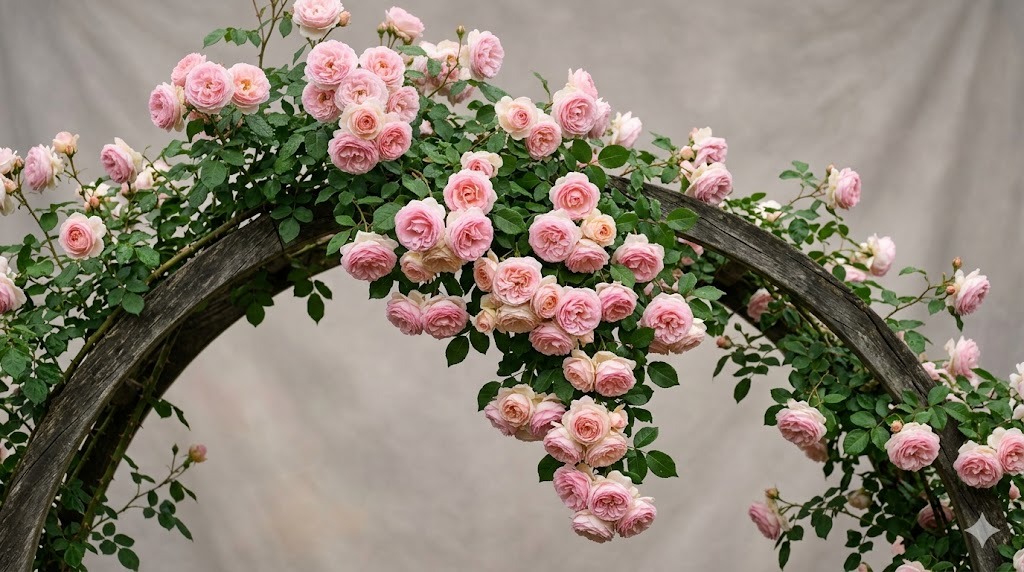
Climbing and rambling roses take the most beloved flower in the world and send it skyward - clothing walls, arches, pergolas, fences, and even trees in cascades of bloom. They turn a vertical surface into a centerpiece, soften hard architecture, and bring fragrance up to nose height. Within this group are two distinct personalities: climbing roses, more restrained, often repeat-flowering, ideal for walls and structures; and rambling roses, vigorous, exuberant, usually flowering once in a spectacular early-summer flood, perfect for covering large areas and scrambling through trees. They are not difficult, but - like all roses, and like clematis - getting the most from them depends on understanding how and when to prune, and the difference between the two types.
Origin & Natural Habitat
Roses (Rosa) are native across the temperate Northern Hemisphere, with wild species in Asia, Europe, and North America growing in hedgerows, woodland edges, scrub, and on slopes. Climbing and rambling garden roses are highly bred plants, with ramblers especially drawing on vigorous wild species that naturally scramble up through hedges and trees. Roses are not true climbers - they have no tendrils or twining stems - so they "climb" by sending up long, arching stems that lean and hook on with their thorns, and which the gardener ties to supports.
Appearance
Both types are deciduous shrubs producing long, arching, thorny stems (canes):
- Climbing roses: generally produce a more permanent, stiffer framework of fairly thick canes, 2-4 m or so; flowers are often large, borne singly or in small clusters, and many varieties repeat-flower through the season.
- Rambling roses: far more vigorous, with long, flexible, whippy canes that can reach 6-12 m, carrying large sprays of many smaller flowers, usually in a single, massive flush in early summer; many produce ornamental hips afterward.
Both come in the full rose color range, and many are richly fragrant.
Why People Grow It - Qualities & Benefits
- Vertical impact: transform walls, arches, pergolas, fences, and trees.
- Glorious flowers and fragrance brought up to eye and nose level.
- Climbers repeat-flower: many bloom from early summer into autumn.
- Ramblers give a spectacular flood of bloom and often colorful autumn hips.
- Soften architecture: disguise walls, sheds, and ugly features.
- Versatile: climbers for structures and walls, ramblers for big spaces and trees.
- Wildlife value: single-flowered types feed pollinators; hips feed birds.
Care
Light & Position
Full sun is best - at least six hours - for the strongest growth and flowering, though some climbers and ramblers tolerate part shade and a few perform on shadier walls. Good air circulation helps reduce disease.
Soil
Fertile, humus-rich, well-drained but moisture-retentive soil, generously improved with compost or well-rotted manure. Roses are hungry, deep-rooted plants.
Watering
Water deeply and regularly while establishing and during dry spells, especially for roses planted against walls, where the soil is often dry and sheltered from rain ("rain shadow").
Feeding
Roses are hungry - feed in spring and again after the first flush with a rose fertilizer, and mulch generously with compost or well-rotted manure to feed, conserve moisture, and improve the soil.
Training - the key to flowering
The single most important technique for climbers and ramblers is training the canes near-horizontal. A rose stem trained upright flowers only at its tip; a stem bent and tied horizontally or in a gentle arc breaks into flowering side-shoots all along its length. Tie the long canes onto wires, trellis, or the structure as horizontally as the situation allows - fanning them out, spiralling them around posts and pillars. This is what turns a few stems into a wall of flower.
Pruning
- Climbing roses: prune in winter/dormancy - keep the main framework, shorten the flowered side-shoots back to a few buds, and remove old, weak, or dead wood. Train in new canes.
- Rambling roses: most flower on the previous year's wood, so prune after flowering in summer - remove some of the oldest flowered canes and tie in the vigorous new ones that will carry next year's display. (If you want the hips, delay or limit pruning.)
Knowing whether you have a climber or a rambler determines the timing.
Hardiness & Winter Care
Most climbing and rambling roses are hardy (commonly to around USDA zone 5, varying by variety) and need little winter protection in moderate climates; in very cold regions, choose hardy varieties and protect the base.
Planting & Propagation
Plant bare-root roses in the dormant season (autumn to early spring) or container roses year-round, into well-prepared, enriched soil; set the graft union appropriately for your climate, and plant a little away from walls so roots reach moister soil, angling the plant toward the support. Propagate from hardwood cuttings (ramblers and many climbers root readily) or by layering.
Common Problems & Pests
- Flowers only at the top, bare lower down: the classic problem - caused by training canes upright instead of horizontally; retrain canes near-horizontal to get flowers all along them.
- Black spot, powdery mildew, and rose rust: the main fungal diseases - reduce them by good air flow, garden hygiene (clearing fallen leaves), and choosing disease-resistant varieties.
- Aphids: cluster on soft new growth and buds.
- Poor flowering: too much shade, wrong-time or wrong pruning, lack of feeding, or dry soil in a wall's rain shadow.
- Rose dieback and canker: affect stems, often where stressed or damaged.
Toxicity & Safety
Roses (Rosa) are regarded as non-toxic and are considered safe for cats, dogs, horses, and humans - the petals and hips are even edible (rose hips are rich in vitamin C and used in syrups and teas). They are not a poisoning hazard. The genuine safety consideration is purely physical: the thorns can give painful scratches and puncture wounds, so wear gloves and long sleeves when training and pruning, and site thorny ramblers away from paths and play areas.
Pros & Cons
Pros
- Spectacular vertical flowers and fragrance; transform walls and structures.
- Climbers repeat-flower; ramblers give a huge flush and ornamental hips.
- Versatile, long-lived, and non-toxic (petals and hips edible).
- Soften architecture; good wildlife value.
Cons
- Need correct, type-specific training and pruning to flower well.
- Thorny - care needed when handling and siting.
- Prone to black spot, mildew, and rust; hungry and thirsty.
- Ramblers can be hugely vigorous and outgrow small spaces.
Best Suited For
- Walls, fences, arches, pergolas, obelisks, and pillars (climbers).
- Covering large walls, sheds, banks, and scrambling through trees (ramblers).
- Cottage and traditional gardens; bringing fragrance to doorways and seating.
- Gardeners willing to train and prune.
Not ideal for very small gardens (vigorous ramblers), deep shade, or anyone unwilling to handle thorny canes and learn the pruning.
FAQ
What is the difference between a climbing rose and a rambling rose? Climbing roses are more restrained, with a stiffer framework, often larger flowers, and many repeat-flower through the season - ideal for walls and structures. Rambling roses are far more vigorous, with long flexible canes, large sprays of smaller flowers usually in one spectacular early-summer flush, and often ornamental hips - ideal for covering big areas and growing through trees. They are also pruned at different times.
Why does my climbing rose only flower at the top? Because the canes have been trained straight upward. A vertical rose stem flowers only at its tip. The fix is to train the long canes as horizontally as possible - bent sideways or in gentle arcs - which makes them break into flowering side-shoots all along their length, giving a wall of flower.
When do I prune climbing and rambling roses? Climbing roses are pruned in winter/dormancy - keep the framework, shorten flowered side-shoots, remove old and dead wood. Most rambling roses flower on the previous year's wood and are pruned after flowering in summer - removing some old canes and tying in vigorous new ones.
Are roses safe for pets? Yes - roses are non-toxic to cats, dogs, and horses, and the petals and hips are even edible for people. The only real hazard is physical: the thorns, which can scratch and puncture, so handle and site thorny roses with care.
Why isn't my climbing rose flowering well? Common causes: canes trained upright instead of horizontally, too much shade, pruning at the wrong time or incorrectly, a lack of feeding, or dry soil - roses against walls often sit in a dry "rain shadow" and need extra watering.