Coneflower (Echinacea)
The coneflower is one of the great pillars of the modern naturalistic garden - a tough, sun-loving prairie perennial that flowers for months and supports a remarkable amount of wildlife.
🗓️ Last reviewed: June 2026
Overview
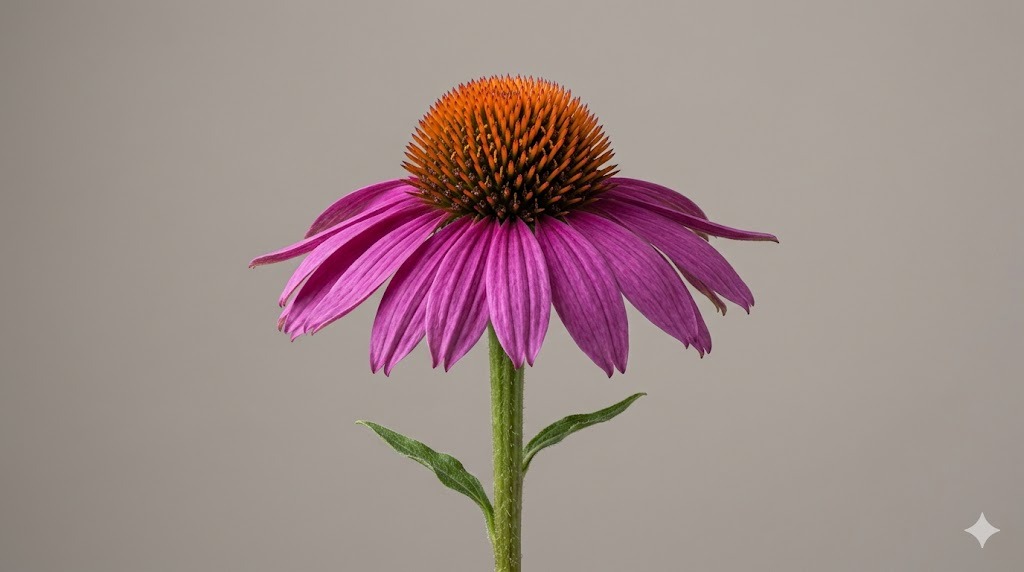
The coneflower is one of the great pillars of the modern naturalistic garden - a tough, sun-loving prairie perennial that flowers for months and supports a remarkable amount of wildlife. Its blooms are unmistakable: large daisy-like flowers with a prominent, spiky, domed central cone, surrounded by petals that traditionally droop slightly backward. The classic is the purple coneflower, Echinacea purpurea, but breeding has added orange, red, yellow, white, and green. Coneflowers are easy, drought-tolerant, and long-blooming, and they keep giving long after the petals fade - the seed heads feed birds through autumn and winter, and look beautiful doing it.
Origin & Natural Habitat
Coneflowers are native to the prairies, open woodlands, and dry grasslands of central and eastern North America. They are true prairie plants - adapted to full sun, lean well-drained soil, summer heat, periodic drought, and cold winters. This origin is the whole basis of their care: give a coneflower prairie conditions - sun and good drainage - and it thrives; give it rich, shady, or wet conditions and it struggles. Echinacea is also well known as a herbal remedy, traditionally used to support the immune system.
Appearance
Coneflowers are clump-forming herbaceous perennials, typically 60-120 cm tall, with upright, sturdy, slightly bristly stems and coarse, lance-shaped dark-green leaves. The flowers, borne from midsummer well into autumn, are large - up to 12 cm across - with a distinctive raised, spiny central cone (often orange-bronze) ringed by ray petals. As the petals age and fall, the cones remain as handsome dark seed heads that hold their structure through winter.
Why People Grow It - Qualities & Benefits
- Long bloom: flowers for months, midsummer into autumn.
- Wildlife magnet: flowers feed bees and butterflies; seed heads feed finches and other birds.
- Drought-tolerant and tough: thrives in heat and dry, lean soil once established.
- Winter structure: the seed heads stand through winter, beautiful in frost.
- Easy and low-maintenance: undemanding and reliable.
- Excellent cut flower and a classic of prairie- and meadow-style planting.
- Herbal heritage: long used in traditional immune-support remedies.
Care
Light & Position
Full sun. Coneflowers are prairie plants and need at least six hours of direct sun for sturdy, upright, free-flowering growth. In shade they grow leggy, flop, and flower poorly.
Soil
Average to lean, well-drained soil. Coneflowers tolerate poor and dry soils well; they do not like rich, heavy, or wet ground - winter wet, in particular, rots the crown and is the main cause of plants failing to return.
Watering
Water through the first growing season to establish. After that, coneflowers are notably drought-tolerant and need watering only in prolonged drought.
Feeding
Minimal - coneflowers prefer lean soil. A light compost mulch is enough; rich feeding produces floppy growth and fewer, weaker flowers.
Seasonal Care & Deadheading
Deadheading through summer encourages more flowers. But in late summer, stop deadheading and leave the final seed heads standing - they feed birds and provide winter structure. Cut the old stems down in late winter or early spring.
Hardiness & Winter Care
Coneflowers are very hardy, commonly to around USDA zone 3-4, and need no winter protection. The real winter risk is not cold but cold plus wet - ensure good drainage so the crown does not rot. Some highly bred modern color hybrids are less robust and shorter-lived than the straight species.
Planting & Propagation
Plant in spring or autumn in full sun and well-drained soil. Propagate the species easily from seed (it also self-seeds gently); named varieties are increased by division in spring or by basal cuttings. Divide established clumps every few years to keep them vigorous.
Common Problems & Pests
- Plant fails to return after winter: usually winter-wet soil rotting the crown - improve drainage.
- Floppy, leggy growth: too much shade or soil too rich.
- Short-lived modern hybrids: some heavily bred color forms are weaker and less perennial than E. purpurea; the species and close selections are the most reliable.
- Aster yellows: a disease causing distorted, greenish, deformed flowers - there is no cure; remove and destroy affected plants.
- Powdery mildew, Japanese beetles, aphids: can occur but are rarely serious.
Toxicity & Safety
Coneflower is regarded as non-toxic / low-toxicity and is considered safe for cats, dogs, horses, and humans - indeed Echinacea is widely consumed by people as a herbal supplement. It is a good, pet-friendly choice for wildlife and family gardens, with high value for pollinators and seed-eating birds.
Pros & Cons
Pros
- Long bloom and excellent wildlife value (pollinators and birds).
- Drought-tolerant, hardy, and easy once established.
- Winter structure from the standing seed heads.
- Pet-safe; great cut flower; classic prairie-style plant.
Cons
- Needs full sun and good drainage - fails in wet or shady ground.
- Winter-wet soil readily rots the crown.
- Some modern color hybrids are short-lived and less robust.
- Can look coarse and is prone to aster yellows in some areas.
Best Suited For
- Sunny borders, prairie- and meadow-style plantings.
- Wildlife and pollinator gardens.
- Hot, dry, well-drained spots and lean soils.
- Cutting gardens and low-maintenance naturalistic schemes.
Not ideal for shady gardens, heavy wet soils, or anyone wanting a tidy, refined plant rather than a robust prairie perennial.
FAQ
Why didn't my coneflower come back this year? The most common cause is winter-wet soil rotting the crown. Coneflowers are very cold-hardy but hate sitting in cold, wet ground. Improve drainage. Also note that some heavily bred modern color hybrids are simply short-lived compared to the tougher purple coneflower species.
Should I cut down coneflowers in autumn? Better not - leave the seed heads standing. They feed finches and other birds through autumn and winter and look lovely in frost. Cut the old stems down in late winter or early spring instead.
Are coneflowers good for pollinators? Excellent - the flowers attract bees and butterflies all summer, and the seed heads feed seed-eating birds in autumn and winter. They are a top wildlife-garden plant.
Are coneflowers safe for pets? Yes - coneflower is considered non-toxic to cats, dogs, and horses, and Echinacea is even taken by people as a herbal supplement.
Why are my coneflowers flopping over? Usually too much shade or soil that is too rich. Coneflowers are prairie plants - give them full sun and lean, well-drained soil, and they grow sturdy and upright.