Coral Bells (Heuchera)
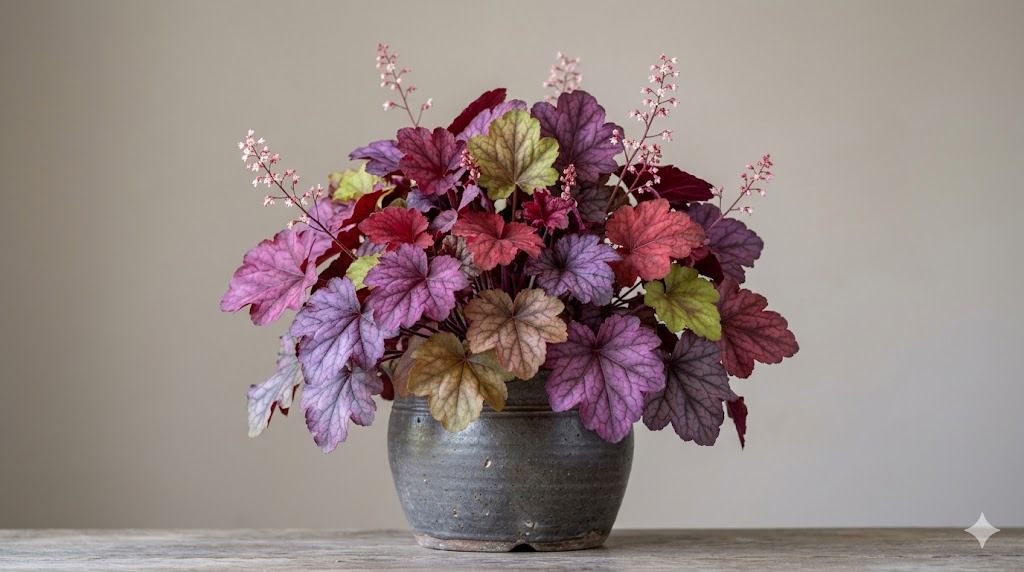
Coral bells, Heuchera, is one of the most versatile foliage perennials in the modern garden - a plant grown above all for its leaves, which come in an extraordinary jewel-box of colors: lime, gold, amber, peach, caramel, coral, rose, purple, near-black, and silver, often veined, marbled, or ruffled.
🗓️ Last reviewed: June 2026
Overview
Coral bells, Heuchera, is one of the most versatile foliage perennials in the modern garden - a plant grown above all for its leaves, which come in an extraordinary jewel-box of colors: lime, gold, amber, peach, caramel, coral, rose, purple, near-black, and silver, often veined, marbled, or ruffled. The neat evergreen (or semi-evergreen) mounds bring color and structure to borders and containers almost all year, in sun or shade, with airy sprays of small bell-shaped flowers as a bonus in early summer. Hardy, compact, and easy, Heuchera is hugely popular - its one persistent enemy being the vine weevil.
Origin & Natural Habitat
Heuchera is native to North America, where its many species grow in woodlands, on rocky slopes, in mountain crevices, and along stream banks. This range of wild habitats explains the plant's adaptability - different species favor sun or shade, dry rock or damp woodland - and modern garden heucheras are complex hybrids drawing on several species, which is why they tolerate such a wide range of conditions. The genus is named after an 18th-century German botanist.
Appearance
Coral bells form low, neat, rounded mounds of foliage, typically 20-40 cm tall and wide. The leaves are rounded to lobed, often maple-shaped, and may be smooth, ruffled, or curled; their colors are the main attraction, spanning almost the entire warm-and-cool spectrum, frequently with contrasting veins or a silvery overlay. In late spring to early summer, slender wiry stems rise above the foliage carrying delicate airy sprays of tiny bell-shaped flowers - usually white, cream, pink, coral, or red. (The closely related ×Heucherella and Tiarella are grown similarly.)
Why People Grow It - Qualities & Benefits
- Year-round foliage color: evergreen or semi-evergreen mounds in jewel tones.
- Vast color range: a Heuchera for almost any color scheme.
- Versatile: thrives in sun or shade, borders or containers.
- Compact and tidy: neat mounds that suit small gardens and edging.
- Hardy and low-maintenance: generally easy and reliable.
- Pollinator-friendly flowers: the dainty sprays attract bees and hummingbirds.
- Excellent in pots and winter containers, holding color through cold months.
Care
Light & Position
Adaptable - most coral bells grow in full sun to part shade. Light level affects leaf color: in general, darker purple and red varieties keep their richest color in more sun, while lime, gold, and pale varieties can scorch in hot sun and prefer part shade. Match the variety to the spot - and in hot climates, give all heucheras some afternoon shade.
Soil
Fertile, humus-rich, well-drained soil. Good drainage is important - heucheras dislike heavy, wet ground, especially in winter, which rots the crown.
Watering
Keep the soil moist while establishing and during dry spells; established plants have moderate drought tolerance. Avoid both drought stress and waterlogging. Containers need regular watering.
Feeding
Light needs - a spring feed or compost mulch is enough.
The Crown-Rise Problem
Heucheras have a characteristic habit: over two or three years the woody crown gradually lifts itself up out of the soil, leaving the plant loose, exposed, and prone to drying and frost damage. The fix is simple and routine: every couple of years, either lift and replant the plant deeper, or divide it, burying the crown back at soil level.
Seasonal Care
Remove tatty, frost-damaged, or dead leaves in spring to tidy the mound and let fresh foliage show. Spent flower stems can be cut off after blooming.
Hardiness & Winter Care
Coral bells are hardy, commonly to around USDA zone 4. They are evergreen to semi-evergreen, holding foliage through winter, though leaves may look worn by spring. The crown-rise habit makes the exposed woody base vulnerable to frost heave - replanting deeper, plus a winter mulch, protects it.
Planting & Propagation
Plant in spring or autumn in well-drained, improved soil. Propagate by division in spring or autumn (which also solves the crown-rise problem) or from the rooted offsets that form around the base. Division every two to three years keeps plants healthy and well-rooted.
Common Problems & Pests
- Vine weevil: the most serious pest - the larvae eat the roots, often killing potted heucheras (a sudden collapse of an apparently healthy plant is the classic sign). Adults notch the leaf edges. Especially troublesome in containers; check roots and treat with biological controls.
- Crown lifting out of the soil: the natural habit described above - replant deeper or divide every couple of years.
- Scorched, pale, or faded leaves: too much hot sun, particularly for lime and gold varieties.
- Crown rot: caused by heavy, wet, poorly drained soil.
- Frost heave: the exposed woody crown lifted by freeze-thaw - firm plants back in or replant deeper.
Toxicity & Safety
Coral bells (Heuchera) is generally regarded as non-toxic / low-toxicity and is considered safe for cats, dogs, horses, and humans - it is not a recognized poisoning hazard and is a good, pet-friendly choice for family gardens and containers.
Pros & Cons
Pros
- Year-round foliage in a huge range of jewel colors.
- Versatile - sun or shade, borders or pots.
- Compact, tidy, hardy, and largely easy.
- Pet-friendly; dainty flowers attract pollinators.
Cons
- Vine weevil can be a serious problem, especially in pots.
- The crown lifts out of the soil and needs replanting every few years.
- Lime and pale varieties scorch in hot sun.
- Dislikes heavy, wet soil; flowers are a minor feature.
Best Suited For
- Borders, edging, and front-of-bed positions in sun or shade.
- Containers and year-round pot displays.
- Woodland and shade gardens (with appropriate varieties).
- Small gardens and gardeners wanting long-season foliage color.
Not ideal for heavy, wet, poorly drained soils, hot full sun (for pale varieties), or vine-weevil-plagued container collections without any control.
FAQ
My heuchera looks loose and lifted out of the ground - what's wrong? Nothing unusual - this is the natural crown-rise habit of coral bells. Over a couple of years the woody crown works its way up out of the soil. Simply lift the plant and replant it deeper, with the crown back at soil level, or divide it. Do this every two to three years.
Why did my potted heuchera suddenly collapse? Most likely vine weevil - the larvae eat the roots, and a previously healthy potted heuchera can collapse suddenly when the root system has been destroyed. Check the roots for white grubs and use biological or other vine-weevil controls.
Should I grow my coral bells in sun or shade? It depends on the variety. Dark purple and red types keep their richest color in more sun; lime, gold, and pale types can scorch in hot sun and prefer part shade. In hot climates, give all of them some afternoon shade.
Are coral bells safe for pets? Yes - Heuchera is generally considered non-toxic to cats, dogs, and horses.
Are heucheras evergreen? They are evergreen to semi-evergreen, holding their foliage through winter in most climates, though the leaves may look worn by spring. Tidy off the tatty old leaves in spring to let fresh growth show.