Cosmos
Cosmos is the airy, effortless, romantic annual that gardeners reach for when they want a long summer of bloom with almost no work.
🗓️ Last reviewed: June 2026
Overview
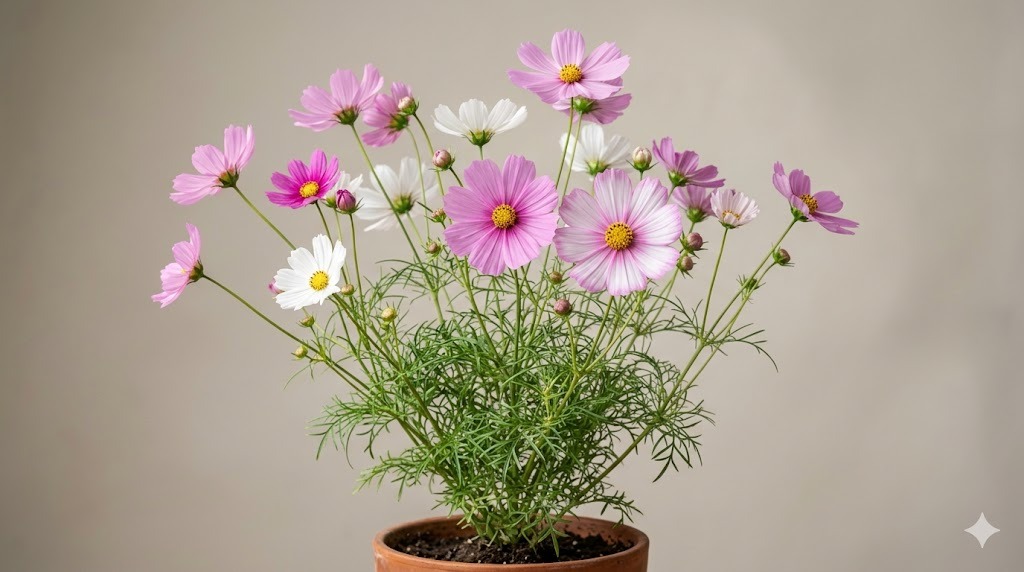
Cosmos is the airy, effortless, romantic annual that gardeners reach for when they want a long summer of bloom with almost no work. On tall, slender stems above a haze of fine, feathery foliage, it carries simple, elegant, daisy-like flowers - most often in white, pink, and crimson - that nod and shimmer in the slightest breeze. Cosmos is one of the easiest plants to grow from seed, it flowers tirelessly from midsummer to frost, it is a favorite of bees and butterflies, and it makes a wonderful cut flower. Its single, gardener-friendly quirk: do not grow it in rich soil or feed it, or you get a forest of leaves and very few flowers.
Origin & Natural Habitat
Cosmos is native to the Americas, especially Mexico and the southern United States, where its ancestors grow in warm, sunny, open scrub and meadowland - often in poor, dry soil. (The Spanish missionaries who named it saw harmony and order in its evenly placed petals - "cosmos.") This origin in lean, sunny, warm conditions explains everything about its care, above all its dislike of rich soil. The most popular garden type is Cosmos bipinnatus; the orange-and-yellow Cosmos sulphureus is a related, more heat-loving species.
Appearance
Cosmos is a tall, airy, branching annual, typically 60-150 cm tall (dwarf varieties are more compact). Its foliage is finely divided, feathery, and almost fern-like, giving the whole plant a light, see-through quality. The flowers are borne singly on long, wiry stems - broad, flat, daisy-like blooms with a ring of (usually) eight petals around a yellow center, in white, every shade of pink, and rich crimson, plus modern picotee, double, and rolled-petal forms. The effect in a border is soft, loose, and gracefully informal.
Why People Grow It - Qualities & Benefits
- Very long bloom: flowers nonstop from midsummer until the first frost.
- Effortlessly easy: one of the simplest, most reliable annuals from seed.
- Airy, elegant, romantic effect: softens and lightens borders beautifully.
- Excellent cut flower: long stems, long vase life; more bloom the more you cut.
- Outstanding for pollinators: open single flowers are loved by bees and butterflies.
- Thrives on poor soil: actively prefers lean conditions - ideal for difficult spots.
- Tall, quick fillers: fast height and color in new or gappy borders.
Care
Light & Position
Full sun - cosmos needs at least six hours of direct sun for sturdy growth and free flowering. In shade it grows leggy and flowers poorly. A spot with some shelter helps protect the tall, slender stems from wind.
Soil
Poor to average, well-drained soil - and this is the key point. Cosmos evolved on lean ground; rich, fertile soil produces tall, lush, leafy plants with very few flowers. Do not improve the soil for cosmos.
Watering
Water to establish and during prolonged dry spells; once growing, cosmos is fairly drought-tolerant. Avoid waterlogging.
Feeding
Do not feed. This is the single most important rule for cosmos. Feeding - especially with nitrogen - gives masses of feathery foliage and almost no flowers. Lean, hungry conditions are exactly what makes cosmos bloom.
Pinching, Deadheading & Support
- Pinch out the growing tip of young plants for bushier, better-branched, more floriferous plants.
- Deadhead regularly, or cut flowers for the vase - this is essential to keep cosmos blooming continuously; left to set seed, flowering slows.
- Tall varieties can flop and may need staking or the support of surrounding plants, especially in wind or on any soil that is too rich.
Hardiness & Winter Care
Cosmos is a frost-tender annual - killed by the first frost and grown fresh from seed each year. Sow or plant out only after the danger of frost has passed.
Planting & Propagation
Cosmos is very easy from seed. Sow directly outdoors after the last frost where the plants are to grow, or start in pots indoors a few weeks earlier and plant out after frost. Germination is fast and reliable. Cosmos often self-seeds, returning the following year - though garden hybrids may not come true. Successional sowing extends the display.
Common Problems & Pests
- All leaves, few flowers: the classic problem - caused by rich soil and/or feeding. The cure is to stop feeding and to grow cosmos lean.
- Floppy, toppling plants: tall types in wind, or grown too soft on rich soil; stake them or support with neighboring plants.
- Leggy growth, poor flowering: too much shade.
- Slugs and snails: can damage young seedlings and plants.
- Aphids: may cluster on stems and buds.
- Generally very trouble-free - cosmos is one of the most problem-free annuals.
Toxicity & Safety
Cosmos (Cosmos bipinnatus and related garden species) is generally regarded as non-toxic / low-toxicity and is considered safe for cats, dogs, horses, and humans - it is not a recognized poisoning hazard and is widely grown in family and wildlife gardens. (Note: the unrelated "chocolate cosmos," Cosmos atrosanguineus, is a different, tuberous plant.) A safe, pollinator-friendly, family-friendly garden flower.
Pros & Cons
Pros
- Very long bloom, midsummer to frost.
- Among the easiest annuals from seed; thrives on poor soil.
- Airy, elegant, romantic effect; excellent cut flower.
- Outstanding for bees and butterflies; pet-friendly; often self-seeds.
Cons
- Frost-tender annual - grown fresh each year.
- Rich soil or feeding ruins flowering (all leaves, no blooms).
- Tall types can flop and may need staking.
- Needs full sun; soft growth is slug-prone when young.
Best Suited For
- Sunny borders, cottage gardens, and naturalistic plantings.
- Cutting gardens - a top, easy cut flower.
- Pollinator and wildlife gardens.
- Poor, lean soils and quick filling of new or gappy borders.
Not ideal for shady gardens, rich well-fed borders (it will not flower), or gardeners wanting a permanent perennial.
FAQ
Why does my cosmos have lots of leaves but no flowers? This is the classic cosmos problem, and the cause is almost always soil that is too rich, or feeding the plant. Cosmos evolved on poor ground - rich, fertile conditions and fertilizer push leafy, feathery growth at the expense of flowers. Stop feeding it, and grow it in lean soil.
Should I feed cosmos? No - do not feed cosmos. Feeding produces masses of foliage and very few flowers. Lean, hungry, poor soil is exactly what makes cosmos bloom well.
How do I keep cosmos flowering all summer? Deadhead regularly, or cut flowers for the vase - removing spent flowers before they set seed keeps cosmos blooming continuously. Pinching young plants for bushy growth, and full sun, also help.
Is cosmos easy to grow from seed? Yes - cosmos is one of the easiest annuals from seed. Sow directly outdoors after the last frost, or start indoors a few weeks earlier; germination is fast and reliable, and plants often self-seed for the following year.
Are cosmos safe for pets? Yes - garden cosmos is generally considered non-toxic to cats, dogs, and horses, and is a safe, pollinator- and family-friendly plant.