Crocus
The crocus is the brave little flower that opens first - pushing up through cold, bare ground, sometimes through snow, to bring the very first jewel-bright color of the year.
🗓️ Last reviewed: June 2026
Overview
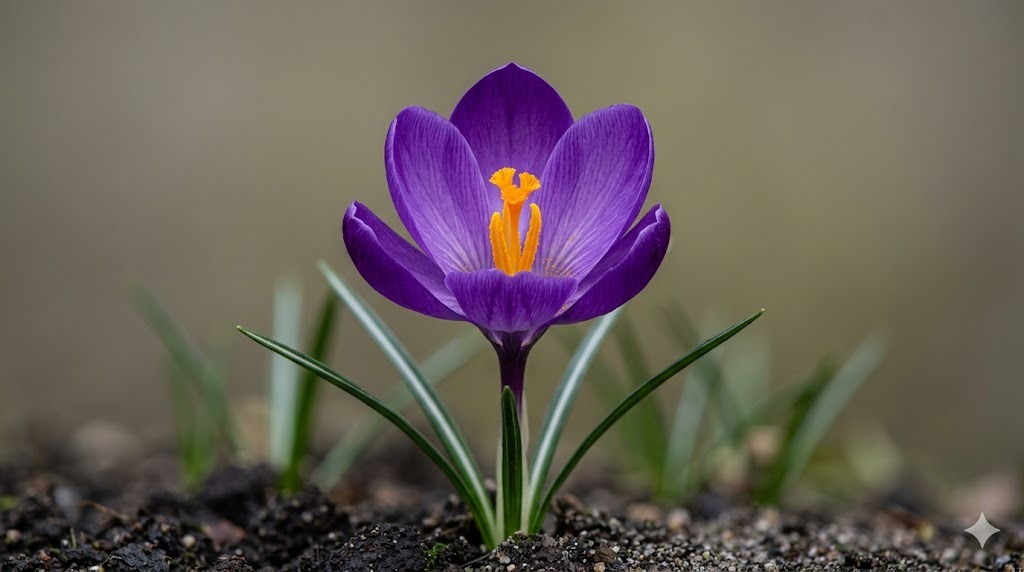
The crocus is the brave little flower that opens first - pushing up through cold, bare ground, sometimes through snow, to bring the very first jewel-bright color of the year. Its goblet-shaped flowers, in purple, gold, white, lilac, and striped forms, glow when the late-winter or early-spring sun reaches them, opening wide in the warmth and closing again at night. Crocuses are tiny, tough, cheap, hardy, and gloriously easy. They naturalize into spreading sheets of color over the years, and they provide one of the first crucial nectar sources for early bees emerging from winter.
Origin & Natural Habitat
Crocus is a genus of around 90 species native to a band stretching from southern Europe and North Africa through the Middle East to central Asia and western China. They grow wild in meadows, woodland, scrub, and rocky alpine slopes, in well-drained ground, experiencing cold winters and dry summers. This origin explains their hardiness, their need for sharp drainage and a dry summer dormancy, and their requirement for winter cold. (The autumn-flowering saffron crocus, Crocus sativus, source of the spice saffron, is a relative - and note that the unrelated "autumn crocus," Colchicum, is a different and highly poisonous plant.)
Appearance
Crocuses grow from a small corm. Each produces a few narrow, grass-like leaves - usually with a distinctive pale central stripe - and one or more short-stemmed, goblet- or chalice-shaped flowers, typically only 5-12 cm tall. The six "petals" (tepals) form a cup that opens flat in sun; inside are bright (often orange) stamens. Colors include purple, violet, gold, yellow, white, cream, lilac, and striped or feathered bicolors. The main spring garden groups are the large-flowered Dutch crocuses and the smaller, earlier, daintier species crocuses (such as Crocus tommasinianus and C. chrysanthus).
Why People Grow It - Qualities & Benefits
- The first color of the year: flowers in late winter and early spring, ahead of almost everything.
- Naturalizes superbly: spreads into ever-larger sheets in lawns, under trees, and on banks.
- Tiny, cheap, and easy: inexpensive corms, simple to plant, very low-maintenance.
- Hardy and tough: shrugs off cold and even snow.
- Vital early nectar: one of the first food sources for bees emerging from winter.
- Versatile: lawns, borders, rockeries, under shrubs, containers, and window boxes.
Care
Light & Position
Full sun to light shade. Crocuses flower best in good light, and the flowers only open fully in sunshine. Because they bloom so early, before deciduous trees leaf out, they naturalize beautifully under trees and shrubs.
Soil
Well-drained soil is important - crocus corms rot in heavy, wet ground. They tolerate poor and gritty soils well and prefer a dry rest in summer.
Planting Time & Depth
Plant corms in autumn, about 7-10 cm deep (roughly three times the corm's height), pointed end up. For naturalizing, scatter and plant them informally for a natural look.
Watering
Autumn and winter moisture is normally sufficient; crocuses rarely need watering and want a dry summer dormancy.
Feeding
Minimal - generally none needed. A light feed after flowering can help build corms in naturalized plantings.
After Flowering
Let the foliage die down naturally - do not cut the grass-like leaves while green, as they feed next year's corm. When naturalized in a lawn, delay mowing that area until the crocus leaves have yellowed and died back (typically about six weeks after flowering).
Hardiness & Winter Care
Crocuses are very hardy - most are reliable to around USDA zone 3-4 - and need no winter protection. They require winter cold to flower well and are unsuited to mild, frost-free climates.
Planting & Propagation
Plant corms in autumn. Crocuses multiply naturally by producing offset cormels and, in many species (notably Crocus tommasinianus), by self-seeding freely - both of which gradually build the spreading drifts they are loved for. Congested clumps can be lifted and divided after the foliage dies down.
Common Problems & Pests
- Corms or flowers dug up and eaten: squirrels, mice, voles, and birds are notorious for digging up and eating crocus corms and pecking the flowers - a frequent disappointment. Protect newly planted corms with netting or wire if this is a problem, or favor Crocus tommasinianus, which is somewhat less attractive to squirrels.
- Corm rot: caused by wet, heavy, poorly drained soil.
- Flowers not opening: normal - crocuses only open in sun and warmth, staying closed in cold or dull weather.
- Few flowers over time: overcrowded congested clumps, too much shade, or foliage cut down too early.
Toxicity & Safety
True spring crocuses (Crocus species) are generally regarded as low-toxicity - they may cause mild stomach upset (vomiting, drooling) if eaten in quantity by cats or dogs, but are not considered a serious poisoning hazard. However, an important warning applies: the unrelated autumn crocus (Colchicum autumnale), which looks superficially similar, is highly poisonous and potentially fatal to pets and people. It is essential not to confuse the two - true spring-flowering Crocus is the low-risk plant; Colchicum is dangerous. Buy from reputable sources and know which you are planting.
Pros & Cons
Pros
- The earliest color of the gardening year - even through snow.
- Naturalizes into spreading sheets; multiplies for free.
- Tiny, cheap, hardy, and extremely easy.
- Vital early nectar for emerging bees; very versatile.
Cons
- Squirrels, mice, and birds dig up corms and damage flowers.
- Flowers are small and only open in sunshine.
- Need winter cold; rot in wet soil.
- Easily confused with the dangerous (unrelated) autumn crocus.
Best Suited For
- Naturalizing in lawns, grass, banks, and under deciduous trees.
- Rockeries, borders, and the front of beds.
- Containers, window boxes, and pots for early color.
- Wildlife gardens - early nectar for bees.
Not ideal for mild frost-free climates, heavy waterlogged soil, or gardens overrun with squirrels (without protection).
FAQ
Why did my crocuses disappear or get dug up? Squirrels, mice, voles, and birds are the usual culprits - they dig up and eat crocus corms and peck at the flowers. Protect newly planted corms with netting or wire mesh, or plant Crocus tommasinianus, which squirrels find a little less tempting.
Why won't my crocus flowers open? That is normal behavior - crocuses open their flowers only in sunshine and warmth, and close them in cold, dull, or wet weather and at night. Wait for a sunny day and they will open wide.
Are crocuses poisonous? True spring crocuses (Crocus species) are low-toxicity - they may cause mild stomach upset if eaten in quantity but are not a serious hazard. The crucial warning: the unrelated autumn crocus (Colchicum) looks similar but is highly poisonous and potentially fatal. Do not confuse the two.
How do I naturalize crocuses in a lawn? Plant corms informally in drifts in autumn, then in spring do not mow that part of the lawn until the crocus foliage has died down - about six weeks after flowering. Over the years they multiply into spreading sheets of color.
Do crocuses come back every year? Yes - crocuses are hardy perennials that return each year and multiply, by offset corms and by self-seeding, into ever-larger drifts. Give them sun, sharp drainage, and let the foliage die down naturally.