Daffodil (Narcissus)
The daffodil is the most cheerful and dependable harbinger of spring there is - the bulb that, planted once and almost forgotten, returns faithfully year after year, multiplying into ever-larger drifts of gold.
🗓️ Last reviewed: June 2026
Overview
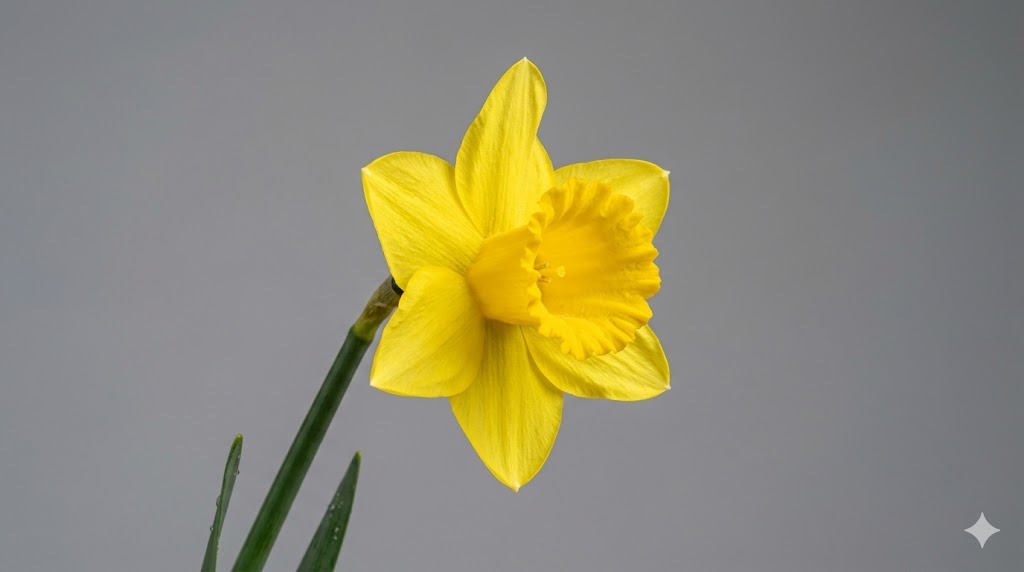
The daffodil is the most cheerful and dependable harbinger of spring there is - the bulb that, planted once and almost forgotten, returns faithfully year after year, multiplying into ever-larger drifts of gold. Where tulips dazzle and dwindle, daffodils simply keep coming. They open in late winter and spring with their unmistakable flowers - a ring of petals around a central trumpet or cup - in yellow, white, cream, orange, and bicolors. They are hardy, easy, rodent- and deer-resistant (because they are poisonous), and ideal for naturalizing in grass and under trees. For reliable spring color with the least possible effort, the daffodil is hard to beat.
Origin & Natural Habitat
Narcissus is native mainly to Europe and North Africa, with a great concentration of wild species around the Mediterranean and especially the Iberian Peninsula. Wild daffodils grow in meadows, woodland, rocky ground, and mountain pastures - places with moist springs and drier summers. This origin explains their toughness and their happy naturalizing habit: they are adapted to a moist growing season followed by a summer rest, and to cold winters.
Appearance
Daffodils grow from a bulb, producing strap-shaped green leaves and leafless flower stems. The flower has an outer ring of six petals (the "perianth") surrounding a central cup or tube (the "corona") - a long trumpet in the classic types, a short cup or flat ring in others. Heights range from 10 cm miniatures to 45 cm large trumpet types. The genus is vast and is divided into divisions including trumpet, large-cupped, small-cupped, double, jonquilla, tazetta, and species (botanical) daffodils - covering a long season from late winter to late spring, and including many fragrant kinds.
Why People Grow It - Qualities & Benefits
- Exceptional reliability: truly perennial - comes back and multiplies for decades.
- Cheerful early color: among the first big flowers of the year.
- Naturalizes beautifully: ideal for drifts in grass, under trees, and on banks.
- Pest-resistant: poisonous, so squirrels, mice, voles, and deer leave the bulbs and plants alone.
- Low-maintenance: plant once and essentially forget.
- Long season and variety: miniatures to trumpets, plus many fragrant types.
- Good cut flowers (with one caveat about mixing in vases).
Care
Light & Position
Full sun to part shade. Daffodils flower best in good light, but because they bloom early - before deciduous trees leaf out - they naturalize superbly under trees and shrubs, getting their sunlight before the canopy closes.
Soil
Moist but well-drained, reasonably fertile soil. Daffodils tolerate a wide range of soils and pH; they dislike only permanently waterlogged ground, which rots the bulbs.
Planting Time & Depth
Plant bulbs in early-to-mid autumn - earlier than tulips, so the roots establish before winter. Plant at roughly two to three times the bulb's height deep (about 10-15 cm), pointed end up.
Watering
Autumn and spring rainfall is usually enough. Water in dry spells during active growth; daffodils prefer a drier rest in summer dormancy.
Feeding
A balanced bulb fertilizer, or feeding after flowering, helps build strong bulbs for the following year - useful especially for naturalized plantings.
After Flowering - the golden rule
Deadhead the spent flowers (so energy is not spent on seed), but leave the foliage completely alone until it has died down and yellowed naturally - typically about six weeks after flowering. Do not cut, fold, or tie the green leaves: they are recharging the bulb for next year. Cutting foliage early is the single most common reason daffodils stop flowering well.
Naturalizing & Lifting
Daffodils are perfect for naturalizing - scatter and plant bulbs informally in grass, and simply do not mow that area until the foliage has died down. Clumps that become congested and flower less can be lifted and divided once the leaves have died back.
Hardiness & Winter Care
Daffodils are very hardy - most are reliable to around USDA zone 3-4 - and need no winter protection. They require winter cold and perform poorly in mild, frost-free climates (though some tazetta types tolerate warmer regions).
Planting & Propagation
Plant bulbs in autumn. Daffodils propagate themselves readily by producing offset bulbs, steadily forming larger clumps and drifts; lift and divide congested clumps after the foliage dies down to spread them around. Species types may also self-seed.
Common Problems & Pests
- "Blindness" - leaves but no flowers: the most common complaint. Causes: foliage cut down too early in previous years, an overcrowded congested clump (divide it), too much shade, too-shallow planting, or drought during growth.
- Narcissus bulb fly: the larvae tunnel into and destroy bulbs - a common cause of bulbs failing to reappear.
- Basal rot and other bulb rots: caused by wet soil or warm storage.
- Narcissus eelworm: causes distorted growth - destroy affected bulbs.
- Daffodils in mixed vases: the cut stems exude a sap that shortens the life of other cut flowers - condition daffodils separately first.
Toxicity & Safety
Daffodils are toxic - all parts contain alkaloids (notably lycorine) and irritant crystals, with the bulb the most poisonous part. Ingestion can cause vomiting, drooling, diarrhea, and abdominal pain in cats, dogs, horses, and humans, with larger amounts more serious. Bulbs have been mistaken for onions, causing human poisoning. The sap can also irritate skin ("daffodil itch"). Keep bulbs away from pets and children, store them securely, and wear gloves if handling many. (This same toxicity is what makes daffodils pleasingly resistant to squirrels, deer, and rodents.)
Pros & Cons
Pros
- Genuinely perennial - reliable for decades, multiplying into drifts.
- Cheerful, early spring color with very little effort.
- Pest-resistant - rodents and deer avoid the bulbs and plants.
- Superb for naturalizing; huge variety; many fragrant types.
Cons
- Toxic, especially the bulbs - a caution with pets and children.
- Foliage must be left to die down - looks untidy for weeks after flowering.
- Cutting leaves early causes "blindness" (no flowers).
- Bulb fly and rots can reduce displays; need winter cold.
Best Suited For
- Naturalizing in lawns, grass, banks, and under deciduous trees.
- Borders, beds, and containers for early spring color.
- Low-maintenance and wildlife-aware gardens.
- Almost any garden wanting reliable, return-year-after-year bulbs.
Not ideal for mild frost-free climates (most types), permanently waterlogged soil, or gardeners who cannot tolerate weeks of dying-down foliage.
FAQ
Why do my daffodils produce leaves but no flowers? This is "blindness," and the most common cause is cutting or tying the foliage too early in previous years, which starves the bulb. Other causes: an overcrowded congested clump (lift and divide it), too much shade, too-shallow planting, or drought while in growth.
Can I cut down daffodil leaves after flowering? Not while they are green. Deadhead the spent flowers, but leave the leaves to die down and turn yellow naturally - usually about six weeks. The foliage is feeding next year's bulb; cutting it early is the top reason daffodils stop flowering.
Are daffodils poisonous? Yes - all parts are toxic, especially the bulb, which has been mistaken for an onion. Eating them causes vomiting and stomach upset in people and pets, and the sap can irritate skin. Keep bulbs away from children and pets. This toxicity is also why rodents and deer leave daffodils alone.
How do I naturalize daffodils in a lawn? Plant bulbs informally in drifts in autumn, then do not mow that area in spring until the daffodil foliage has fully died down - about six weeks after flowering. Over the years the bulbs multiply into ever-larger sweeps.
Can I put daffodils in a vase with other flowers? Not straight away - cut daffodil stems release a sap that shortens the life of other flowers. Condition the daffodils on their own in water first, then arrange them with others.