Daylily (Hemerocallis)
The daylily is the workhorse of the summer border - a perennial so tough, so adaptable, and so generous that it is often called the "perfect perennial." Each individual flower lasts just a single day (hence the name), but a healthy clump produces a long, unbroken succession of them over many weeks, in a glorious range of colors: yellow, orange, red, pink, purple, cream, and endless bicolors.
🗓️ Last reviewed: June 2026
Overview
The daylily is the workhorse of the summer border - a perennial so tough, so adaptable, and so generous that it is often called the "perfect perennial." Each individual flower lasts just a single day (hence the name), but a healthy clump produces a long, unbroken succession of them over many weeks, in a glorious range of colors: yellow, orange, red, pink, purple, cream, and endless bicolors. Daylilies thrive almost anywhere, shrug off drought, heat, poor soil, and neglect, suffer few pests, and multiply happily. For a beginner who wants reliable, long-lasting color with minimal effort, few plants come close.
Origin & Natural Habitat
Daylilies (Hemerocallis) are native to East Asia - China, Korea, and Japan. In the wild they grow in meadows, woodland edges, and along streams and roadsides, in a wide range of conditions. This adaptable, almost weedy toughness in the wild is exactly what makes garden daylilies so forgiving. Note: despite the name and lily-like flowers, daylilies are not true lilies - a distinction that matters greatly for pet safety.
Appearance
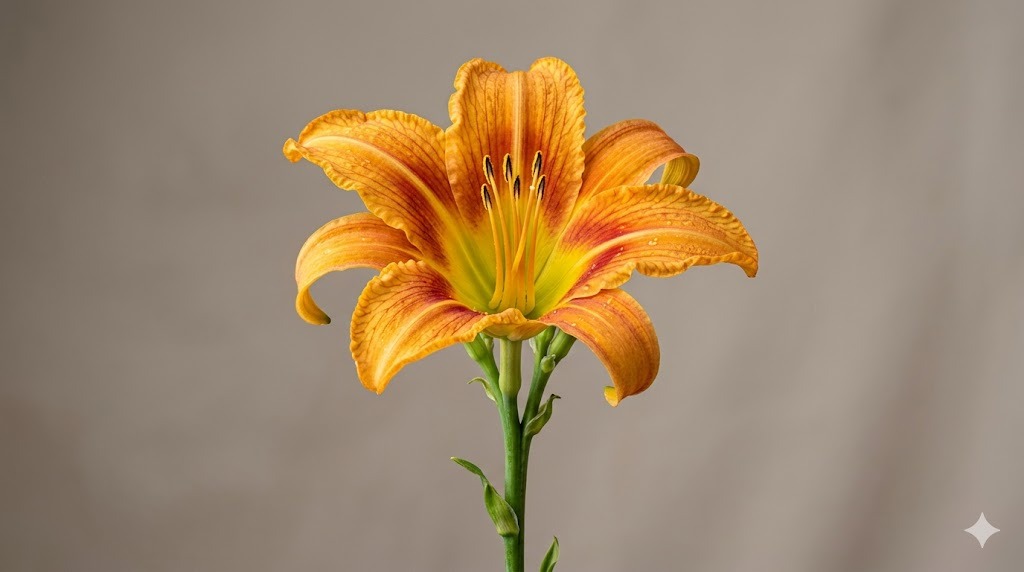
Daylilies are clump-forming herbaceous perennials with arching, strap-shaped leaves forming a fountain of foliage 30-90 cm tall. From the clump rise leafless flower stems ("scapes") carrying multiple buds; each opens into a large trumpet- or star-shaped flower, typically 8-15 cm across. Modern breeding has produced thousands of cultivars in almost every color but pure blue and white, including ruffled, spider-form, double, and "reblooming" types that flower in more than one flush. Most are deciduous; some are evergreen or semi-evergreen.
Why People Grow It - Qualities & Benefits
- Extremely easy and tough: drought-, heat-, and neglect-tolerant; the classic low-effort perennial.
- Long bloom: weeks of continuous flower from a steady succession of buds.
- Huge color range: thousands of varieties; reblooming types extend the season.
- Adaptable: grows in a wide range of soils, light levels, and climates.
- Pest- and disease-resistant: very few serious problems.
- Multiplies readily: clumps bulk up fast and divide easily for free plants.
- Edible flowers: the blooms of Hemerocallis are edible and used in some Asian cuisines.
Care
Light & Position
Full sun is best - at least six hours - for the most flowers. Daylilies tolerate part-shade and still bloom reasonably, though less profusely. Dark-colored varieties sometimes hold their color better with a little afternoon shade.
Soil
Almost any soil - daylilies are famously unfussy. They do best in fertile, moist but well-drained ground, but tolerate poor, dry, heavy, or sandy soils and a wide pH range.
Watering
Water while establishing and during dry spells, especially around flowering, for the best display. Established daylilies are notably drought-tolerant and survive considerable dry weather.
Feeding
Modest needs. A spring feed with a balanced fertilizer, or a compost mulch, keeps clumps vigorous and free-flowering. Avoid high-nitrogen feeds, which favor leaves over flowers.
Seasonal Care & Deadheading
Deadhead spent flowers and remove finished scapes for tidiness (deadheading is cosmetic - it does not greatly affect bloom). Tidy away dead foliage in late autumn or early spring.
Hardiness & Winter Care
Daylilies are very hardy - most are reliable to around USDA zone 3 - and need no winter protection. Deciduous types die back fully and reappear in spring; evergreen types may look tatty in cold winters but generally recover.
Planting & Propagation
Plant in spring or autumn. Daylilies establish quickly and tolerate even summer planting if kept watered. Propagate by division - lift an established clump every few years and split it into fans, each with leaves and roots. Division rejuvenates tired clumps and is the easy route to more plants.
Common Problems & Pests
- Few flowers: usually too much shade, or an overcrowded clump that needs dividing.
- Daylily rust: a fungal disease causing orange pustules on the leaves - more of a problem in warm climates; remove affected foliage.
- Daylily gall midge: a pest that distorts and aborts buds, mainly in some regions - remove and destroy affected buds.
- Slugs/snails and aphids: can damage emerging spring growth and buds but rarely cause lasting harm.
- Overcrowding: clumps that are not divided eventually flower less - divide every 3-5 years.
Toxicity & Safety
For people and dogs, daylilies are considered low-toxicity / generally safe - the flowers are even edible for humans. However, daylilies are seriously toxic to cats. Although they are not true lilies, Hemerocallis causes the same dangerous effect: ingestion of any part can cause acute, potentially fatal kidney failure in cats. In any garden or home with cats, this is an important warning - keep cats away from daylilies, and seek immediate veterinary help if a cat eats any part of one.
Pros & Cons
Pros
- One of the toughest, easiest perennials - ideal for beginners.
- Long succession of bloom over many weeks.
- Thousands of colors; reblooming types extend the season.
- Drought-tolerant, adaptable, and multiplies readily.
Cons
- Each flower lasts only a single day.
- Highly toxic to cats - a serious risk in cat households.
- Clumps need dividing every few years to keep flowering well.
- Rust and gall midge can be a nuisance in some regions.
Best Suited For
- Beginner gardeners and low-maintenance gardens.
- Sunny borders, mass plantings, banks, and difficult dry spots.
- Mixed and cottage-style borders wanting long, reliable color.
- Gardens without cats.
Not ideal for homes and gardens with cats (serious toxicity), deep shade, or anyone wanting individually long-lasting flowers.
FAQ
Are daylilies poisonous to cats? Yes - very. Although daylilies are not true lilies, Hemerocallis is highly toxic to cats: eating any part can cause acute, potentially fatal kidney failure. Keep cats away from daylilies, and get immediate veterinary care if a cat ingests any part. For dogs and people they are considered low-risk (the flowers are even edible for humans).
Why does each daylily flower only last one day? That is simply the plant's nature - and the source of its name. But each flower stem carries many buds, and a clump produces a long succession, so the display lasts for weeks even though individual flowers do not.
Why isn't my daylily flowering well? Usually too much shade, or an overcrowded clump. Give it full sun, and divide congested clumps every three to five years to restore strong flowering.
Do I need to deadhead daylilies? Only for tidiness - removing spent flowers and finished stems keeps the plant looking neat, but it does not significantly change how much it blooms.
How do I get more daylilies? By division - lift an established clump and split it into fans, each with leaves and roots. It is easy, reliable, and rejuvenates older clumps at the same time.