Forsythia
Forsythia is the shrub that sets the early spring garden alight.
🗓️ Last reviewed: June 2026
Overview
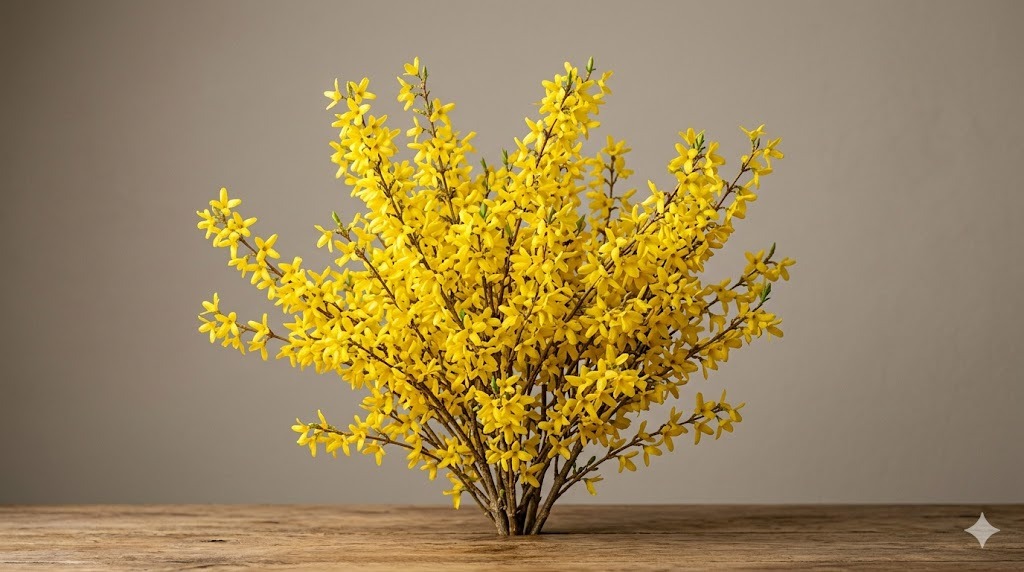
Forsythia is the shrub that sets the early spring garden alight. Before its leaves appear - often while the weather is still raw - its bare arching branches erupt into a blaze of bright golden-yellow flowers, one of the first big splashes of color of the year. It is tough, hardy, fast-growing, cheap, and almost foolproof. Its honest limitations are equally clear: the spectacular flowering lasts only a couple of weeks, and for the rest of the year forsythia is a plain green shrub with no autumn color or scent. Used well - and pruned at the right time - it is a cheerful, reliable harbinger of spring.
Origin & Natural Habitat
Most garden forsythias derive from species native to East Asia - especially China and Korea - with one species from southeastern Europe. In the wild they grow on scrubby hillsides, woodland edges, and thickets in well-drained ground. They are plants of cold-winter, continental climates, fully hardy and undemanding, which is why forsythia thrives almost anywhere with a proper winter.
Appearance
Forsythia is a deciduous shrub, typically 1.5-3 m tall and wide, with an upright base and long, arching outer branches. In early spring the bare stems are smothered along their entire length with four-petalled, star-shaped, bright yellow flowers. The leaves emerge after the flowers - simple, green, and unremarkable, with no notable autumn color. Weeping and dwarf forms exist; the overall habit is informal and somewhat unruly if left unpruned.
Why People Grow It - Qualities & Benefits
- Early spring color: among the first shrubs to flower, a vivid burst of gold.
- Toughness: extremely hardy, undemanding, and reliable.
- Fast growth: quickly fills space; good for new gardens.
- Cheap and easy: inexpensive and very simple to propagate.
- Versatile: works as a specimen, informal hedge, or screen.
- Forced flowers: cut stems in late winter and bring them indoors to bloom early.
Care
Light & Position
Full sun for the best flowering; it tolerates light shade but flowers less generously there. An open position suits its arching, informal habit.
Soil
Undemanding - any reasonably fertile, well-drained soil is fine. Forsythia tolerates a wide range of conditions and pH; it dislikes only permanently waterlogged ground.
Watering
Water while establishing and in dry spells in the first year or two. Established plants are drought-tolerant and rarely need watering.
Feeding
Minimal needs. A spring mulch or a light feed is plenty; over-feeding just produces leafy growth.
Pruning - the timing that matters
Forsythia flowers on old wood - the previous year's stems. Prune immediately after flowering, in spring, so the plant has the whole season to grow new stems that will carry next year's flowers. After bloom, cut back the stems that have just flowered, and every few years remove a few of the oldest stems right at the base to keep the shrub young and well-flowered. Pruning later - in summer, autumn, or winter - removes the flower buds and is the main reason a forsythia "won't bloom."
Hardiness & Winter Care
Forsythia is very hardy - commonly USDA zone 4-5 - and needs no winter protection. In very cold areas an exceptionally hard winter can occasionally damage exposed flower buds, but the plant itself is exceptionally tough.
Planting & Propagation
Plant in autumn or spring in sun and well-drained soil. Propagation is very easy: hardwood cuttings in autumn/winter root readily, as do softwood cuttings; low branches touching the ground often self-layer. It is one of the simplest shrubs to multiply.
Common Problems & Pests
- No flowers / few flowers: the classic problem - almost always pruning at the wrong time of year (removing the old wood that carries the buds). Prune only just after flowering. Too much shade is the other cause.
- Untidy, overgrown, tangled shrub: caused by never pruning; cured by annual post-flowering pruning and occasional removal of old stems.
- Pests/disease: generally very trouble-free; occasional die-back or galls, rarely serious.
Toxicity & Safety
Forsythia is generally regarded as non-toxic / low-toxicity to cats, dogs, horses, and humans, and is considered a pet-safe garden shrub. (The fruit of Forsythia suspensa is used in traditional herbal medicine, but the ornamental shrub poses no significant poisoning risk in the garden.)
Pros & Cons
Pros
- One of the earliest and brightest spring flowering shrubs.
- Extremely hardy, tough, and reliable.
- Fast-growing, cheap, and very easy to propagate.
- Pet-friendly and trouble-free.
Cons
- Flowering season is short - only a couple of weeks.
- Plain and unremarkable the rest of the year - no scent, no autumn color.
- Becomes untidy and tangled without regular pruning.
- Pruning at the wrong time easily ruins the next year's flowers.
Best Suited For
- Cold-winter gardens wanting early, bold spring color.
- Informal hedges, screens, and mixed shrub borders.
- New gardens needing fast, reliable filler.
- Gardeners who want an easy, foolproof shrub - and don't mind a plain plant after bloom.
Not ideal for small gardens wanting year-round interest, formal designs, deep shade, or anyone seeking fragrance or autumn color.
FAQ
Why won't my forsythia flower? The most common reason is pruning at the wrong time. Forsythia flowers on old wood, so pruning in summer, autumn, or winter cuts off the flower buds. Prune only just after flowering. Too much shade can also reduce blooming.
When should I prune forsythia? Immediately after it finishes flowering in spring. This gives the shrub the rest of the season to grow new stems that will carry the next year's flowers.
Is forsythia safe for pets? Yes - forsythia is generally considered non-toxic to cats, dogs, and horses.
My forsythia is an overgrown tangle - what do I do? Renovate it by pruning after flowering: cut back flowered stems and remove a few of the oldest, thickest stems right at the base. Repeating this over a couple of years restores a tidy, well-flowering shrub.
Can I bring forsythia flowers indoors early? Yes - cut budded stems in late winter, bring them inside, and stand them in water. The warmth "forces" them into early bloom, giving you golden flowers weeks ahead of the garden.