Foxglove (Digitalis)
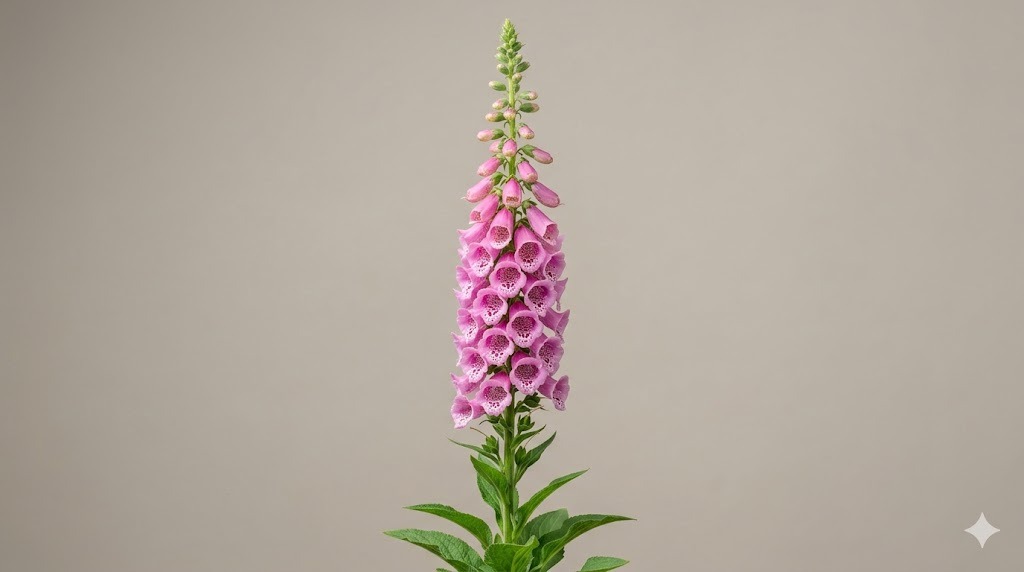
The foxglove is the elegant spire of the woodland-edge garden - tall, graceful stems hung with rows of speckled, tubular bells in pink, purple, white, cream, and apricot, glowing in the soft light of part shade where so few statuesque flowers will grow.
🗓️ Last reviewed: June 2026
Overview
The foxglove is the elegant spire of the woodland-edge garden - tall, graceful stems hung with rows of speckled, tubular bells in pink, purple, white, cream, and apricot, glowing in the soft light of part shade where so few statuesque flowers will grow. It is a cottage-garden classic, a magnet for bumblebees, and one of the easiest plants to establish, because most foxgloves are biennials that sow themselves around and keep the garden stocked for free. The foxglove is also famously poisonous - the source of the heart drug digitalis - and that dual nature, beautiful and dangerous, is central to growing it wisely.
Origin & Natural Habitat
Digitalis is native to Europe, northwest Africa, and parts of Asia. The common foxglove, Digitalis purpurea, grows wild on woodland edges and clearings, hedgerows, heaths, and disturbed or recently cleared ground - often appearing in profusion after woodland is felled. This is a plant of dappled light, cool moist humus-rich soil, and shelter. Its habit of colonizing disturbed ground from its huge seed output is exactly what makes garden foxgloves self-perpetuating.
Appearance
Most garden foxgloves are biennials: in the first year they form a low rosette of large, soft, veined green leaves; in the second year they send up the dramatic flower spike - typically 1-2 m tall - before setting seed and dying. The spike carries many pendent, tubular bell-flowers, usually on one side, their throats spotted and freckled inside (a landing guide for bees). Colors range through pink, purple, magenta, white, cream, and soft apricot. Some species and modern strains are short-lived perennials, and a few perennial Digitalis (like the rusty D. ferruginea) behave more reliably as perennials.
Why People Grow It - Qualities & Benefits
- Elegant vertical structure for part shade - a rare quality there.
- Cottage-garden charm: a romantic, traditional, much-loved flower.
- Bumblebee magnet: the tubular flowers are a favorite of long-tongued bees.
- Self-seeding: biennial types perpetuate themselves, giving free plants for years.
- Thrives in shade: flowers generously where many tall plants will not.
- Good cut flower and a fine partner for roses, ferns, and woodland planting.
Care
Light & Position
Part shade or dappled light is ideal - the classic woodland-edge condition. Foxgloves tolerate full sun in cooler climates if the soil stays moist, and tolerate fairly deep shade, flowering a little less. Some shelter from strong wind helps protect the tall spikes.
Soil
Cool, moist, fertile, humus-rich soil that does not dry out, ideally slightly acidic. Improve with compost or leaf mould. Foxgloves dislike both drought and waterlogging.
Watering
Keep the soil moist, especially in dry spells - drought-stressed foxgloves produce shorter, poorer spikes. Mulch to retain moisture.
Feeding
Modest needs - humus-rich soil and a compost mulch are usually enough.
Self-Seeding & Maintaining the Display
Because most foxgloves are biennial, the key to a continuous display is letting them self-seed. Allow at least some spikes to set and shed seed each year, so there is always a new generation of rosettes coming on for next year. If you deadhead every spike to keep things tidy, you will get no plants the following year. To get a second flush in the same season, you can cut the main spike after it finishes - side shoots often produce smaller later spikes - but always leave some seed to fall.
Hardiness & Winter Care
Foxgloves are hardy, commonly to around USDA zone 4. The first-year rosette overwinters as a low evergreen-ish clump and needs no protection.
Planting & Propagation
Sow seed in early-to-mid summer for plants that flower the following year, or buy and plant out young rosettes. Foxgloves are most often simply allowed to self-seed - the easiest method by far. The tiny seed needs light to germinate, so scatter it on the surface and do not bury it. Transplant self-sown rosettes while small if you want to position them.
Common Problems & Pests
- "It flowered once and died": not a failure - biennial foxgloves naturally die after flowering in their second year. Let them seed so the next generation replaces them.
- No flowers the next year: caused by deadheading every spike and preventing any seed from setting; always leave some to self-sow.
- Powdery mildew & leaf spot: can affect the foliage, especially in dry or crowded conditions.
- Aphids: may cluster on the spikes.
- Slugs/snails: can damage the young rosettes.
Toxicity & Safety
Foxglove is highly toxic - this is one of the most important safety points for any garden plant. All parts - leaves, flowers, seeds, roots - contain cardiac glycosides (the basis of the heart drug digitalis). Ingestion by humans, cats, dogs, horses, or livestock can cause vomiting, an irregular or slowed heartbeat, and is potentially fatal; even water from a vase of cut foxgloves can be dangerous. The plant should never be eaten, and there is a real risk of the first-year leaf rosette being mistaken for an edible leafy plant (such as comfrey or borage). Wear gloves when handling, keep it away from children, pets, and grazing animals, and never plant it where the leaves could be confused with edible greens.
Pros & Cons
Pros
- Elegant vertical structure for part shade - rare and valuable.
- Cottage-garden beauty; a bumblebee magnet.
- Self-seeding biennials give free plants year after year.
- Hardy, easy, and thrives where many tall plants fail.
Cons
- Highly toxic - potentially fatal if eaten; a serious caution.
- Most are biennial - each plant flowers once, then dies.
- Needs self-seeding managed, or the display lapses.
- Tall spikes can need shelter; foliage prone to mildew.
Best Suited For
- Woodland gardens, shady and part-shaded borders.
- Cottage-garden and naturalistic plantings; among roses, ferns, and shrubs.
- Wildlife and pollinator gardens (bumblebees).
- Gardeners who want easy, self-renewing vertical color in shade.
Not ideal for households with young children, grazing pets, or livestock that might eat it; hot dry gardens; or gardeners wanting a tidy, permanent, non-seeding plant.
FAQ
Why did my foxglove die after flowering? That is normal - most foxgloves are biennials. They grow a leaf rosette in year one, flower in year two, set seed, and then die. The way to keep foxgloves in the garden is to let them self-seed so a new generation always replaces the old.
How do I keep foxgloves coming back every year? Let them self-seed. Allow at least some flower spikes to set and shed seed each season, so there are always young rosettes coming on. If you deadhead every spike, you will have no foxgloves the following year.
Are foxgloves poisonous? Yes - highly, and potentially fatally. Every part contains cardiac glycosides and is toxic to people, cats, dogs, horses, and livestock; even the vase water is dangerous. Never eat it, wear gloves to handle it, keep it from children and pets, and never plant it where the leaves could be mistaken for edible greens.
Can foxgloves grow in shade? Yes - part shade and dappled woodland light suit them best, and they are one of the few tall, elegant flowering plants that perform well there. They will also take full sun in cooler climates if the soil stays moist.
Are any foxgloves perennial? Some species and modern strains are short-lived perennials, and a few - such as the rusty foxglove, Digitalis ferruginea - behave more reliably as perennials. But the familiar common foxglove is a biennial.