Fruit Trees - Apple, Cherry & Plum (Home Orchard Intro)
A fruit tree is one of the most generous, long-lasting things a gardener can plant - a single tree can give blossom in spring, shade and structure in summer, and armfuls of fresh fruit in autumn, year after year, for decades.
🗓️ Last reviewed: June 2026
Overview
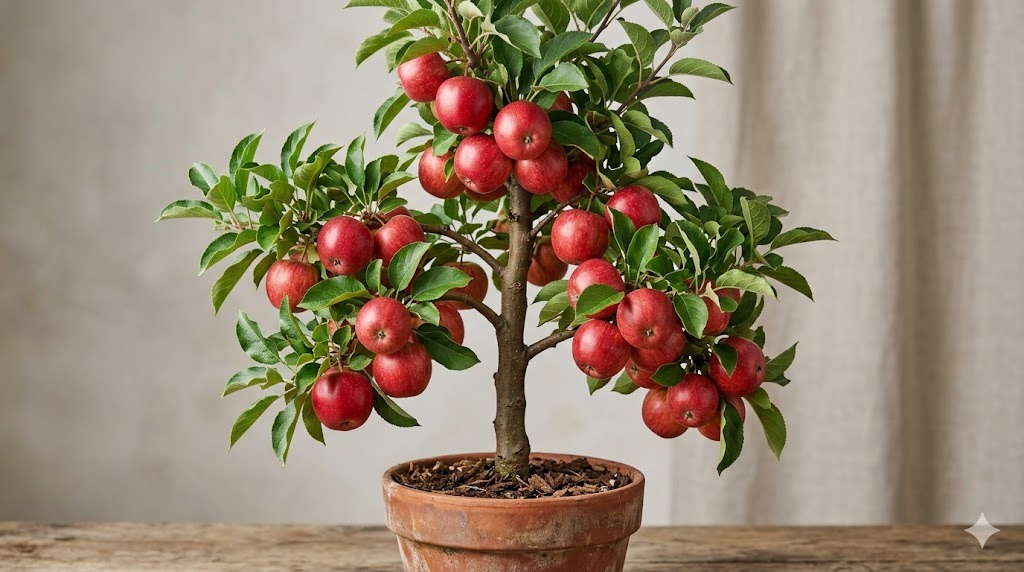
A fruit tree is one of the most generous, long-lasting things a gardener can plant - a single tree can give blossom in spring, shade and structure in summer, and armfuls of fresh fruit in autumn, year after year, for decades. The classic trio for a home orchard is the apple, the cherry, and the plum - all hardy, all rewarding, and all far more achievable than many people think, because modern trees grafted onto dwarfing rootstocks can be kept small enough for an average garden, even a large pot. This guide is an introduction to growing these tree fruits: the few key concepts - rootstocks, pollination, and pruning - that turn a planted tree into a productive one.
Origin & Natural Habitat
The domesticated apple (Malus domestica) traces back to wild apple species of Central Asia; cherries (Prunus avium and P. cerasus) and plums (Prunus domestica and relatives) derive from wild species across Europe and western Asia. All are temperate-climate trees from regions with cold winters and distinct seasons - and, importantly, they require a period of winter cold ("winter chill") to break dormancy and flower and fruit properly. This is why these classic orchard fruits thrive in temperate gardens and perform poorly in mild, frost-free climates.
Appearance
Apples, cherries, and plums are deciduous trees with a broadly similar life cycle: bare in winter, a spectacular flush of blossom in spring (white to pink), a leafy canopy in summer, and ripening fruit in late summer to autumn. The eventual size depends overwhelmingly on the rootstock onto which the named variety is grafted - the same apple variety might make a 2 m container tree on a very dwarfing rootstock or a large traditional orchard tree on a vigorous one. Trees may be grown as free-standing bushes or trained as space-saving forms - cordons, espaliers, fans - against walls and fences.
Why People Grow It - Qualities & Benefits
- Fresh home-grown fruit - flavour and varieties unavailable in shops.
- Decades of harvest: a fruit tree is a long-term, productive investment.
- Spring blossom: one of the most beautiful sights of the gardening year.
- Achievable in small gardens: dwarfing rootstocks and trained forms suit modest spaces and pots.
- Wildlife value: blossom feeds pollinators; fruit feeds birds and mammals.
- Structure and shade: a tree gives the garden height, framework, and a focal point.
- Heritage and variety: access to hundreds of old and unusual varieties.
Care - the Key Concepts
Rootstock - choosing the size of your tree
The single most important concept for a small garden. A fruit tree is two plants in one: a named variety (the top, which determines the fruit) grafted onto a rootstock (the roots, which largely determine the tree's eventual size and vigour). Choosing the right rootstock means you can have a productive apple tree that stays small enough for a tiny garden or a large pot, or a bigger tree for an orchard - your choice. Always check the rootstock when buying, not just the fruit variety.
Pollination - many fruit trees need a partner
Many fruit trees cannot fruit alone. A large number of apples, most sweet cherries, and many plums are not self-fertile - they need pollen from a different, compatible variety, flowering at the same time, nearby, to set fruit. Before buying, check whether a tree is self-fertile or needs a pollination partner; if it needs one, you must either grow a suitable second tree, have one in a neighbouring garden, or choose a self-fertile variety. (Some apples, cherries, and plums are self-fertile - a good choice where there is only room for one tree.) "Family trees," with several varieties grafted onto one tree, are another solution for small spaces.
Light, Soil & Position
Full sun is best for ripening good fruit, in a position sheltered from strong wind and ideally not a frost pocket - late frosts can destroy the blossom and the crop. Fertile, well-drained soil enriched with compost; fruit trees dislike waterlogged ground.
Planting
Plant bare-root trees in the dormant season (autumn to early spring) or container trees year-round. Plant at the correct depth - keep the graft union above soil level - stake the young tree, and water it well to establish.
Watering & Feeding
Water young trees regularly through their first few years and in dry spells, especially trees in pots and trained forms. Feed in spring and mulch; avoid heavy nitrogen, which encourages leafy growth over fruit.
Pruning
Pruning shapes the tree, lets in light and air, and is essential for good cropping - but the timing differs by fruit:
- Apples (and pears) are generally pruned in winter, while dormant.
- Cherries and plums (the Prunus stone fruits) should be pruned in summer, not winter - pruning them in the dormant season exposes them to silver leaf and bacterial canker, serious diseases that enter through wounds. Prune stone fruit when the tree is in active growth and wounds heal fast.
This difference - apples in winter, plums and cherries in summer - is one of the most important things a new orchardist must learn.
Thinning & Protecting the Crop
In heavy-cropping years, thinning the young fruitlets (removing some so the rest grow larger and the branches are not overloaded) improves quality. Netting may be needed to protect cherries especially from birds.
Hardiness & Winter Care
Apples, cherries, and plums are hardy and need winter cold to crop; they are unsuited to frost-free climates. The trees themselves are tough, but the spring blossom is frost-tender - a late frost on the open flowers can wipe out that year's crop, so avoid frost pockets and shelter early-blossoming trees.
Planting & Propagation
Buy trees as grafted plants, choosing the variety, the rootstock (for size), and a pollination arrangement that suits your garden. Plant in the dormant season for bare-root trees. Fruit trees are propagated commercially by grafting the chosen variety onto a selected rootstock - this is a skilled task, and is also why home-saved seed does not reproduce the parent variety.
Common Problems & Pests
- No fruit despite flowering: very often a pollination problem - the tree needs a compatible partner variety it does not have; also late-frost damage to the blossom, or a young tree not yet mature.
- Tree too big for the garden: the wrong (too-vigorous) rootstock was chosen - select a dwarfing rootstock for small spaces.
- Silver leaf and bacterial canker: serious diseases of plums and cherries, entering through pruning wounds - which is exactly why stone fruit is pruned in summer, not winter.
- Apple scab, apple/plum sawfly, codling moth, aphids, brown rot, birds: various pests and diseases affect tree fruit - good hygiene, resistant varieties, and routine care manage most.
- Biennial bearing: some apples crop heavily one year and barely the next - thinning in the heavy year helps even it out.
Toxicity & Safety
The fruit of apples, cherries, and plums is, of course, safe and delicious for people. However, an important caution applies to the rest of these plants: the leaves, bark, and especially the seeds/pips and stone kernels of apple, cherry, and plum contain compounds that release cyanide and are toxic. Apple pips and the kernels inside cherry and plum stones should not be eaten in quantity by people, and the foliage - particularly wilted Prunus (cherry/plum) leaves - is dangerous to horses and livestock, and the plants are also considered toxic to cats and dogs. Enjoy the fruit freely (discarding cores and stones), but keep pets and grazing animals away from the foliage, prunings, and seeds. Never let wilted cherry or plum prunings reach livestock.
Pros & Cons
Pros
- Decades of fresh, home-grown fruit from a single planting.
- Beautiful spring blossom; structure, shade, and wildlife value.
- Achievable in small gardens and pots via dwarfing rootstocks and trained forms.
- Access to hundreds of varieties unavailable in shops.
Cons
- Many varieties need a pollination partner - must be planned.
- Rootstock choice is essential and easily overlooked.
- Stone fruit must be pruned in summer to avoid silver leaf/canker.
- Spring blossom is frost-vulnerable; foliage and seeds are toxic to pets and livestock.
Best Suited For
- Temperate gardens with proper winter cold.
- Long-term gardeners and anyone wanting a productive, heirloom planting.
- Small gardens and patios (dwarfing rootstocks, trained forms, pots) as well as orchards.
- Sunny, sheltered positions away from frost pockets.
Not ideal for mild, frost-free climates, deep shade, frost-pocket sites, waterlogged soil, or gardeners unwilling to plan for pollination and rootstock.
FAQ
Why does my fruit tree blossom but produce no fruit? The most common reason is pollination - many apples, most sweet cherries, and many plums are not self-fertile and need pollen from a different, compatible variety flowering nearby. Without a suitable partner, the tree blooms but sets little or no fruit. Late frost destroying the blossom, or a tree still too young, are the other usual causes.
How do I keep a fruit tree small enough for my garden? By choosing the right rootstock. A fruit tree is a chosen variety grafted onto a rootstock, and the rootstock largely determines the tree's eventual size. Dwarfing rootstocks keep apples and other fruit trees small enough for tiny gardens or even large pots. Always check the rootstock when buying - not just the fruit variety.
When should I prune my fruit trees? It depends on the fruit. Apples (and pears) are pruned in winter, while dormant. Cherries and plums - the stone fruits - must be pruned in summer, while in active growth, NOT in winter. Winter pruning of stone fruit exposes it to silver leaf and bacterial canker, serious diseases that enter through wounds.
Do I need more than one fruit tree? Often, yes - many fruit trees are not self-fertile and need a compatible pollination partner to crop. If you only have room for one tree, choose a self-fertile variety, or a "family tree" with several varieties grafted on, or rely on a compatible tree in a neighbouring garden.
Are fruit trees toxic to pets? The fruit is safe and delicious, but the leaves, bark, and the seeds/pips and stone kernels of apple, cherry, and plum contain cyanide-releasing compounds and are toxic. Wilted cherry and plum (Prunus) leaves are especially dangerous to horses and livestock, and the plants are also toxic to cats and dogs. Enjoy the fruit, but keep pets and grazing animals away from the foliage, prunings, and seeds.