Gladiolus
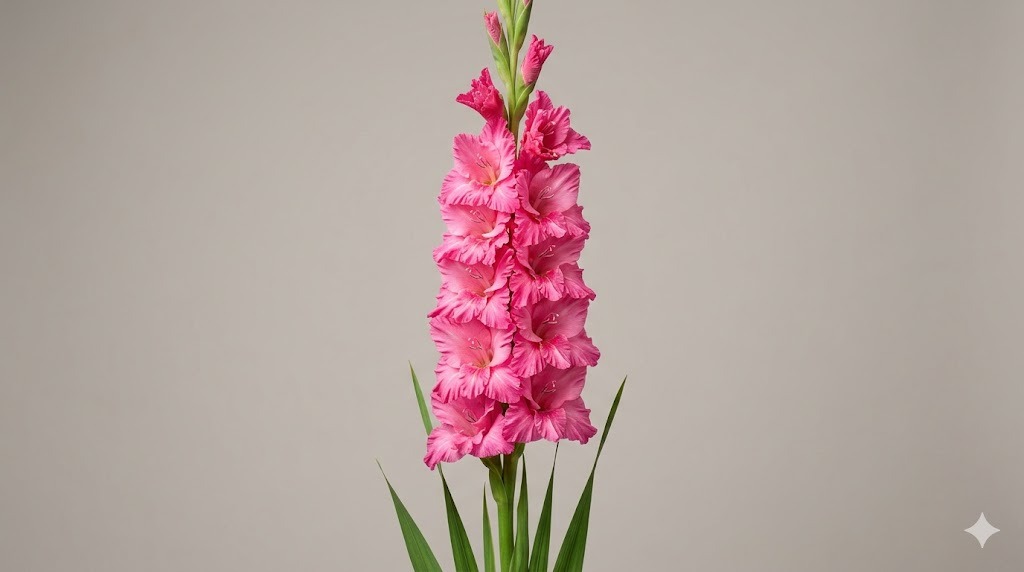
The gladiolus is the great vertical flourish of the summer garden - tall, dramatic spires densely packed with large, funnel-shaped flowers that open in sequence from the bottom up, in almost every color imaginable.
🗓️ Last reviewed: June 2026
Overview
The gladiolus is the great vertical flourish of the summer garden - tall, dramatic spires densely packed with large, funnel-shaped flowers that open in sequence from the bottom up, in almost every color imaginable. Its name comes from the Latin for "little sword," for the blade-shaped leaves, and "glads" have been a cut-flower and exhibition favorite for generations. They are easy and inexpensive to grow, flowering the same summer they are planted. The honest catches are two: in cold climates the corms are frost-tender and usually lifted or replaced each year, and those tall flower spikes almost always need staking.
Origin & Natural Habitat
The genus Gladiolus is concentrated overwhelmingly in South Africa, with other species across the rest of Africa, the Mediterranean, and the Middle East. The large-flowered garden gladioli are complex hybrids, mostly derived from South African species that grow in grassland and seasonally moist habitats with warm conditions. This origin explains their needs: warmth, full sun, good drainage, and - for the most popular hybrids - no tolerance of a freezing winter.
Appearance
Gladioli grow from a corm (a swollen underground stem base, not a true bulb). Each corm produces a fan of stiff, upright, sword-shaped leaves and a tall, single, unbranched flower spike - typically 60-150 cm tall. The spike carries many large flowers, often a dozen or more, arranged in a row or two and opening progressively from the base upward over a week or more. The funnel-shaped, often ruffled flowers come in white, yellow, orange, red, pink, purple, green, near-black, and striking bicolors. Smaller, daintier types (such as the hardier Gladiolus "nanus" group) also exist.
Why People Grow It - Qualities & Benefits
- Dramatic vertical structure: bold spires add height and rhythm to the border.
- Spectacular color range: almost every color, plus ruffled and bicolor forms.
- Premier cut flower: a long-lasting, classic florist's and exhibitor's flower.
- Flowers the first year: plant in spring, flower the same summer.
- Easy and inexpensive: corms are cheap and simple to grow.
- Succession planting: staggered planting gives weeks of continuous bloom.
Care
Light & Position
Full sun - gladioli need at least six hours of direct sun for strong spikes and good flowering. Choose a position with some shelter from strong wind, which can topple the tall spikes.
Soil
Fertile, well-drained soil improved with compost. Good drainage matters - corms rot in heavy, wet ground.
Planting
Plant corms in spring, after the danger of hard frost has passed, about 10-15 cm deep, pointed (growing) end up. Deeper planting gives better stability. For a long display, plant in succession - a batch every couple of weeks from spring into early summer - so spikes open over many weeks rather than all at once.
Watering
Water regularly and deeply, especially as the flower spikes develop and during dry spells - gladioli need consistent moisture for full, well-filled spikes. Avoid waterlogging.
Feeding
Feed with a balanced fertilizer as growth establishes, and a higher-potassium feed as the spikes form, to support strong flowering.
Staking
The tall large-flowered gladioli are top-heavy and almost always need staking - individually, or supported by surrounding plants - or wind and the weight of the open flowers will topple them. Stake early. Planting deeper and in a sheltered spot also helps.
After Flowering & Overwintering
Cut spikes for the vase or remove them when finished, but leave the foliage to feed the corm. In autumn:
- In cold climates: after the first frost, lift the corms, dry ("cure") them, clean them, and store them somewhere cool, dry, and frost-free over winter; replant in spring. Or treat glads as annuals and buy fresh corms.
- In mild, frost-free climates: corms can be left in the ground.
Hardiness & Winter Care
The large-flowered hybrid gladioli are frost-tender - hardy roughly to USDA zone 7-8 and warmer if left in the ground; in colder zones the corms must be lifted and stored, or replaced. Some smaller species and the hardy G. "nanus" types tolerate more cold.
Planting & Propagation
Plant corms in spring. Gladioli propagate by producing cormels (tiny offset corms) around the base of the parent corm each year - these can be grown on over a year or two to flowering size. Lifting in autumn is the natural time to collect them. Species types can also be grown from seed.
Common Problems & Pests
- Toppled, leaning spikes: the classic problem - tall glads are top-heavy; stake early, plant deep, and shelter from wind.
- Gladiolus thrips: the main pest - tiny insects that cause silvery streaking and flecking on leaves and flowers, and can spoil blooms; they also damage corms in storage.
- Corm rot and storage rots: caused by wet soil, or corms stored damp; cure and store them dry.
- Few or poor flowers: too much shade, drought stress while spikes formed, too-small corms, or poor feeding.
- Slugs/snails and aphids: can damage growth.
Toxicity & Safety
Gladiolus is regarded as toxic if eaten, with the corms the most toxic part - ingestion can cause vomiting, drooling, and diarrhea in cats, dogs, and horses, and stomach upset in humans, and the sap or corms may irritate skin. Serious poisoning is uncommon, and gladioli are widely grown in family gardens, but pets and children should be kept from chewing the plant, and the corms in particular should be stored securely.
Pros & Cons
Pros
- Dramatic vertical spires; spectacular color range.
- A premier, long-lasting cut flower.
- Flowers the same year; cheap and easy to plant.
- Succession planting gives weeks of bloom.
Cons
- Tall spikes almost always need staking.
- Frost-tender (large hybrids) - lift and store, or replace, in cold climates.
- Each corm gives just one spike; spikes are short-lived in the border.
- Thrips can spoil flowers; toxic if eaten.
Best Suited For
- Cutting gardens and exhibition growing - the classic use.
- Sunny borders wanting bold vertical accents.
- Gardeners who will plant in succession and stake.
- Mixed borders where surrounding plants can hide the leaves and lend support.
Not ideal for windy exposed gardens (without staking), very low-effort gardeners, deep shade, or - for the hardy display - cold gardens where the corms must be lifted each year.
FAQ
Do gladiolus come back every year? The large-flowered hybrid gladioli are frost-tender. In mild, frost-free climates they can be left in the ground and will return. Where the ground freezes, the corms must be lifted in autumn, stored frost-free over winter, and replanted in spring - or simply replaced with fresh corms each year. Some smaller species and "nanus" types are hardier.
Why do my gladioli fall over? The tall large-flowered types are top-heavy, and the weight of the open flowers plus any wind topples them. Stake them - early, before they need it - plant the corms deeper for stability, and choose a spot sheltered from strong wind.
How do I get gladioli to flower over a long period? Plant in succession - a batch of corms every couple of weeks from spring into early summer. Since each corm produces one spike that flowers for a week or two, staggered planting gives you weeks of continuous bloom rather than one short burst.
Are gladiolus poisonous? Yes - gladiolus is toxic if eaten, with the corms the most toxic part. It can cause vomiting and stomach upset in cats, dogs, horses, and people, and may irritate skin. Keep pets and children from chewing it, and store the corms securely.
What are the silvery streaks on my gladiolus leaves and flowers? That is damage from gladiolus thrips - tiny insects that feed on the leaves and flowers, causing silvery flecking and streaking and spoiling the blooms. They also attack corms in storage, so inspect and treat corms before storing.