Hibiscus (Hardy & Shrub)
Hibiscus brings a touch of the tropics to temperate gardens.
🗓️ Last reviewed: June 2026
Overview
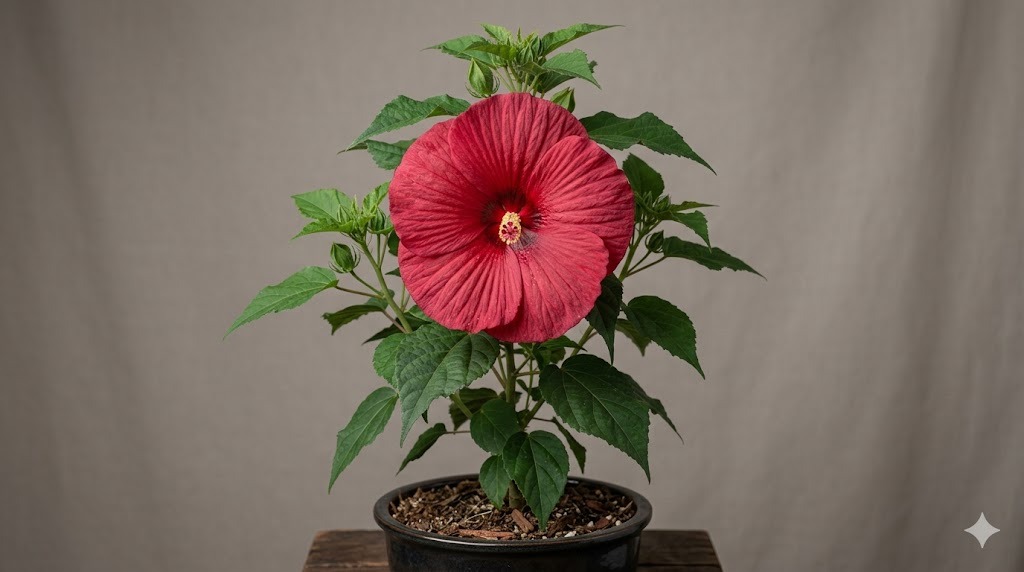
Hibiscus brings a touch of the tropics to temperate gardens. Its flowers are unmistakable - broad, flaring trumpets with a prominent central column of stamens, in white, pink, red, blue, and purple, often with a contrasting eye. This guide covers the hardy garden types: the hardy shrub Hibiscus syriacus (rose of Sharon), a tough deciduous shrub that flowers late in summer, and the hardy perennial Hibiscus moscheutos (rose mallow / swamp hibiscus), which dies back each winter and returns with dinner-plate-sized blooms. These are not the tender house-and-patio tropical hibiscus - they are properly winter-hardy plants for the open garden, valued above all for color when much of the garden is fading.
Origin & Natural Habitat
Hibiscus syriacus originates in East Asia (China and surrounding regions), despite its "rose of Sharon" and "syriacus" names. Hibiscus moscheutos is native to wetlands of the eastern United States, growing in marshes and along riverbanks - which is why it tolerates, even enjoys, moist ground. Both belong to the mallow family. Their origins explain their care: the shrub wants sun and ordinary well-drained soil; the perennial wants sun and reliably moist soil.
Appearance
- Hardy shrub (H. syriacus): an upright deciduous shrub, 2-3 m tall, with lobed leaves that appear late in spring. From mid-to-late summer into autumn it carries a long succession of 5-10 cm trumpet flowers, single or double, often with a darker central eye.
- Hardy perennial (H. moscheutos): a herbaceous perennial, 1-2 m tall, dying to the ground each winter and re-emerging late in spring. Its flowers are spectacular - up to 20-30 cm across, the famous "dinner-plate" blooms.
Why People Grow It - Qualities & Benefits
- Exotic, tropical-looking flowers that are fully hardy.
- Late-season color: flowers from mid/late summer into autumn, when many plants fade.
- Long bloom period: a steady succession of flowers over many weeks.
- Pollinator value: the open flowers attract bees and hummingbirds (where present).
- Versatility: the shrub suits borders, screens, and hedging; the perennial makes a bold border focal point.
- Hardy and adaptable across a wide climate range.
Care
Light & Position
Full sun for the best flowering - at least six hours a day. Both types flower poorly in shade. Shelter from strong wind, which can tatter the large flowers.
Soil
- H. syriacus: fertile, moist but well-drained soil; tolerant of most soils.
- H. moscheutos: fertile soil that stays reliably moist - it naturally grows in wet ground and will not thrive if it dries out.
Watering
The shrub needs watering while establishing and in dry spells. The perennial rose mallow is thirsty - keep it consistently moist, never letting it dry out, especially in heat.
Feeding
Feed in spring with a balanced fertilizer; the heavy-blooming perennial appreciates regular feeding through the growing season. Mulch to conserve moisture.
Pruning
- H. syriacus: flowers on new wood. Prune in late winter or early spring - light shaping, or harder pruning for bigger flowers and a tidier shrub. It is slow to leaf out in spring, so don't assume a bare branch is dead.
- H. moscheutos: cut the dead top growth to the ground in late autumn or early spring; it regrows entirely from the base each year.
Hardiness & Winter Care
H. syriacus is hardy to around USDA zone 5; H. moscheutos to around zone 4-5, its roots surviving winter underground. The perennial's very late emergence in spring (sometimes not until early summer) is normal - be patient and don't dig it out thinking it has died.
Planting & Propagation
Plant in spring so the plant establishes before winter. H. syriacus propagates from softwood or semi-ripe cuttings; it also self-seeds. H. moscheutos can be grown from seed (often flowering the first or second year) or by division. Both are easy to increase.
Common Problems & Pests
- "Dead" branches in spring: usually not dead - H. syriacus simply leafs out very late; wait before cutting.
- Bud drop: flower buds form but fall before opening - often caused by drought stress, sudden weather change, or aphids.
- Few flowers: too much shade, or (for the shrub) failure to prune.
- Pests: aphids and Japanese beetles can be troublesome; the perennial is a target for the hibiscus sawfly, whose larvae skeletonize leaves.
- Self-seeding: H. syriacus can seed around; remove seedlings or choose sterile varieties.
Toxicity & Safety
Hardy garden hibiscus (H. syriacus and H. moscheutos) is generally regarded as non-toxic / low-toxicity to humans and is considered safe - the flowers of many Hibiscus species are even edible. For pets the picture is more cautious: hibiscus is sometimes listed as mildly toxic to dogs (rose of Sharon in particular), capable of causing nausea, vomiting, or diarrhea if eaten in quantity. Serious poisoning is uncommon, but it is sensible to discourage pets from grazing on it.
Pros & Cons
Pros
- Exotic, tropical-looking flowers that are fully hardy.
- Late-summer-to-autumn color when other plants fade.
- Long blooming season; good for pollinators.
- Adaptable and reliable across a wide climate range.
Cons
- Need full sun; flower poorly in shade.
- H. moscheutos is thirsty and dislikes drying out.
- Slow, very late spring growth can worry gardeners.
- Aphids, beetles, and sawfly can be a nuisance; mild pet-toxicity caution.
Best Suited For
- Sunny borders wanting bold late-season color.
- H. syriacus: informal hedges, screens, and shrub borders.
- H. moscheutos: damp borders, rain gardens, and pondside plantings - a dramatic focal point.
- Gardeners wanting a tropical look in a temperate climate.
Not ideal for deep shade, very dry gardens (the perennial), or impatient gardeners unsettled by late spring growth.
FAQ
My hibiscus branches look dead in spring - is it dead? Probably not. Hibiscus syriacus is notoriously slow to leaf out, often staying bare well into spring. Scratch the bark - if it is green underneath, the branch is alive. Be patient before cutting anything.
When should I prune my shrub hibiscus? Hibiscus syriacus flowers on new wood, so prune in late winter or early spring. Harder pruning produces fewer but larger flowers and a tidier shrub.
Why are my hibiscus buds falling off before opening? Bud drop is usually caused by drought stress, a sudden change in conditions, or aphid infestation. Keep the plant evenly watered and check for pests.
Is hardy hibiscus safe for pets? The plant is low-toxicity, but hibiscus (especially rose of Sharon) is sometimes listed as mildly toxic to dogs, potentially causing stomach upset if eaten in quantity. Discourage pets from grazing on it.
Why does my rose mallow flower so late and so big? Hibiscus moscheutos is a perennial that dies down completely each winter and re-emerges very late - sometimes early summer - then grows fast and produces its huge dinner-plate flowers in mid-to-late summer. Late emergence is normal.