Hosta
The hosta is the undisputed king of the shade garden - grown not for flowers but for its magnificent foliage.
🗓️ Last reviewed: June 2026
Overview
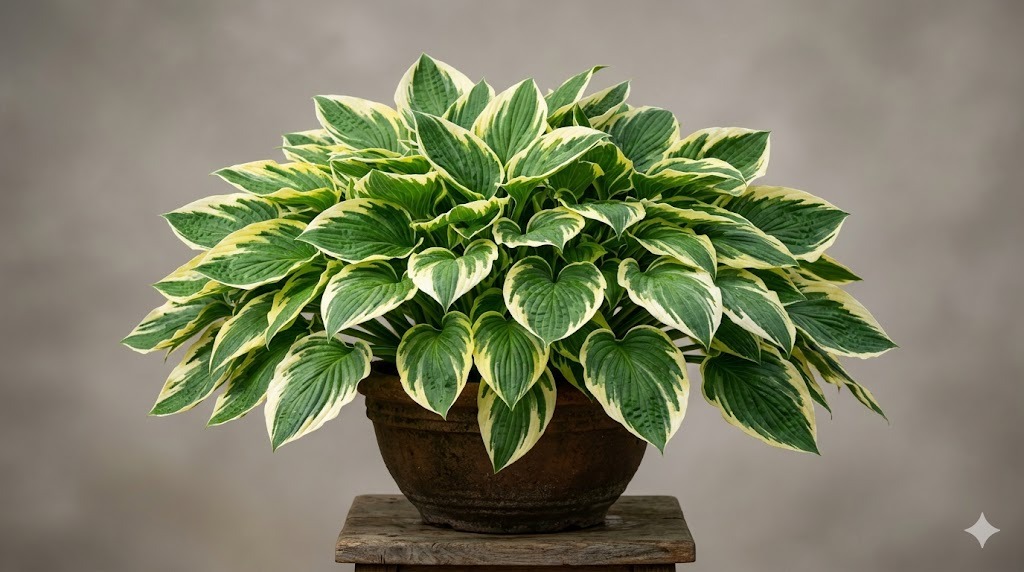
The hosta is the undisputed king of the shade garden - grown not for flowers but for its magnificent foliage. Its leaves come in an enormous range: blue-grey, gold, lime, deep green, and every kind of variegation, in sizes from tiny mouse-ear miniatures to giants with leaves the size of dinner plates. Hostas form bold, sculptural clumps that bring structure, contrast, and a cool, lush quality to spots where most plants sulk. They are hardy, long-lived, and easy - with one famous, infuriating enemy: slugs and snails, which can reduce a beautiful hosta to lace overnight. Manage that one problem, and the hosta is the most reliable foliage plant a shady garden can have.
Origin & Natural Habitat
Hostas are native to East Asia - Japan, China, and Korea. In the wild they grow on shaded, moist woodland floors, on stream banks, and in damp rocky places. This woodland-floor origin is the entire blueprint for their care: they want shade or part-shade, cool moist soil rich in leaf litter, and shelter. They are also fully hardy, dying down each winter and returning reliably each spring.
Appearance
Hostas are clump-forming herbaceous perennials grown for their leaves. The clumps range from 10 cm miniatures to specimens over a metre across, with leaves that may be rounded, heart-shaped, or long and narrow; smooth or heavily puckered; and colored blue, green, gold, chartreuse, or variegated with white or cream margins or centers. In summer they send up tall slender stems of tubular or bell-shaped flowers, usually lavender or white - sometimes fragrant - though for most gardeners the flowers are a secondary bonus to the foliage.
Why People Grow It - Qualities & Benefits
- Superb shade foliage: thrives and looks lush where flowering plants fail.
- Huge variety: sizes, leaf shapes, and colors for every situation.
- Structure and contrast: bold leaves anchor a planting and set off finer textures.
- Long-lived and low-maintenance: clumps improve for many years.
- Hardy and reliable: very cold-tolerant; returns dependably each spring.
- Container-friendly: excellent in pots, where slug control is also easier.
- Some fragrance: certain varieties (from Hosta plantaginea) have scented flowers.
Care
Light & Position
Shade to part-shade. Most hostas are happiest in dappled light or morning sun with afternoon shade. As a rough guide, blue-leaved hostas need the most shade (sun burns off their blue bloom), while gold and variegated types tolerate - and color best with - a little more light. Hot full sun scorches the leaves of most varieties.
Soil
Cool, moist, fertile, humus-rich soil that holds moisture but does not waterlog - woodland-floor soil. Improve with plenty of compost or leaf mould.
Watering
Hostas like consistent moisture; they wilt and scorch if they dry out, especially in warmer or sunnier spots. Water in dry spells and mulch generously to keep the roots cool and damp. Pots dry out fast and need regular watering.
Feeding
Feed in spring with a balanced fertilizer or a generous compost mulch. Hostas are reasonably hungry plants and reward feeding with bigger, lusher leaves.
Seasonal Care
Cut down the foliage after the first frosts blacken it in autumn - clearing the old leaves also removes slug eggs and overwintering pests. New shoots ("noses") emerge in spring.
Hardiness & Winter Care
Hostas are very hardy - commonly to USDA zone 3 - and need no winter protection. They are herbaceous, dying back completely each winter; they actually need a period of winter cold and dormancy to perform well.
Planting & Propagation
Plant in spring or autumn in shade and moist, improved soil. Propagate easily by division in spring (as the shoots emerge) or autumn - lift the clump and split it with a spade or knife, each piece carrying shoots and roots. Division is also how you keep a large clump manageable and make new plants.
Common Problems & Pests
- Slugs and snails: by far the biggest problem - they shred the leaves into lace, especially in spring on emerging shoots and in damp weather. Thicker-leaved, heavily puckered, and blue varieties show better natural resistance. Control with barriers, traps, hand-picking, or wildlife-friendly slug pellets; growing hostas in pots makes protection much easier.
- Scorched, brown-edged leaves: too much sun or the plant drying out.
- Vine weevil: larvae eat the roots, especially in containers.
- Hosta virus X: a virus causing mottled, distorted leaves - there is no cure; destroy infected plants and buy from reputable sources.
- Deer and rabbits: in some areas they graze hostas heavily.
Toxicity & Safety
Hosta is regarded as toxic to cats, dogs, and horses - it contains saponins, and ingestion can cause vomiting, diarrhea, and depression in pets. It is, however, considered non-toxic to humans (the young shoots are even eaten as a vegetable in parts of Asia). In gardens with pets that graze, discourage them from chewing hosta foliage.
Pros & Cons
Pros
- Outstanding foliage for shade, where flowers struggle.
- Enormous variety of size, shape, and color.
- Long-lived, hardy, and low-maintenance.
- Excellent in containers; easy to propagate by division.
Cons
- Slugs and snails are a constant battle.
- Most varieties scorch in hot full sun.
- Dies down completely in winter - no off-season presence.
- Toxic to cats, dogs, and horses.
Best Suited For
- Shady and woodland gardens, north-facing borders.
- Underplanting trees and shrubs; edging shady paths.
- Containers on shaded patios (also easier for slug control).
- Gardeners wanting bold foliage and structure without fuss.
Not ideal for hot, dry, sunny gardens, slug-plagued plots without any control measures, or homes where pets graze freely on foliage.
FAQ
Why are my hosta leaves full of holes? Slugs and snails. They are the hosta's number-one enemy, especially in spring and in damp weather. Use barriers, traps, hand-picking, or wildlife-safe pellets - and consider thicker-leaved, blue, or puckered varieties, which resist damage better. Pots make protection easier.
Can hostas grow in sun? Most prefer shade or part-shade and scorch in hot full sun. Gold and variegated varieties tolerate a little more light, while blue hostas need the most shade. A spot with morning sun and afternoon shade suits most.
Are hostas safe for pets? No - hostas are toxic to cats, dogs, and horses, containing saponins that cause vomiting and diarrhea if eaten. They are non-toxic to humans, however.
Why are my hosta leaves turning brown at the edges? Usually too much sun or the plant drying out. Move it to more shade and keep the soil consistently moist with watering and mulch.
How do I make more hostas? By division - lift an established clump in spring or autumn and split it into pieces, each with shoots and roots. It is easy, reliable, and also keeps large clumps manageable.