Hyacinth
The hyacinth is, above all, a fragrance - one of the most intense, far-reaching scents in the whole spring garden.
🗓️ Last reviewed: June 2026
Overview
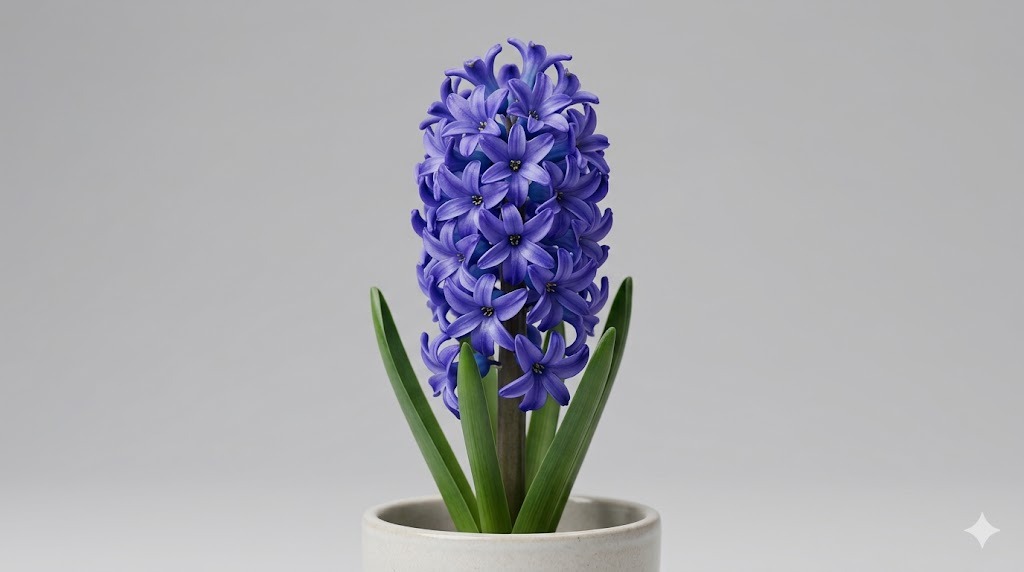
The hyacinth is, above all, a fragrance - one of the most intense, far-reaching scents in the whole spring garden. Its dense, formal flower spike, packed with waxy starry florets in jewel colors - blue, purple, pink, white, cream, salmon, even soft yellow - is handsome enough, but it is the perfume that makes the hyacinth unforgettable. It is the classic bulb for forcing indoors in winter, filling the house with scent weeks before spring; in the garden it brings a neat, bold, fragrant statement to beds and pots. Hyacinths are easy and reliable, with one honest quirk: the magnificent first-year spike tends to grow looser and smaller in later years.
Origin & Natural Habitat
The common garden hyacinth, Hyacinthus orientalis, originates in the eastern Mediterranean and the Middle East - Turkey, Syria, and the surrounding region - where it grows on rocky hillsides and well-drained slopes with hot, dry summers and cool winters. It was extensively bred, especially by Dutch growers, into the plump, densely flowered hyacinths sold today. Its origin explains its needs: full sun, sharp drainage, a dry summer rest, and winter cold.
Appearance
The hyacinth grows from a large, rounded bulb. It produces a small rosette of strap-shaped, glossy green leaves and a single thick, upright flower spike, usually 15-30 cm tall. The spike is densely clustered with many small, waxy, six-pointed star-shaped florets, often slightly reflexed, giving a plump, formal, almost solid-looking column of bloom. The first year's spike is the fullest and most formal; in subsequent years the flower head naturally becomes looser, more open, and more informal - which many gardeners actually find more graceful in a border. (The unrelated grape hyacinth, Muscari, is a different, smaller plant.)
Why People Grow It - Qualities & Benefits
- Powerful fragrance: one of the most intense and beloved scents of spring.
- Bold, formal spring color: neat, dense spikes in rich jewel tones.
- The classic forcing bulb: can be brought into flower indoors in winter for scent and color.
- Easy and reliable: simple to grow in beds, pots, and containers.
- Early color: flowers in early-to-mid spring.
- Versatile: formal bedding, mixed borders, pots, window boxes, and indoor displays.
Care
Light & Position
Full sun to light shade. Full sun gives the strongest, sturdiest spikes; in light shade hyacinths still flower but may lean toward the light.
Soil
Fertile, well-drained soil. Hyacinth bulbs rot in heavy, wet ground, particularly during their summer dormancy. On heavy soil, improve drainage or grow them in pots.
Planting Time & Depth
Plant bulbs in autumn, about 10-15 cm deep, pointed end up. For forcing, use specially prepared (pre-chilled) bulbs and pot them up in early autumn.
Watering
Autumn and spring rainfall usually suffices outdoors; water in dry spells during growth. Hyacinths prefer a dry summer rest.
Feeding
A balanced bulb fertilizer at planting and again after flowering helps build the bulb and supports future spikes.
After Flowering
Deadhead the spent flower spike, but leave the foliage to die down naturally - the leaves feed the bulb for next year. Outdoor garden hyacinths usually return for several years, with the spike becoming looser and smaller over time.
Forcing Indoors
Hyacinths are the classic forcing bulb. Use prepared bulbs, pot them in autumn, and give them a cool, dark period (around 8-12 weeks) to root, then gradually bring them into light and warmth to flower indoors in mid-winter. After forcing, bulbs are exhausted for indoor use but can often be planted out in the garden to recover and flower in future years.
Hardiness & Winter Care
Hyacinths are hardy, commonly to around USDA zone 4-5, and need no winter protection in the ground. They require winter cold to flower; in mild climates, bulbs must be pre-chilled.
Planting & Propagation
Plant bulbs in autumn. Hyacinths increase slowly by producing offset bulblets around the parent; commercial propagation uses specialist techniques. For most gardeners, buying bulbs is the practical route, accepting that garden clumps loosen and slowly decline over the years.
Common Problems & Pests
- Looser, smaller spikes in later years: entirely normal - the dense formal first-year spike naturally relaxes into a looser, more informal head; many gardeners prefer this in borders.
- Bulb rot: caused by wet, heavy, poorly drained soil, especially in summer.
- Floppy or leaning spikes: the heavy first-year spikes can topple, especially in rain or shade; full sun and shelter help.
- Failure to flower well after forcing: forced bulbs are exhausted - plant them out to recover.
- Few pests: generally trouble-free, though bulbs may be eaten by rodents.
Toxicity & Safety
Hyacinths are toxic - all parts contain irritant compounds (including oxalic acid crystals), with the bulb the most toxic part. Ingestion can cause vomiting, drooling, and diarrhea in cats, dogs, and horses, and stomach upset in humans. Handling the bulbs frequently can also cause an itchy skin reaction in sensitive people ("hyacinth itch"), so wearing gloves is advisable. Keep bulbs away from pets and children, and store them securely.
Pros & Cons
Pros
- One of the most powerful, beloved fragrances of spring.
- Bold, formal, jewel-colored spikes.
- The classic bulb for forcing scent indoors in winter.
- Easy, reliable, and versatile in beds, pots, and the home.
Cons
- Spikes become looser and smaller in later years.
- Toxic, especially the bulbs; can cause skin irritation when handled.
- Need sharp drainage; rot in wet soil.
- For some, the intense scent is overpowering indoors.
Best Suited For
- Formal spring bedding and mixed borders.
- Containers, pots, and window boxes near doors and paths, to enjoy the scent.
- Indoor forcing for winter fragrance.
- Gardeners who love fragrance above all.
Not ideal for heavy waterlogged soils, mild frost-free climates (without pre-chilling), or those sensitive to strong perfume indoors.
FAQ
Why is my hyacinth spike looser and smaller than last year? This is completely normal. The plump, dense, formal spike of the first year naturally relaxes in later years into a looser, more open, more informal flower head. Many gardeners actually find this looser look more graceful in a border. It is not a sign of poor health.
Can I plant a forced indoor hyacinth in the garden afterward? Yes - once it has finished flowering indoors, let the foliage die down, then plant the bulb out in the garden. Forced bulbs are exhausted for further indoor use, but planted outside they can recover and flower again in future springs.
Are hyacinths poisonous? Yes - hyacinths are toxic, with the bulb the most dangerous part. Eating them can cause vomiting and stomach upset in cats, dogs, horses, and people. Handling the bulbs can also irritate skin. Keep bulbs away from pets and children, and wear gloves when handling them.
When do I plant hyacinth bulbs? Plant in autumn, about 10-15 cm deep, pointed end up, in well-drained soil or pots. For forcing indoors, use specially prepared (pre-chilled) bulbs and pot them up in early autumn.
Why did my hyacinth bulb rot? Almost always wet, heavy, poorly drained soil, especially over the summer dormancy. Hyacinths need sharp drainage and a dry summer rest. Improve drainage or grow them in pots.