Hydrangea
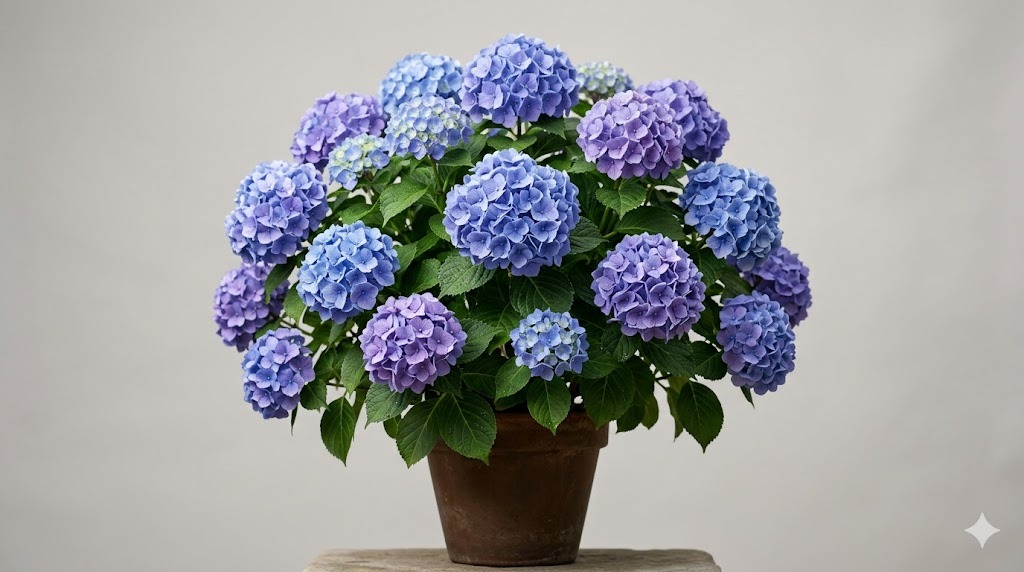
The Hydrangea is the big, billowing, generous flowering shrub that anchors so many summer gardens - huge mophead globes, lacy flat caps, or elegant cone-shaped plumes of bloom, in blue, pink, white, and green, often lasting for months and drying beautifully on the plant.
🗓️ Last reviewed: June 2026
Overview
The Hydrangea is the big, billowing, generous flowering shrub that anchors so many summer gardens - huge mophead globes, lacy flat caps, or elegant cone-shaped plumes of bloom, in blue, pink, white, and green, often lasting for months and drying beautifully on the plant. Hydrangeas are mostly easy and rewarding, and famous for one piece of garden magic: some types change flower color depending on the soil. The one thing that confuses gardeners - and causes most "my hydrangea won't flower" complaints - is pruning, because different types are pruned at different times.
Origin & Natural Habitat
Hydrangeas are native to Asia (especially Japan, Korea, and China) and the Americas. They grow naturally in woodland edges, clearings, and stream banks - moist, fertile ground with shelter and dappled-to-partial light. The name comes from Greek for "water vessel," a nod to their thirst. This moist-woodland-edge origin is the key to their care: they want rich, moist (but not waterlogged) soil, shelter, and protection from the harshest sun.
Appearance
Hydrangeas are deciduous shrubs (a few are climbers) with bold, often large leaves and dramatic flower heads. The main garden types:
- Bigleaf / mophead & lacecap (H. macrophylla): rounded "mophead" globes or flat "lacecap" heads; the color-changing type; blue/pink/purple/white.
- Panicle (H. paniculata): cone-shaped flower plumes, very hardy, sun-tolerant, white aging to pink.
- Smooth (H. arborescens, e.g. 'Annabelle'): huge white rounded heads, very hardy.
- Oakleaf (H. quercifolia): oak-shaped leaves with great autumn color, cone flowers.
- Climbing hydrangea (H. petiolaris): covered separately.
Sizes range from compact 1 m shrubs to large specimens of 2-3 m.
Why People Grow It - Qualities & Benefits
- Big, generous, long-lasting blooms: months of color, and the heads dry beautifully on the plant.
- Color magic: mophead types can be turned blue or pink by adjusting soil chemistry.
- Easy and reliable: mostly low-fuss once established and correctly placed.
- Versatile: specimen shrubs, borders, hedges, foundation plantings, and large pots.
- Cut and dried flowers: excellent fresh, and they dry for everlasting arrangements.
- Autumn interest: oakleaf types add fiery autumn foliage.
Care
Light & Position
Most hydrangeas prefer morning sun and afternoon shade, or dappled light - especially bigleaf/mophead types, which wilt and scorch in hot afternoon sun. Panicle hydrangeas are the exception: they tolerate, and flower best in, full sun. Shelter from harsh wind.
Soil
Rich, fertile, moist but well-drained soil, generously improved with compost. Hydrangeas do not like to dry out, nor to sit waterlogged.
Watering
Hydrangeas are thirsty - the name says it. Water deeply and regularly, especially in the first years, in dry spells, and in heat. Wilting in afternoon heat is common; if the plant recovers in the evening, it is fine, but persistent wilting means it needs water (and possibly more shade). Mulch to keep roots cool and moist.
Feeding
Feed in spring with a balanced or shrub fertilizer; mulch with compost. Avoid over-feeding with high nitrogen, which gives leaves at the expense of flowers.
The Color Magic (mophead/lacecap only)
Bigleaf hydrangea flower color responds to soil pH and aluminium availability:
- Acidic soil (low pH) → the plant takes up aluminium → blue flowers.
- Alkaline soil (high pH) → aluminium is locked up → pink flowers.
To go blue, lower the pH and add aluminium sulphate; to go pink, raise the pH with garden lime. White hydrangeas do not change color. The shift takes time and is easiest in pots, where you control the soil.
Pruning - the key to flowering
This is what gets gardeners. Different types bloom on different wood:
- Bigleaf (mophead/lacecap) and oakleaf bloom mostly on old wood (last year's stems). Prune only lightly, just after flowering - do NOT prune hard in spring, or you cut off all the flower buds. (This is the #1 reason a hydrangea "won't flower.")
- Panicle and smooth bloom on new wood (the current year's growth). Prune these in late winter/early spring, cutting back hard for bigger, stronger blooms.
Know which type you have before you prune.
Hardiness & Winter Care
Hardiness varies: panicle and smooth hydrangeas are very hardy (to around USDA zone 3-4); bigleaf types are less hardy and their old-wood flower buds can be killed by hard frost or cold snaps - in cold regions, choose hardy or "rebloomer" varieties and protect the buds over winter. All garden hydrangeas are deciduous.
Planting & Propagation
Plant in spring or autumn in improved soil. Propagate easily from softwood cuttings in early summer, or by layering low branches. Some types produce suckers that can be divided.
Common Problems & Pests
- No flowers: the classic problem - usually pruning an old-wood type at the wrong time, or frost killing the buds; also too much shade or excess nitrogen.
- Wilting: common in afternoon heat; if it recovers by evening it is fine, but persistent wilting means more water and/or shade needed.
- Scorched, browning leaves/flowers: too much hot sun, or drying out.
- Flower color "wrong": soil pH - adjust as above (mophead types only).
- Pests/disease: generally robust; powdery mildew, leaf spots, aphids, and scale can occur.
Toxicity & Safety
Toxic to cats, dogs, and humans. Hydrangeas contain cyanogenic glycosides (which can release cyanide compounds); the leaves, buds, and flowers can cause vomiting, diarrhea, and lethargy in pets if eaten, with larger amounts more serious. Keep pets and children from eating it; serious poisoning is uncommon but the plant should not be ingested.
Pros & Cons
Pros
- Big, generous, long-lasting blooms.
- Color-changing magic (mophead types).
- Mostly easy and reliable.
- Versatile; great cut and dried flowers.
Cons
- Toxic to pets and people.
- Thirsty - dislikes drying out.
- Pruning is type-specific and confuses gardeners.
- Bigleaf types' flower buds are frost-vulnerable.
Best Suited For
- Borders, foundation plantings, and specimen positions.
- Spots with morning sun and afternoon shade (most types).
- Full sun (panicle types).
- Cottage and woodland-edge gardens; large pots.
Not ideal for very dry gardens, deep shade, or - given toxicity - homes where pets graze on shrubs.
FAQ
Why won't my hydrangea flower? The most common reason is pruning at the wrong time. Bigleaf (mophead/lacecap) and oakleaf hydrangeas bloom on old wood - if you prune them hard in spring, you cut off the flower buds. Frost killing the buds, too much shade, or excess nitrogen fertilizer can also be to blame.
How do I make my hydrangea blue (or pink)? Only mophead/lacecap (bigleaf) types change color. Acidic soil makes them blue; alkaline soil makes them pink. Lower the pH and add aluminium sulphate for blue; add garden lime for pink. White hydrangeas do not change.
When should I prune my hydrangea? It depends on the type. Bigleaf and oakleaf bloom on old wood - prune lightly, just after flowering. Panicle and smooth types bloom on new wood - prune in late winter/early spring. Identify your type first.
Why is my hydrangea wilting? Hydrangeas are thirsty and often wilt in hot afternoon sun. If it perks back up in the evening, it is fine. If it stays wilted, it needs more water - and possibly more shade.
Are hydrangeas safe for pets? No - hydrangeas are toxic to cats and dogs (and people). The leaves and flowers can cause vomiting and diarrhea if eaten. Keep pets from grazing on them.