Impatiens (Busy Lizzie)
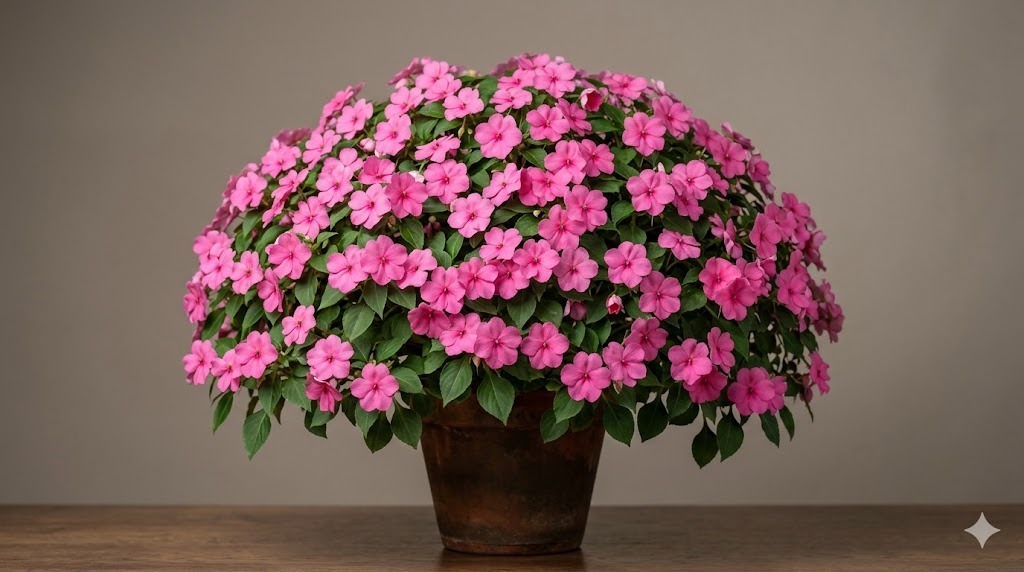
Impatiens - long known affectionately as "busy Lizzie" - is the great shade-bedding plant: a soft, mounding annual that smothers itself in flat, five-petalled flowers and blooms relentlessly all summer in the very places where sun-loving bedding fails.
🗓️ Last reviewed: June 2026
Overview
Impatiens - long known affectionately as "busy Lizzie" - is the great shade-bedding plant: a soft, mounding annual that smothers itself in flat, five-petalled flowers and blooms relentlessly all summer in the very places where sun-loving bedding fails. For generations it was the default choice for shady beds, pots, and hanging baskets, in cheerful pinks, reds, oranges, whites, and purples. Then came a major setback - a devastating disease, impatiens downy mildew, which swept through the classic busy Lizzie and changed how it is grown. Understanding that disease, and the resistant alternatives, is now central to growing impatiens well.
Origin & Natural Habitat
Impatiens is a large genus native to tropical and subtropical regions, with the familiar busy Lizzie (Impatiens walleriana) originating in East Africa, and the New Guinea impatiens (Impatiens hawkeri) from New Guinea. In the wild they grow in moist, shaded forest habitats. This tropical, shaded, humid, moist-soil origin defines their needs: shade or part shade, consistent moisture, warmth, and no tolerance of frost. The name "impatiens" comes from the ripe seed pods that burst explosively at a touch, scattering seed.
Appearance
Impatiens are soft, succulent-stemmed, mounding plants, typically 15-45 cm tall. The two main outdoor types:
- Busy Lizzie (Impatiens walleriana): compact, with soft green leaves and a dense covering of flat, round, five-petalled flowers in white, pink, red, orange, lavender, and bicolors; the classic shade bedding plant.
- New Guinea impatiens (Impatiens hawkeri): larger and more robust, with bigger flowers and often striking bronze or variegated foliage; more sun-tolerant and importantly resistant to the downy mildew disease.
Newer mildew-resistant busy Lizzie strains have also been bred to fill the gap.
Why People Grow It - Qualities & Benefits
- Outstanding color for shade: flowers generously where most bedding cannot.
- Nonstop bloom: flowers continuously from late spring to frost.
- Self-cleaning: drops its own spent flowers - little or no deadheading.
- Soft, even, mounding cover: superb for uniform bedding, pots, and baskets.
- Easy and fast: quick, generous, low-fuss color.
- New Guinea types add bolder flowers, colorful foliage, and more sun tolerance.
Care
Light & Position
Shade to part shade. Busy Lizzie is one of the best true shade bedding plants - dappled light or part shade is ideal, and hot full sun scorches and wilts it. New Guinea impatiens tolerate more sun, especially with adequate moisture, but still appreciate some afternoon shade.
Soil
Fertile, humus-rich, consistently moist but well-drained soil, or good-quality potting compost. Impatiens dislike both drying out and waterlogging.
Watering
Impatiens are thirsty and dislike drying out - they wilt dramatically when dry (recovering once watered, but repeated stress harms them). Keep the soil consistently moist; water containers and baskets regularly, often daily in summer heat. Avoid waterlogging.
Feeding
Feed regularly through the season with a balanced or high-potassium liquid fertilizer, especially in containers, to sustain the long display.
Deadheading
Impatiens are self-cleaning - they shed their own faded flowers - so little or no deadheading is needed, a real labour saving.
Hardiness & Winter Care
Impatiens are frost-tender annuals - killed by the first frost and grown fresh each year. Plant out only after all danger of frost has passed and the soil has warmed.
Planting & Propagation
Plant out after the last frost. Busy Lizzie can be raised from seed (needs warmth and light to germinate) but is most often bought as bedding; New Guinea impatiens are usually vegetatively propagated and bought as plants. Impatiens root very easily from stem cuttings, which can also be used to overwinter favorite plants indoors.
Common Problems & Pests - and the Downy Mildew Story
- Impatiens downy mildew: the defining problem of recent years. This disease causes leaves to yellow, a white downy growth to appear on the undersides, and then sudden, dramatic collapse and leaf-drop, leaving bare stems. It devastated classic Impatiens walleriana and made it unreliable in many areas. Key responses: grow the resistant New Guinea impatiens or the newer mildew-resistant busy Lizzie strains; avoid replanting susceptible busy Lizzie in soil where the disease has struck (the spores can persist); and ensure good air circulation.
- Wilting: from dry soil - impatiens are thirsty; keep them moist.
- Leggy, sparse growth: too deep shade or underfeeding.
- Slugs/snails and aphids: can damage the soft growth.
- Botrytis (grey mould): in cool, damp, crowded conditions.
Toxicity & Safety
Impatiens (busy Lizzie and New Guinea impatiens) is generally regarded as non-toxic / low-toxicity and is considered safe for cats, dogs, horses, and humans - it is not a recognized poisoning hazard and is widely grown in family gardens, pots, and baskets without concern. A good, pet-friendly choice for shady summer color.
Pros & Cons
Pros
- One of the best bedding plants for shade.
- Nonstop, generous bloom; self-cleaning (no deadheading).
- Soft, even mounding cover; easy and fast.
- Pet-friendly; New Guinea types resist the downy mildew disease.
Cons
- Classic busy Lizzie is vulnerable to devastating downy mildew.
- Frost-tender annual - replaced every year.
- Thirsty - wilts badly and dislikes drying out.
- Hot full sun scorches busy Lizzie; soft stems are slug-prone.
Best Suited For
- Shady and part-shaded beds, borders, pots, and hanging baskets.
- Uniform shade bedding and edging.
- Gardeners wanting easy, low-deadheading summer color in the shade.
- Containers where moisture can be kept up.
Not ideal for hot dry full-sun spots (busy Lizzie), gardens where impatiens downy mildew is established (use resistant types), or anyone wanting a permanent perennial.
FAQ
Why did my impatiens suddenly collapse and lose all their leaves? This is almost certainly impatiens downy mildew - a disease that yellows the leaves, produces a white downy coating on their undersides, and then causes sudden, dramatic collapse and leaf-drop. It severely affects classic busy Lizzie (Impatiens walleriana). Grow resistant New Guinea impatiens or mildew-resistant busy Lizzie strains instead, and avoid replanting susceptible types in affected soil.
What is the difference between busy Lizzie and New Guinea impatiens? Busy Lizzie (Impatiens walleriana) is the compact classic shade bedding plant - but vulnerable to downy mildew. New Guinea impatiens (Impatiens hawkeri) are larger and more robust, with bigger flowers, often colorful foliage, more sun tolerance, and - crucially - resistance to the downy mildew disease.
Can impatiens grow in shade? Yes - busy Lizzie is one of the best bedding plants for shade and part shade, flowering generously where most bedding fails. New Guinea impatiens tolerate more sun. Neither is happy in hot, scorching full sun (busy Lizzie) or in very deep shade.
Do I need to deadhead impatiens? No - impatiens are self-cleaning, dropping their own spent flowers, so they need little or no deadheading. This makes them a low-effort source of continuous color.
Are impatiens safe for pets? Yes - impatiens are generally considered non-toxic to cats, dogs, and horses, and are a pet-friendly choice for shady pots and beds.