Jasmine
Jasmine is, above all else, fragrance - the name itself has become a byword for sweet perfume.
🗓️ Last reviewed: June 2026
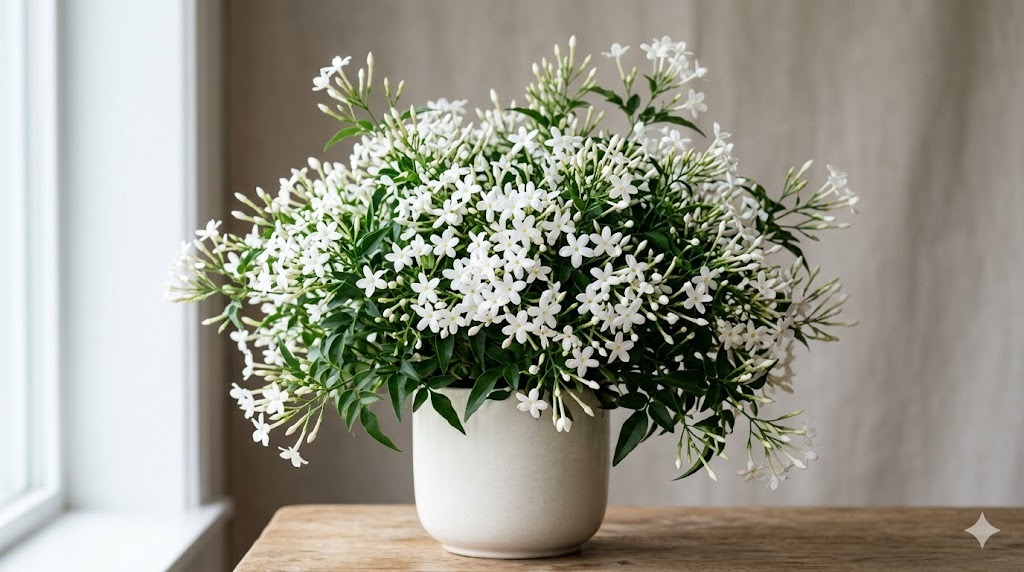
Overview
Jasmine is, above all else, fragrance - the name itself has become a byword for sweet perfume. The climbing jasmines clothe arches, walls, trellis, and pergolas in a froth of small, starry flowers, usually white or yellow, that release an intense, romantic scent, especially in the evening. There are two quite different garden plants commonly called jasmine, and the distinction matters: summer (common white) jasmine (Jasminum officinale), grown for its powerfully scented summer flowers, and winter jasmine (Jasminum nudiflorum), an unscented but invaluable plant that flowers bright yellow on bare stems in the depths of winter. Both are easy and rewarding; this guide covers both, with the famously fragrant summer jasmine as the centerpiece.
Origin & Natural Habitat
Jasminum is a large genus native to warm temperate and tropical regions of Eurasia, Africa, and Oceania. Common summer jasmine originates from the Caucasus and across to the Himalayas and China; winter jasmine comes from China. In the wild, the climbing jasmines scramble over rocks, shrubs, and slopes in sunny, warm, well-drained positions. This warm-climate origin explains summer jasmine's love of a warm, sheltered, sunny spot and its limited hardiness in cold regions. (Note: the unrelated, intensely fragrant Trachelospermum, "star jasmine," and tender house-plant jasmines are sometimes also called jasmine.)
Appearance
- Summer / common jasmine (Jasminum officinale): a vigorous, twining, deciduous (semi-evergreen in mild climates) climber reaching 4-8 m, with divided leaves of small leaflets and clusters of small, white (sometimes pink-budded), star-shaped, five- to six-petalled flowers through summer - intensely fragrant.
- Winter jasmine (Jasminum nudiflorum): a lax, arching, scrambling deciduous shrub (not a true twining climber, but trained against walls), with bright yellow star flowers borne on bare green stems in winter and very early spring - cheerful but not fragrant.
Both have the characteristic starry jasmine flower shape.
Why People Grow It - Qualities & Benefits
- Intense, romantic fragrance (summer jasmine) - one of the most beloved garden scents.
- Winter colour (winter jasmine) - bright yellow flowers when the garden is bare.
- Clothes structures: softens and adorns arches, walls, pergolas, and trellis.
- Long display: summer jasmine flowers over a long summer season.
- Pollinator value: the flowers attract bees, butterflies, and moths.
- Versatile: climbers for warm walls and arches; winter jasmine for difficult and shadier walls and banks.
- Easy and rewarding once given the right position.
Care
Light & Position
- Summer jasmine: wants a warm, sheltered, sunny position - ideally a south- or west-facing wall - for the best flowering and fragrance, and to ripen growth before winter. In cold areas, shelter is essential.
- Winter jasmine: much more tolerant - grows happily in sun or part shade, and is useful for shadier, cooler, and difficult walls and banks.
Soil
Fertile, well-drained soil. Both jasmines are fairly adaptable but dislike heavy, waterlogged ground; summer jasmine in particular wants good drainage.
Watering
Water while establishing and during dry spells; keep summer jasmine reasonably moist through the growing season. Avoid waterlogging.
Feeding
Feed in spring with a balanced fertilizer; a high-potassium feed encourages flowering. Avoid excess nitrogen, which gives leafy growth at the expense of flowers.
Support & Pruning
Summer jasmine twines and needs wires, trellis, or a framework to climb; winter jasmine has lax stems that must be tied in to a support. Pruning, as so often, follows the flowering time:
- Summer jasmine: flowers mainly on the current and previous season's growth - prune after flowering, thinning out and shortening growth to control size and keep it from becoming a congested tangle.
- Winter jasmine: flowers on the previous year's growth - prune after flowering (in spring), cutting back the flowered shoots to encourage strong new growth for next winter's display.
Hardiness & Winter Care
Winter jasmine is hardy (commonly to around USDA zone 6) and very tough. Summer jasmine is less hardy and more borderline in cold climates - it benefits from a sheltered, warm wall and may need protection or be grown in containers moved under cover in very cold regions. Tender tropical jasmines must be grown as conservatory or house plants in cold climates.
Planting & Propagation
Plant in spring or autumn against a suitable support; give summer jasmine the warmest, most sheltered spot available. Propagate by semi-ripe cuttings in summer or by layering - both root readily. Winter jasmine roots especially easily where its lax stems touch the ground.
Common Problems & Pests
- Few flowers / poor flowering: for summer jasmine, usually too cold or shaded a position, or too much nitrogen; for both, pruning at the wrong time, removing the wood that carries the flowers.
- No fragrance from winter jasmine: not a fault - winter jasmine is simply not a scented plant; only summer jasmine carries the famous perfume.
- Tangled, congested, bare-based growth: vigorous summer jasmine left unpruned becomes a thicket - prune after flowering to keep it open and tidy.
- Aphids: can cluster on soft new growth and buds.
- Frost damage (summer jasmine): cold can cut back growth in exposed sites.
- Generally robust - jasmines are not especially prone to serious pests or diseases.
Toxicity & Safety
True jasmine (Jasminum species - both summer and winter jasmine) is generally regarded as non-toxic / low-toxicity and is considered safe for cats, dogs, horses, and humans - it is not a recognized poisoning hazard and is widely grown in family gardens. One important caution: several unrelated plants are confusingly called "jasmine" and some are dangerous - notably Carolina/yellow jasmine (Gelsemium), which is highly toxic, and cestrum ("night-blooming jasmine"). True Jasminum is the safe plant; the name "jasmine" alone is not a guarantee of safety, so know the botanical identity of what you are planting.
Pros & Cons
Pros
- Intense, romantic fragrance (summer jasmine) - a top garden scent.
- Winter jasmine gives bright flowers in the bleakest months.
- Clothes structures attractively; long summer display.
- Good for pollinators; true jasmine is non-toxic; easy to propagate.
Cons
- Summer jasmine is borderline-hardy and needs a warm, sheltered spot.
- Winter jasmine has no fragrance - a common surprise.
- Vigorous summer jasmine becomes a tangle without pruning.
- Confusable with unrelated, sometimes toxic "jasmines."
Best Suited For
- Summer jasmine: warm, sheltered, sunny walls, arches, and pergolas - near doors and seating to enjoy the scent.
- Winter jasmine: shadier, cooler, difficult walls and banks; winter colour.
- Cottage and fragrant gardens; pollinator gardens.
- Mild-climate gardens (summer jasmine); pots in colder regions.
Not ideal for cold, exposed gardens (summer jasmine, without shelter), or gardeners expecting fragrance from winter jasmine.
FAQ
What is the difference between summer and winter jasmine? Summer jasmine (Jasminum officinale) is a twining climber with intensely fragrant white flowers in summer - it is the famously scented jasmine, but it is borderline-hardy and needs a warm, sheltered spot. Winter jasmine (Jasminum nudiflorum) is a lax wall shrub with bright yellow flowers on bare stems in winter - it is very hardy and useful, but it has no fragrance.
Why doesn't my winter jasmine smell of anything? Because winter jasmine is simply not a scented plant - that is normal, not a fault. Only summer (common white) jasmine carries the famous jasmine perfume. Winter jasmine is grown for its cheerful yellow winter flowers, not its scent.
Why won't my summer jasmine flower well? Usually the position is too cold or too shaded - summer jasmine needs a warm, sheltered, sunny spot. Too much nitrogen fertilizer (giving leaves instead of flowers) and pruning at the wrong time can also be to blame.
When should I prune jasmine? Prune both summer and winter jasmine after flowering. Summer jasmine: after its summer flowers fade, thin and shorten growth to control it. Winter jasmine: after its winter/spring flowers, cut back the flowered shoots to encourage strong new growth for next winter.
Is jasmine safe for pets? True jasmine (Jasminum) is generally considered non-toxic and safe for cats, dogs, and horses. Be aware, though, that several unrelated plants are also called "jasmine" - some, like Carolina jasmine (Gelsemium), are highly toxic. Make sure you have true Jasminum.