Lily (Asiatic & Oriental)
The lily is one of the grandest flowers a bulb can give - tall, elegant stems carrying large, often spectacularly fragrant blooms that turn a summer border into something glamorous.
🗓️ Last reviewed: June 2026
Overview
The lily is one of the grandest flowers a bulb can give - tall, elegant stems carrying large, often spectacularly fragrant blooms that turn a summer border into something glamorous. This guide covers the two great garden groups: the Asiatic lilies, earlier, in vivid clear colors and largely unscented, and the Oriental lilies, later, with huge, richly perfumed flowers in white, pink, and crimson. True lilies (Lilium) are easy and reliable given sun and good drainage, and they are properly perennial, returning and multiplying for years. The one warning that overrides all others: true lilies are deadly to cats, and that single fact must shape the decision to grow them.
Origin & Natural Habitat
The genus Lilium contains around 100 species native across the temperate Northern Hemisphere - Asia, Europe, and North America. Asiatic lilies are hybrids derived mainly from East Asian species; Oriental lilies derive from Japanese species. In the wild, lilies grow in meadows, woodland edges, and mountain slopes - typically in well-drained, humus-rich ground, with their roots cool and shaded and their heads in the sun. This "cool feet, warm head" preference is a key to their care.
Appearance
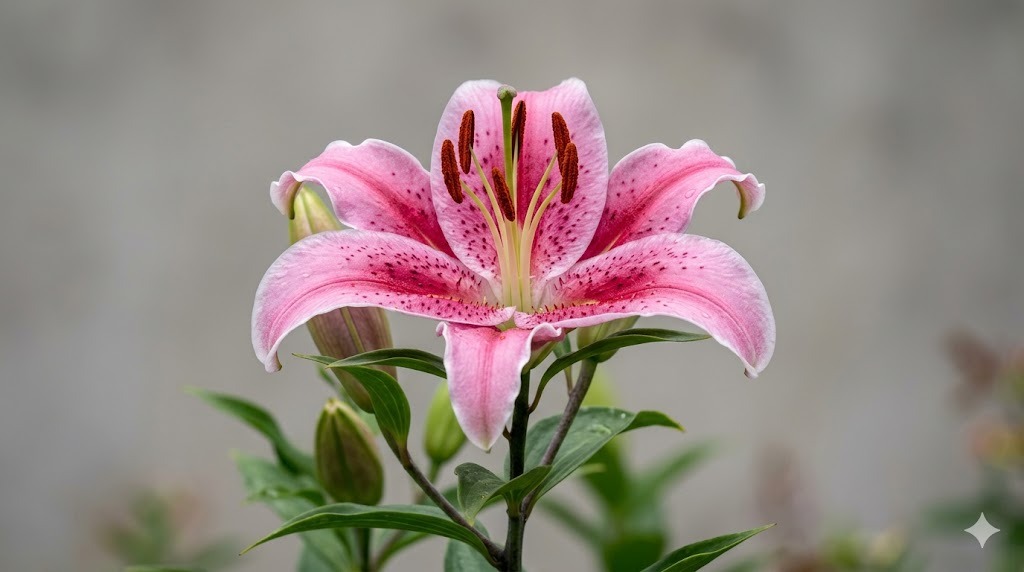
Lilies grow from a scaly bulb (made of fleshy overlapping scales, with no protective tunic). Each bulb sends up a single tall, unbranched stem, usually 60-150 cm or more, clothed in narrow leaves and topped with one to many large flowers. The flowers may face up, out, or down, and may be trumpet-, bowl-, or reflexed "Turk's cap"-shaped. Asiatic lilies: medium-sized, upward-facing, vivid (orange, red, yellow, pink, white), generally unscented, flowering early-to-midsummer. Oriental lilies: very large, bowl-shaped or reflexed, intensely fragrant, in white, pink, and crimson, often spotted, flowering mid-to-late summer.
Why People Grow It - Qualities & Benefits
- Spectacular, large, elegant flowers - real glamour in the border.
- Fragrance: Oriental lilies have one of the most powerful, luxurious scents in gardening.
- Properly perennial: true lilies return and multiply year after year.
- Long season possible: combining Asiatic and Oriental types extends bloom across summer.
- Superb cut flowers: a florist's classic, long-lasting in the vase.
- Vertical structure and bold impact in borders and large containers.
- Pollinator value for some types (Oriental lilies attract moths and butterflies).
Care
Light & Position
Sun on the flowers, shade on the roots. Lilies want their heads in full sun to light shade for good flowering, but appreciate cool, shaded soil at the base - achieved by mulching, or by growing low plants around them to shade the root zone. Shelter taller types from strong wind.
Soil
Rich, humus-rich, well-drained soil. Drainage is critical - lily bulbs (which have no protective skin) rot easily in wet ground. Note a soil preference: many Asiatic lilies tolerate a range of pH, while Oriental lilies need acidic to neutral soil and dislike lime - on alkaline soil, grow Orientals in pots of ericaceous compost.
Planting
Plant bulbs in autumn or spring, deep - about three times the bulb's height - in well-drained soil. The scaly bulbs should never be allowed to dry out before planting.
Watering
Keep the soil moist during growth and flowering, but never waterlogged. Mulch helps retain moisture and keep the roots cool.
Feeding
Feed in spring as growth appears and through the season with a balanced or high-potassium fertilizer to support strong stems and good flowering.
Support & After Flowering
Tall lilies, especially heavy-headed Orientals, may need staking. Deadhead spent flowers, but leave the stem and foliage to die down naturally - they feed the bulb for next year. Cut the dead stem down only in autumn.
Hardiness & Winter Care
Asiatic and Oriental lilies are hardy, commonly to around USDA zone 4-5, and need no winter protection in the ground. They die back fully in winter and return in spring.
Planting & Propagation
Plant scaly bulbs deep, fresh, in well-drained soil. Lilies propagate several ways: by offset bulbs, by bulbils (tiny bulbs forming in the leaf axils of some species/Asiatics), and by bulb scaling - detaching individual scales from a bulb to grow new plants. Clumps can be lifted and divided.
Common Problems & Pests
- Lily beetle: the most serious pest in many regions - a bright scarlet beetle (and its repulsive larvae) that devours leaves, buds, and flowers and can defoliate a lily. Inspect plants and remove beetles and larvae by hand.
- Bulb rot: caused by wet, poorly drained soil - sharp drainage is essential.
- Botrytis (lily disease): fungal spotting and rotting of leaves and buds, worse in damp, crowded conditions.
- Few flowers / weak stems: too much shade, poor feeding, drought, or an immature/overcrowded clump.
- Viruses: can cause streaked, distorted growth - destroy affected plants.
Toxicity & Safety
This is the single most important point about growing lilies. True lilies (Lilium) - both Asiatic and Oriental - are extremely and specifically toxic to cats. Every part of the plant - leaves, flowers, pollen, stem, bulb, and even the water in a vase - is dangerous: a cat that bites a leaf, or simply licks pollen from its fur, can suffer acute, rapid, and often fatal kidney failure. This is not a mild risk; it is one of the most serious plant poisonings in veterinary medicine. In any household with cats, true lilies should not be grown or brought indoors as cut flowers. If a cat has any contact with a lily, seek emergency veterinary treatment immediately - speed is critical. For dogs the lily is far less dangerous (mainly mild stomach upset), and for humans it is low-risk, but the cat hazard is absolute.
Pros & Cons
Pros
- Spectacular, large, elegant flowers; intense fragrance (Oriental types).
- Properly perennial - returns and multiplies.
- Long season possible by combining Asiatic and Oriental lilies.
- Superb cut flowers; bold vertical structure.
Cons
- Lethally toxic to cats - a decisive drawback for cat owners.
- Lily beetle can devastate plants.
- Need sharp drainage; bulbs rot easily in wet soil.
- Oriental lilies need acidic-to-neutral soil; tall types may need staking.
Best Suited For
- Sunny, well-drained borders - in homes without cats.
- Mixed and cottage borders wanting glamour, height, and fragrance.
- Large containers (essential for Oriental lilies on alkaline soil).
- Cutting gardens (again, for cat-free households).
Not ideal for any home or garden with cats; wet, heavy soils; deep shade; or alkaline gardens (for Oriental lilies grown in the ground).
FAQ
Are lilies dangerous to cats? Yes - extremely. True lilies (Lilium), both Asiatic and Oriental, are among the most dangerous plants for cats. Every part - leaves, flowers, pollen, bulb, even vase water - can cause acute, often fatal kidney failure, even from a tiny amount or from grooming pollen off the fur. In any household with cats, lilies should not be grown or brought in as cut flowers. If a cat contacts a lily, seek emergency veterinary care immediately.
What is the difference between Asiatic and Oriental lilies? Asiatic lilies flower earlier, in vivid clear colors, and are largely unscented; they are very easy and tolerate a range of soils. Oriental lilies flower later, with huge, intensely fragrant blooms in white, pink, and crimson, and need acidic-to-neutral soil.
Why are my lily leaves and flowers being eaten? Most likely the lily beetle - a bright red beetle, and its larvae, that devour lily foliage, buds, and flowers and can strip a plant. Inspect regularly and remove the beetles and larvae by hand.
Do lilies come back every year? Yes - true lilies are properly perennial. Planted in well-drained soil, they return each year and multiply by offsets, bulbils, and scaling. Leave the stems and foliage to die down naturally to feed the bulb.
Can I grow Oriental lilies if my soil is chalky? Not well in the ground - Oriental lilies need acidic-to-neutral soil and dislike lime. On chalky soil, grow them in pots of ericaceous (acidic) compost instead.