Marigold
The marigold is the bright, cheerful, hardworking annual that almost every gardener grows at some point - and for good reason.
🗓️ Last reviewed: June 2026
Overview
The marigold is the bright, cheerful, hardworking annual that almost every gardener grows at some point - and for good reason. It is one of the easiest flowers there is: sow it, give it sun, and it rewards you with masses of warm gold, orange, yellow, and mahogany blooms from early summer until frost. Marigolds are cheap, fast, forgiving, and perfect for children and beginners. They are also one of the most famous companion plants in the vegetable garden, widely planted to help protect crops from pests. This guide covers the true marigolds, Tagetes - the French and African (American) marigolds - the bright annuals of beds, borders, and the veg patch.
Origin & Natural Habitat
True marigolds (Tagetes) are native to the Americas, especially Mexico and Central America - which is why the so-called "African" marigold is more accurately the American marigold. Their wild ancestors grow in warm, sunny, open habitats. Marigolds have deep cultural roots in Mexico, famously used in Day of the Dead celebrations. Their warm-climate origin explains their love of sun and heat and their lack of frost tolerance. (Note: the unrelated "pot marigold," Calendula, is a different plant, though also an easy annual.)
Appearance
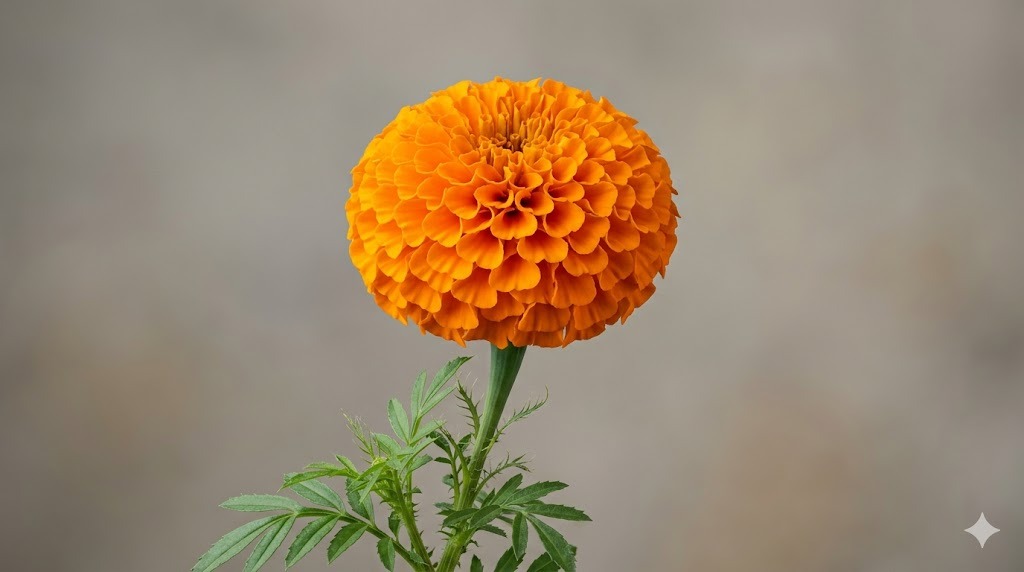
Marigolds are bushy annual plants with finely divided, aromatic, ferny green foliage that has a distinctive pungent scent. The two main garden types:
- French marigolds (Tagetes patula): compact and bushy, 15-30 cm tall, with masses of smaller single or double flowers, often in rich bicolors of orange, yellow, and mahogany-red.
- African / American marigolds (Tagetes erecta): taller, 30-90 cm, with large, full, pompon-like double flowers in solid yellow and orange.
- Signet marigolds (Tagetes tenuifolia): dainty, with small single flowers and edible blooms.
The flowers are daisy-family blooms, single to fully double, in the warm end of the spectrum.
Why People Grow It - Qualities & Benefits
- Extremely easy: one of the simplest flowers to grow from seed - ideal for beginners and children.
- Long, generous bloom: flowers from early summer until the first frost.
- Bright, warm color: cheerful gold, orange, yellow, and mahogany.
- Companion planting: widely used to help protect vegetables (notably from some pests; their roots can suppress certain harmful soil nematodes).
- Cheap and fast: inexpensive seed, quick to flower.
- Pollinator value: single-flowered types are good for bees and hoverflies.
- Some edible flowers (signet types) and useful as cut flowers.
Care
Light & Position
Full sun. Marigolds need a sunny, warm position for the best, most abundant flowering and compact growth; they get leggy and flower poorly in shade.
Soil
Undemanding - any reasonably fertile, well-drained soil suits them. Marigolds tolerate poor soils well; rich soil tends to produce lush foliage at the expense of flowers.
Watering
Water to establish and during dry spells. Marigolds are fairly drought-tolerant once growing; avoid waterlogging, and water the soil rather than the flowers, since wet double blooms can rot.
Feeding
Minimal - marigolds flower well in average soil and need little or no feeding. Over-feeding (especially with nitrogen) gives leaves instead of flowers.
Pinching & Deadheading
Pinch out the growing tips of young plants to encourage bushy growth. Deadhead spent flowers regularly - this is the key to keeping marigolds blooming nonstop until frost; left to set seed, flowering slows.
Hardiness & Winter Care
Marigolds are frost-tender annuals - killed by the first autumn frost and grown fresh each year. Plant out only after the danger of frost has passed.
Planting & Propagation
Marigolds are very easy from seed - sow indoors in early spring for transplants, or sow directly outdoors after the last frost. The large seeds are easy to handle (good for children), and germination is fast and reliable. Plants are also widely sold cheaply as bedding. Marigolds may self-seed in mild conditions.
Common Problems & Pests
- Slugs and snails: the main problem - they love young marigold plants and can destroy seedlings and bedding; protect young plants.
- Few flowers / leggy growth: too much shade, soil too rich, or failure to deadhead.
- Flowers rotting: double African types can rot in wet weather; water at the base.
- Botrytis (grey mould): can affect flowers in damp, crowded conditions.
- Aphids and spider mites: can occur, especially on stressed plants.
- Interestingly, marigolds can also attract slugs away from other plants, sometimes used as a "sacrificial" trap crop.
Toxicity & Safety
True marigolds (Tagetes) are generally regarded as non-toxic / low-toxicity and are considered safe for cats, dogs, and humans - they are not a recognized serious poisoning hazard, and signet marigold flowers are even edible. The sap and the pungent foliage can occasionally cause mild skin irritation in sensitive people. Overall, marigolds are a safe, family-friendly, child-friendly garden plant.
Pros & Cons
Pros
- Extremely easy from seed - perfect for beginners and children.
- Long, generous bloom from early summer to frost.
- Bright, cheerful, warm color; cheap and fast.
- Useful companion plant; pet-safe and family-friendly.
Cons
- Frost-tender annual - replaced every year.
- Slugs and snails love the young plants.
- Double types can rot in wet weather.
- Pungent foliage scent is disliked by some; needs deadheading for best display.
Best Suited For
- Beginner gardeners and children's gardening projects.
- Summer bedding, border edging, and containers.
- The vegetable garden as a companion plant.
- Quick, cheap, reliable color in any sunny spot.
Not ideal for shady gardens, gardeners wanting a permanent perennial, or anyone who dislikes the foliage scent.
FAQ
Do marigolds really help protect vegetables? Marigolds are one of the most popular companion plants. They are widely used in the vegetable garden, and there is genuine evidence that Tagetes roots can suppress certain harmful soil nematodes; they are also used to attract or distract some pests. They are not a magic cure-all, but they are a useful, traditional, and harmless addition to the veg patch.
Why aren't my marigolds flowering well? Usually too much shade, soil that is too rich, or not deadheading. Marigolds want full sun and average (not rich) soil, and regular removal of spent flowers keeps them blooming.
Are marigolds safe for pets? True marigolds (Tagetes) are generally considered non-toxic and a safe, family-friendly plant for cats and dogs, though the pungent foliage may mildly irritate sensitive skin.
How do I keep marigolds blooming all summer? Deadhead regularly - remove the spent flowers before they set seed. Combined with full sun, this keeps marigolds flowering continuously from early summer until the first frost.
Can I grow marigolds from seed? Yes - very easily. The large seeds are simple to handle and germinate fast and reliably, making marigolds one of the best flowers for beginners and for children to grow. Sow indoors in early spring, or directly outdoors after the last frost.