Begonia (Outdoor)
The begonia is one of the most useful summer plants for a tricky situation: it brings bold, generous color to spots that get part shade, where sun-lovers sulk.
🗓️ Last reviewed: June 2026
Overview
The begonia is one of the most useful summer plants for a tricky situation: it brings bold, generous color to spots that get part shade, where sun-lovers sulk. This guide covers the outdoor bedding and container begonias - chiefly the small, glossy, ever-blooming wax (semperflorens) begonias that edge beds and fill pots, and the spectacular large-flowered tuberous begonias, whose rose-like double blooms in jewel colors are container showstoppers. Begonias flower tirelessly all summer with relatively little fuss; their main quirks are a love of part shade over full sun, a hatred of cold and frost, and a dislike of soggy soil.
Origin & Natural Habitat
Begonia is a vast genus - well over 1,000 species - native to moist tropical and subtropical regions across the world. Their wild homes are humid forests and shaded, damp habitats, often as understory or rock-dwelling plants. This origin is the key to their care: begonias like warmth, humidity, light but not scorching, and moist-but-not-waterlogged conditions, and - being tropical - they have no frost tolerance whatsoever.
Appearance
The main outdoor types:
- Wax / semperflorens begonias: compact, bushy plants 15-30 cm tall, with rounded, glossy, fleshy leaves (green or bronze) and a constant scattering of small single or double flowers in white, pink, and red. Neat and uniform - classic bedding and edging plants.
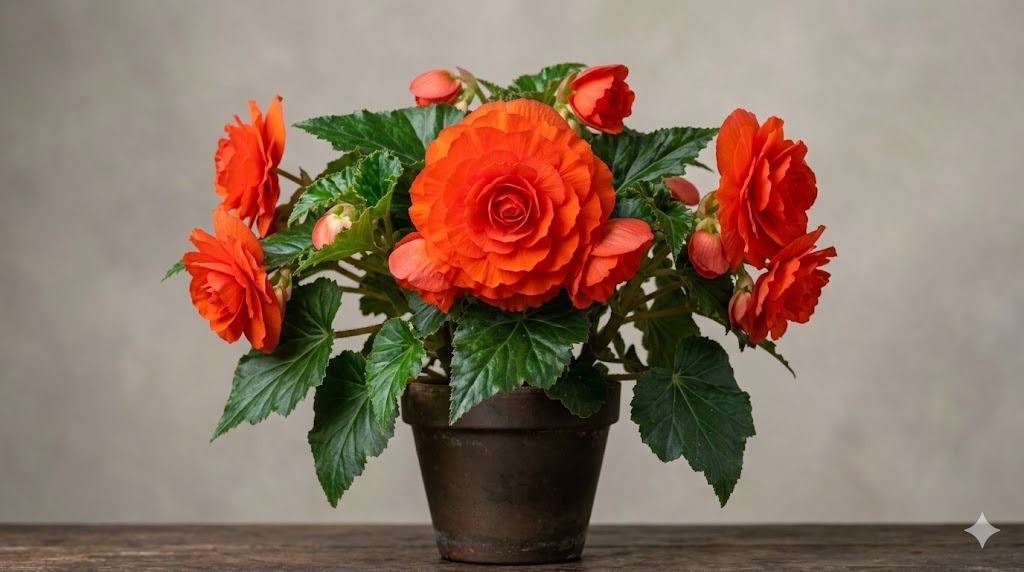
- Tuberous begonias: grown from a tuber, with larger leaves and big, showy, often double flowers - many resembling roses or camellias - in vivid yellow, orange, red, pink, and white; upright types for pots and beds, and pendula (trailing) types that cascade from hanging baskets.
All have somewhat brittle, succulent stems.
Why People Grow It - Qualities & Benefits
- Color for part shade: one of the best bedding plants for shadier spots.
- Nonstop bloom: flowers continuously from late spring until frost.
- Bold display (tuberous types): large, luxurious, rose-like flowers.
- Neat and uniform (wax types): reliable, tidy bedding and edging.
- Trailing options: pendula begonias for spectacular hanging baskets.
- Largely self-cleaning and low-fuss: wax begonias need little deadheading.
- Attractive foliage: glossy green or bronze leaves are good-looking in themselves.
Care
Light & Position
Part shade is ideal - dappled light, or morning sun with afternoon shade. This is unusual among summer bedding and is the begonia's great strength. Wax begonias with bronze foliage tolerate more sun; green-leaved and tuberous types prefer more shade and can scorch in hot full sun. Deep shade reduces flowering.
Soil
Fertile, humus-rich, moist but well-drained soil, or good-quality potting compost. Begonias dislike both drying out and waterlogging - the brittle, fleshy stems and tubers rot in soggy conditions.
Watering
Keep the soil evenly moist but never sodden. Water the soil, not the foliage and flowers - wet leaves and blooms are prone to powdery mildew and rot. Containers need regular attention; let the surface dry slightly between waterings.
Feeding
Feed regularly through summer with a balanced or high-potassium liquid fertilizer to sustain the long flowering display, especially in containers.
Deadheading
Wax begonias are largely self-cleaning and need little or no deadheading. Tuberous begonias benefit from removing spent flowers; many also produce small single female flowers alongside the big showy (male) doubles - these can be pinched off to channel energy into the showy blooms.
Tuberous Begonias - Overwintering
Tuberous begonias can be kept from year to year. After the first frost blackens the foliage, lift the tubers, dry them, and store them somewhere cool, dry, and frost-free over winter; start them back into growth indoors in early spring. Wax begonias are usually treated as annuals and replaced (though they can be overwintered as houseplants).
Hardiness & Winter Care
All these begonias are frost-tender and grown outdoors only in the frost-free months. Plant out only once all danger of frost has passed and the soil has warmed.
Planting & Propagation
Plant out after the last frost. Wax begonias are raised from very fine seed (slow and fiddly) or, more practically, bought as bedding plants. Tuberous begonias are started from tubers indoors in late winter/early spring. Begonias can also be propagated from stem cuttings, and some from leaf cuttings.
Common Problems & Pests
- Powdery mildew: the most common problem - a white coating on leaves, encouraged by overhead watering, poor air flow, and crowded, humid conditions.
- Rot (stem, tuber, crown): caused by waterlogged soil or constantly wet conditions; the brittle succulent stems and tubers are vulnerable.
- Botrytis (grey mould): in cool, damp, crowded situations.
- Scorched, bleached leaves: too much hot direct sun, especially for tuberous and green-leaved types.
- Few flowers: too deep shade, underfeeding, or (for tuberous types) a tuber not yet established.
- Slugs/snails and vine weevil: can damage stems and tubers.
Toxicity & Safety
Begonias are listed as toxic to pets - to cats, dogs, and horses. They contain insoluble oxalate crystals (most concentrated in the underground parts/tubers), and ingestion can cause intense mouth and throat irritation, drooling, and vomiting; tuberous types are considered the more hazardous. For humans they are generally low-risk and not a serious poisoning concern. Serious pet poisoning is uncommon, but pets should be discouraged from chewing begonias, particularly the tubers.
Pros & Cons
Pros
- Excellent color for part shade - unusual among bedding plants.
- Nonstop bloom all summer; wax types largely self-cleaning.
- Tuberous types give large, luxurious, rose-like flowers.
- Tuberous tubers can be saved and reused year to year.
Cons
- Frost-tender - annual, or tubers lifted and stored.
- Toxic to cats, dogs, and horses (oxalate crystals).
- Prone to powdery mildew, and to rot in soggy soil.
- Brittle succulent stems; scorch in hot full sun.
Best Suited For
- Part-shaded beds, borders, and containers.
- Edging and uniform bedding (wax begonias).
- Hanging baskets and showy pots (tuberous and pendula begonias).
- Gardeners wanting summer-long color in a shadier spot.
Not ideal for hot, dry, full-sun positions, deep shade, waterlogged soil, or homes where pets graze freely on plants and tubers.
FAQ
Can begonias grow in shade? Begonias are one of the best summer bedding plants for part shade - dappled light or morning sun with afternoon shade. That is their great strength. They do not, however, thrive in deep, dark shade, where flowering drops off, and most dislike hot full sun, which can scorch the leaves.
Why do my begonia leaves have a white powdery coating? That is powdery mildew, the begonia's most common problem. It is encouraged by watering over the leaves, poor air circulation, and crowded, humid conditions. Water the soil rather than the foliage, give plants space, and remove badly affected leaves.
Can I save my tuberous begonias for next year? Yes - after the first frost, lift the tubers, dry them off, and store them somewhere cool, dry, and frost-free over winter. Start them back into growth indoors in early spring. Wax begonias are usually just replaced each year.
Are begonias safe for pets? No - begonias are listed as toxic to cats, dogs, and horses, containing oxalate crystals (most concentrated in the tubers) that cause mouth irritation and vomiting if eaten. Discourage pets from chewing them, especially the tubers.
Why aren't my tuberous begonias flowering well? Possible causes: too deep shade, underfeeding, or a tuber that has not yet fully established. Also, tuberous begonias produce small single flowers alongside the big showy doubles - removing those small flowers channels the plant's energy into the spectacular blooms.