Ivy (Hedera, Outdoor)
Ivy is the great problem-solver of the garden - the tough, evergreen, self-clinging climber and ground cover that thrives where almost nothing else will.
🗓️ Last reviewed: June 2026
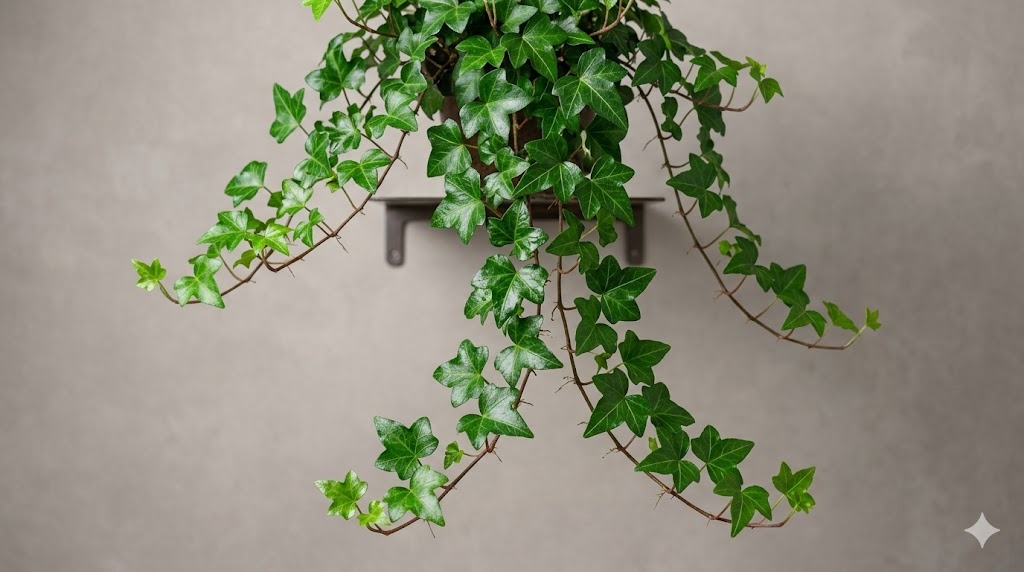
Overview
Ivy is the great problem-solver of the garden - the tough, evergreen, self-clinging climber and ground cover that thrives where almost nothing else will. It clothes shady walls and fences, carpets bare and dry ground beneath trees, masks ugly features, and provides year-round green structure with effectively no care at all. Its leaves come in a surprising range - glossy dark green, gold-variegated, silver-marbled, large or small, plain or deeply lobed. Ivy is also, quietly, one of the most valuable wildlife plants there is. It carries two reputations to weigh up honestly: a fear that it "destroys walls and trees," and a tendency, with some species in some regions, to become invasive.
Origin & Natural Habitat
Hedera is a genus of evergreen woody climbers native to Europe, North Africa, and across Asia. Common or English ivy (Hedera helix) grows wild in woodlands, on cliffs, rocks, and trees, climbing toward the light and carpeting the shaded woodland floor. This origin explains its character completely: ivy is adapted to deep shade, poor and dry soils, and cool conditions, and it has two life stages - a juvenile climbing/creeping stage and a mature, bushy, flowering-and-fruiting stage. (Common ivy is considered invasive in parts of North America and elsewhere - an important point covered below.)
Appearance
Ivy is an evergreen, woody-stemmed plant with two distinct phases:
- Juvenile phase: trailing or climbing stems that self-cling by means of tiny aerial rootlets; the familiar lobed (often three- to five-lobed) leaves; this is the stage used for climbing and ground cover.
- Mature ("arborescent") phase: once ivy reaches the top of its support and good light, it produces shrubby, non-climbing growth with unlobed leaves, followed by clusters of small greenish flowers in autumn and then black berries.
Leaves range from small to large, plain green to gold-, cream-, or silver-variegated.
Why People Grow It - Qualities & Benefits
- Thrives in deep shade: covers walls, fences, and ground where little else grows.
- Year-round evergreen cover: structure and greenery in every season.
- Self-clinging: climbs walls and fences without wires or ties.
- Excellent ground cover: smothers weeds and carpets dry, shady ground under trees.
- Extremely tough and low-maintenance: drought-, poverty-, and neglect-tolerant.
- Outstanding wildlife value: late autumn flowers are a vital nectar source; berries feed birds in winter; the dense evergreen growth shelters and nests birds and insects.
- Variety: many leaf forms and variegations for different effects.
Care
Light & Position
Extremely adaptable - ivy grows in everything from full sun to deep shade. Plain green ivies are the most shade-tolerant; variegated (gold and silver) types keep their colour better and look best with more light, and may scorch in harsh sun or lose their variegation in deep shade.
Soil
Almost any soil - ivy tolerates poor, dry, heavy, chalky, and acidic ground alike. It dislikes only permanently waterlogged conditions.
Watering
Water to establish; once growing, ivy is markedly drought-tolerant and rarely needs watering in the ground. Container-grown ivy needs occasional watering.
Feeding
Generally needs no feeding - ivy grows perfectly well in poor soil.
Pruning & Control
The main "care" ivy needs is control. Trim and cut it back whenever needed, at almost any time of year, to keep it within bounds - off windows, gutters, roof lines, and out of trees you want to protect. Clipping climbing ivy also keeps it in the juvenile, flat-growing phase and prevents the heavy, bushy mature growth. Ivy tolerates hard pruning and renovation very well.
Walls and Trees - the honest facts
- On sound walls: ivy's aerial rootlets cling to the surface but do not generally penetrate or damage structurally sound masonry; it can even buffer a wall from weather. However, ivy will exploit and worsen existing cracks, loose mortar, and damaged render, and can lift weak surfaces - so it is best kept off old or unsound walls and away from gutters and roofs.
- On trees: ivy is not a parasite and does not feed off the tree. On a healthy, vigorous tree it is usually not harmful. But heavy ivy growth can add weight and wind resistance, and shade the canopy, which can stress an already weak or ailing tree - so it is sensible to control ivy on trees that are old, struggling, or valued.
Hardiness & Winter Care
Common ivy is very hardy (commonly to around USDA zone 4-5) and fully evergreen, needing no winter protection. Some large-leaved and variegated types are a little less hardy.
Planting & Propagation
Plant in autumn or spring; ivy establishes easily almost anywhere. Propagation is extremely easy - stems self-layer wherever they touch soil, and cuttings root readily. Be cautious about planting and spreading common ivy where it is classed as invasive.
Common Problems & Pests
- Outgrowing its space / invading: ivy's chief "problem" - it spreads vigorously and must be controlled by regular cutting back; in some regions it is genuinely invasive in the wider landscape.
- Damaging unsound walls or stressing weak trees: as above - keep ivy off old, cracked, or rendered walls and gutters, and control it on ailing or valued trees.
- Variegation fading / scorching: variegated types lose colour in too much shade and may scorch in harsh sun - match the variety to the light.
- Pests: generally robust; ivy can host scale insects, aphids, and red spider mite, and is occasionally affected by leaf spot, but serious problems are uncommon.
Toxicity & Safety
Ivy is toxic. The leaves and berries of Hedera contain irritant compounds (saponins and others) and are poisonous if eaten by cats, dogs, horses, and humans, causing vomiting, diarrhea, drooling, and abdominal discomfort; the berries are the more hazardous part. In addition, contact with ivy sap and foliage can cause skin irritation and allergic dermatitis in sensitive people - wearing gloves and covering up when cutting ivy is sensible. Keep pets and children from eating the leaves and berries. (Ivy's value to wildlife remains high despite its toxicity to mammals.)
Pros & Cons
Pros
- Thrives in deep shade and poor, dry soil where little else will grow.
- Year-round evergreen cover; self-clinging; smothers weeds.
- Extremely tough, drought-tolerant, and virtually maintenance-free.
- Outstanding wildlife value - late nectar, winter berries, shelter.
Cons
- Vigorous - must be controlled; genuinely invasive in some regions.
- Exploits unsound walls and can stress weak or ailing trees.
- Toxic if eaten; sap can cause skin irritation.
- Can be regarded as dull or "weedy"; flowers are insignificant.
Best Suited For
- Shady, difficult walls, fences, and banks.
- Ground cover under trees and in dry shade.
- Masking ugly features; year-round green structure; topiary on frames.
- Wildlife gardens - a top plant for late nectar, berries, and shelter.
Not ideal for old, cracked, or rendered walls and areas near gutters/roofs; ailing or specimen trees; small gardens unwilling to control it; regions where it is invasive; or homes where pets and children might eat the berries (without care).
FAQ
Does ivy damage walls? On structurally sound masonry, ivy's clinging rootlets do not generally penetrate or damage the wall - and can even shelter it from weathering. But ivy will exploit and worsen existing cracks, loose mortar, and damaged render, and can lift weak surfaces. So keep it off old, unsound, or rendered walls, and away from gutters and roofs.
Does ivy kill trees? Ivy is not a parasite - it does not feed off the tree, and on a healthy, vigorous tree it is usually not harmful. However, heavy ivy adds weight and wind resistance and shades the canopy, which can stress a tree that is already old, weak, or ailing. It is sensible to control ivy on struggling or valued trees.
Is ivy poisonous? Yes - ivy is toxic. The leaves and especially the berries can cause vomiting and stomach upset if eaten by cats, dogs, horses, or people, and the sap can cause skin irritation in sensitive individuals. Keep pets and children from eating it, and wear gloves when cutting it.
Why is my variegated ivy turning plain green? Variegated ivies lose their gold or silver colouring in too much shade and revert toward plain green. Give variegated types more light to keep their variegation; plain green ivies are the ones for deep shade.
Is ivy good for wildlife? Very - ivy is one of the best wildlife plants. Its late-autumn flowers are a crucial nectar source when little else is in bloom, its winter berries feed birds, and its dense evergreen growth provides shelter and nesting sites for birds and insects.