Pansy & Viola
Pansies and violas are the cheerful little faces that keep a garden colorful when almost nothing else will - through autumn, winter, and early spring, in the cool months when summer bedding has long given up.
🗓️ Last reviewed: June 2026
Overview
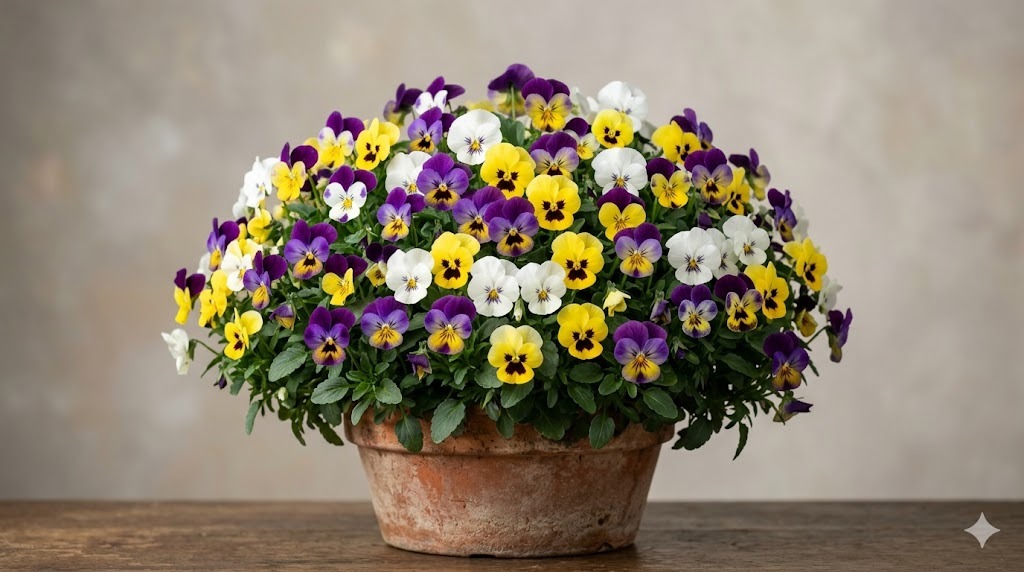
Pansies and violas are the cheerful little faces that keep a garden colorful when almost nothing else will - through autumn, winter, and early spring, in the cool months when summer bedding has long given up. They are close relatives: pansies have larger flowers, often with the characteristic dark "face" blotch, while violas have smaller, daintier, more numerous blooms. Both are tough, hardy, generous, and endlessly useful for pots, window boxes, and bedding. They are usually grown as cool-season annuals or short-lived plants, and their great gift is timing - they fill the gap when the garden would otherwise be bare.
Origin & Natural Habitat
Pansies and violas belong to the genus Viola, which has hundreds of species native across temperate regions worldwide, growing in meadows, woodlands, and grassy banks. The garden pansy (Viola × wittrockiana) is a hybrid developed in the 19th century from wild European violas, including the wild pansy or "heartsease." Their temperate, cool-climate ancestry is the key to their character: they thrive in cool conditions and actually struggle in summer heat, which is the opposite of most bedding plants.
Appearance
Pansies and violas are low, compact, mounding or slightly spreading plants, typically 10-25 cm tall, with rounded or heart-shaped leaves. The flowers have the classic five-petalled Viola form:
- Pansies: larger flowers, often 5-10 cm across, frequently with a bold dark central blotch (the "face"), in a huge range of colors - purple, blue, yellow, white, orange, red, near-black, and many bicolors.
- Violas: smaller flowers, daintier, but produced in greater abundance over a longer period; often more weather-resilient.
Both flower in solids, bicolors, "whiskered," and blotched patterns.
Why People Grow It - Qualities & Benefits
- Cool-season color: flower in autumn, winter, and spring, when little else does.
- Fills the gap: keeps pots and beds colorful between summer displays.
- Cheerful, characterful "faces": charming, friendly flowers.
- Hardy and tough: withstand cold, and often flower on through frost and even snow.
- Huge color range: a pansy or viola for any scheme.
- Edible flowers: the blooms are edible and pretty for decorating food.
- Easy and versatile: excellent in pots, window boxes, edging, and bedding.
Care
Light & Position
Full sun to part shade. In the cool seasons they flower best with good light, including full sun; in warmer conditions a little shade helps them last longer. They generally dislike hot, baking positions.
Soil
Fertile, moist but well-drained soil, or good-quality potting compost. They dislike both drying out and waterlogging.
Watering
Keep the soil consistently moist - pansies and violas dislike drying out - but avoid waterlogging. Containers and window boxes need regular checking, even in cooler weather.
Feeding
Feed regularly through the flowering season with a balanced liquid fertilizer, especially in containers, to sustain the long display. Plants that stop flowering often simply need feeding.
Deadheading
Deadheading is important - regularly removing the spent, faded flowers (and any developing seed pods) is the single best thing you can do to keep pansies and violas blooming generously and for longer. Left to set seed, flowering slows markedly.
Heat and Season
The defining quirk: pansies and violas dislike heat. In hot summer weather they tend to become leggy, sparse, and tired, and often stop flowering or fade out. They are best treated as plants for the cool seasons - planted for autumn-to-spring color and then replaced for summer. Violas generally cope with heat a little better and last longer than large pansies.
Hardiness & Winter Care
Pansies and violas are hardy and cold-tolerant - many will flower through frost and continue (or pause and resume) through winter in milder climates, and survive cold winters to bloom again in spring. They are usually grown as cool-season annuals or biennials rather than long-term perennials.
Planting & Propagation
Plant out in autumn for autumn-to-spring color, or in early spring. Pansies and violas are raised from seed (sown in summer for autumn/winter plants, or late winter for spring) but are most often bought as young plants. Many violas, and the wild types, self-seed generously around the garden - often a welcome bonus.
Common Problems & Pests
- Leggy, sparse, fading plants: usually caused by summer heat (their main weakness), or by a lack of deadheading and feeding.
- Few flowers: not deadheading, underfeeding, or heat stress.
- Slugs and snails: can damage the soft foliage and flowers, especially young plants.
- Pansy downy mildew, leaf spot, and rust: fungal diseases that can affect plants in damp, crowded conditions.
- Pansy sickness (soil-borne fungal rots): can cause plants to collapse, especially where pansies are grown repeatedly in the same soil - rotate plantings.
- Aphids: can cluster on growth and spread virus.
Toxicity & Safety
Pansies and violas (Viola) are generally regarded as non-toxic / low-toxicity and are considered safe for cats, dogs, horses, and humans - indeed the flowers are edible and are popular for decorating cakes, salads, and desserts. They are not a recognized poisoning hazard and are a safe, family-friendly choice for pots and beds.
Pros & Cons
Pros
- Color in the cool seasons - autumn, winter, and spring - when little else flowers.
- Hardy and tough; many flower through frost.
- Cheerful "faces"; huge color range; edible flowers.
- Easy, versatile, and pet-friendly; violas often self-seed.
Cons
- Dislike summer heat - become leggy and fade; usually a cool-season plant only.
- Need regular deadheading and feeding to keep flowering well.
- Soft growth is prone to slugs; various fungal diseases possible.
- Usually short-lived - treated as annuals/biennials, not lasting perennials.
Best Suited For
- Autumn, winter, and spring color in pots, window boxes, and bedding.
- Filling the gap between summer displays.
- Edging paths and beds; underplanting spring bulbs.
- Cool-climate and cool-season gardening; edible-flower growing.
Not ideal for providing summer color in hot conditions, or as a long-lived permanent perennial.
FAQ
Why do my pansies go leggy and stop flowering in summer? Heat is their weakness. Pansies and violas are cool-season plants - in hot summer weather they become leggy and sparse, fade, and often stop blooming. They are best used for autumn-to-spring color and replaced with heat-loving plants for summer. Violas tend to cope with heat a little better than large pansies.
How do I keep pansies and violas flowering for longer? Deadhead regularly - remove the spent flowers and any seed pods - and feed them through the season. Deadheading and feeding are the two things that keep the display generous and prolonged.
Can pansies survive winter? Yes - pansies and violas are hardy and cold-tolerant. Many flower right through frost, and in milder climates continue (or pause and resume) flowering through winter; in colder areas they survive to bloom again in spring.
Are pansy and viola flowers edible? Yes - the flowers of pansies and violas are edible and popular for decorating cakes, desserts, and salads, and the plants are considered non-toxic and safe around pets and children.
When should I plant pansies and violas? Plant in autumn for autumn-through-spring color, or in early spring for a spring display. Buying young plants is easiest; they can also be grown from seed sown in summer (for autumn/winter) or late winter (for spring).