Petunia
The petunia is the workhorse of the summer container - the plant that, more than any other, fills pots, window boxes, and hanging baskets with month after month of nonstop, saturated color.
🗓️ Last reviewed: June 2026
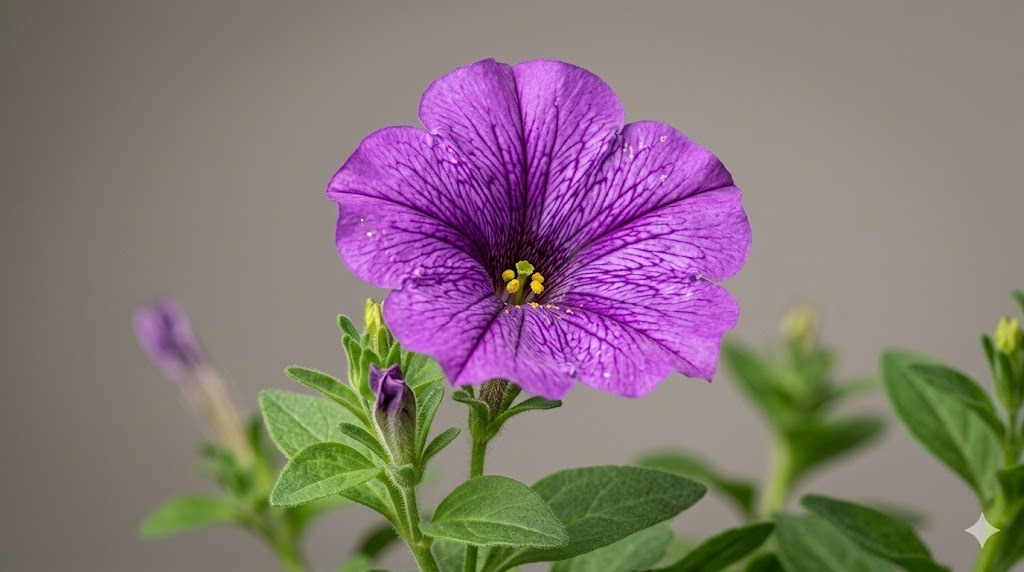
Overview
The petunia is the workhorse of the summer container - the plant that, more than any other, fills pots, window boxes, and hanging baskets with month after month of nonstop, saturated color. Its trumpet-shaped flowers come in almost every color and pattern: solids, stripes, stars, picotee edges, veining, and near-black, often with a pleasant evening fragrance. Petunias are grown as annuals, flowering from late spring until the first frost, and they are cheap, cheerful, and rewarding. The honest trade-off is that they are hungry, thirsty plants that need regular feeding, watering, and (for some types) deadheading to keep that famous display going.
Origin & Natural Habitat
Petunias are native to South America, where their wild ancestors grow in warm, sunny, open habitats. The garden petunia is a hybrid (Petunia × hybrida) developed from those species, and modern breeding - especially the trailing Surfinia and similar vegetatively propagated types, and compact seed series - has transformed the petunia into the container plant we know. Its South American, warm-climate origin explains its love of heat and sun and its complete lack of frost tolerance.
Appearance
Petunias are soft, somewhat sprawling or trailing plants, with slightly sticky, hairy stems and leaves. Heights and habits vary widely by type: compact mounding forms 15-30 cm tall, and vigorous trailing/spreading forms that cascade a metre or more. The flowers are the point - funnel- or trumpet-shaped, single or double, from small ("milliflora") to very large ("grandiflora"), in an enormous color and pattern range. The closely related, very free-flowering small-flowered types are often sold as Calibrachoa ("million bells"), grown the same way.
Why People Grow It - Qualities & Benefits
- Nonstop summer color: flowers continuously from late spring to frost.
- Huge color and pattern range: solids, stripes, stars, picotees, near-black.
- The container plant: unbeatable in pots, window boxes, and hanging baskets.
- Trailing types cascade spectacularly from baskets and walls.
- Cheap and cheerful: inexpensive and quick to give a big display.
- Fragrance: many have a sweet evening scent.
- Fast results: rapid, generous flowering through the whole season.
Care
Light & Position
Full sun - at least six hours, ideally more. Petunias flower poorly and grow leggy and sparse in shade. Warm, sunny, sheltered spots give the best displays.
Soil
Fertile, well-drained soil or a good-quality multipurpose potting compost in containers. They dislike heavy, cold, wet soil.
Watering
Petunias are thirsty, especially in containers and hanging baskets, which dry out fast in summer heat - daily watering is often needed in hot weather. However, avoid waterlogging, and try to water the soil rather than the flowers, as wet blooms can spoil and rot.
Feeding
Petunias are hungry - this is central to a good display. In containers especially, feed regularly (typically weekly) with a high-potassium liquid fertilizer (a tomato-type feed) once flowering begins. Underfed petunias grow pale, yellowish, and stop flowering well. Mixing slow-release fertilizer into the compost at planting also helps.
Deadheading & Pinching
- Pinch out the growing tips of young plants to encourage bushy, branching growth rather than a few long straggly stems.
- Deadheading: older grandiflora and many seed-type petunias benefit greatly from removing spent, faded, soggy flowers, which also prevents seed-setting and prolongs bloom. Many modern trailing types (Surfinia and similar) and Calibrachoa are largely "self-cleaning" and need little or no deadheading - a useful labour saving.
- If plants become leggy and tired by midsummer, cutting them back hard, then feeding and watering, rejuvenates them.
Hardiness & Winter Care
Petunias are frost-tender and grown as annuals. Plant them out only after all danger of frost has passed; they are killed by the first autumn frost and replaced each year.
Planting & Propagation
Plant out after the last frost into warm soil or containers. Seed-type petunias are raised from (very fine) seed sown indoors in late winter/early spring; the vigorous trailing types (Surfinia) and Calibrachoa are vegetatively propagated and bought as young plants or plugs. Most gardeners simply buy plants each spring.
Common Problems & Pests
- Leggy, sparse, few flowers: too little sun, lack of feeding, or no pinching/cutting back; petunias need sun, food, and occasional hard pruning.
- Pale, yellowing foliage: usually underfeeding, or nutrient problems in container compost.
- Flowers spoiled by rain: the soft blooms (especially large grandiflora types) collapse into soggy mush in wet weather; smaller-flowered types are far more weather-resistant.
- Petunia / tobacco budworm: caterpillars that bore into and eat buds and flowers - a common pest.
- Aphids, slugs, and botrytis (grey mould): can affect plants, especially in damp, crowded conditions.
Toxicity & Safety
Petunias are generally regarded as non-toxic / low-toxicity and are considered safe for cats, dogs, horses, and humans - they are not a recognized poisoning hazard and are widely grown in family gardens, pots, and baskets without concern. A good, pet-friendly choice for container displays.
Pros & Cons
Pros
- Nonstop color from late spring to frost.
- The premier plant for pots, window boxes, and hanging baskets.
- Huge color and pattern range; trailing types cascade beautifully.
- Cheap, fast, rewarding, and pet-friendly.
Cons
- Frost-tender - an annual, replaced every year.
- Hungry and thirsty - needs regular feeding and watering.
- Large-flowered types are spoiled by rain.
- Can grow leggy without pinching and cutting back; budworm pest.
Best Suited For
- Containers, hanging baskets, and window boxes - their classic role.
- Sunny summer bedding and border edging.
- Quick, cheap, season-long color; balconies and patios.
- Gardeners who want a big display and don't mind regular feeding and watering.
Not ideal for shady spots, low-effort gardeners unwilling to feed and water regularly, very wet climates (for large-flowered types), or anyone wanting a permanent perennial.
FAQ
Why have my petunias gone leggy with few flowers? Usually a combination of too little sun, not enough feeding, and never pinching or cutting them back. Petunias need full sun, regular high-potassium feeding, and - when they get straggly by midsummer - a hard cut-back followed by feeding and watering to rejuvenate them.
Do I need to deadhead petunias? It depends on the type. Older grandiflora and many seed-grown petunias flower much better if you remove the spent, soggy flowers. But many modern trailing types (Surfinia and similar) and Calibrachoa are largely self-cleaning and need little or no deadheading.
Why are my petunia leaves turning pale or yellow? Most often underfeeding - petunias are hungry plants, especially in containers, and quickly run out of nutrients. Feed regularly with a high-potassium (tomato-type) liquid fertilizer once flowering starts.
Are petunias safe for pets? Yes - petunias are generally considered non-toxic to cats, dogs, and horses, and are a pet-friendly choice for pots and baskets.
Why do my petunia flowers turn to mush after rain? The large-flowered grandiflora types have soft blooms that collapse in wet weather. If you have a rainy climate, choose smaller-flowered types (milliflora) or the trailing Surfinia-style petunias and Calibrachoa, which are much more weather-resistant.