Privet (Ligustrum)
Privet is the familiar, hardworking hedging plant of countless gardens - the dense, tough, fast-growing shrub behind a great many of the green boundary hedges that line streets and divide gardens.
🗓️ Last reviewed: June 2026
Overview
Privet is the familiar, hardworking hedging plant of countless gardens - the dense, tough, fast-growing shrub behind a great many of the green boundary hedges that line streets and divide gardens. It is cheap, easy, vigorous, adaptable, and quick to give privacy and a defined boundary, which is exactly why it has been planted so widely for so long. Privet is not a glamorous plant - it is a practical one - and that practicality is both its strength and its limitation. It is also, like several common hedging plants, mildly toxic, and one species in particular can be invasive. For a fast, dependable, no-nonsense hedge, though, privet remains a sensible workhorse choice.
Origin & Natural Habitat
Ligustrum is a genus of shrubs and small trees native to Europe, North Africa, and especially Asia. The common privet (Ligustrum vulgare) is native to Europe; the very widely planted garden hedging privets are often the East Asian Ligustrum ovalifolium (oval-leaved or "garden" privet) and Ligustrum japonicum (Japanese privet). In the wild they grow in woodland, scrub, and hedgerows on a range of soils. Their adaptability in the wild is exactly what makes garden privet so undemanding - and what makes some species spread aggressively where conditions suit them.
Appearance
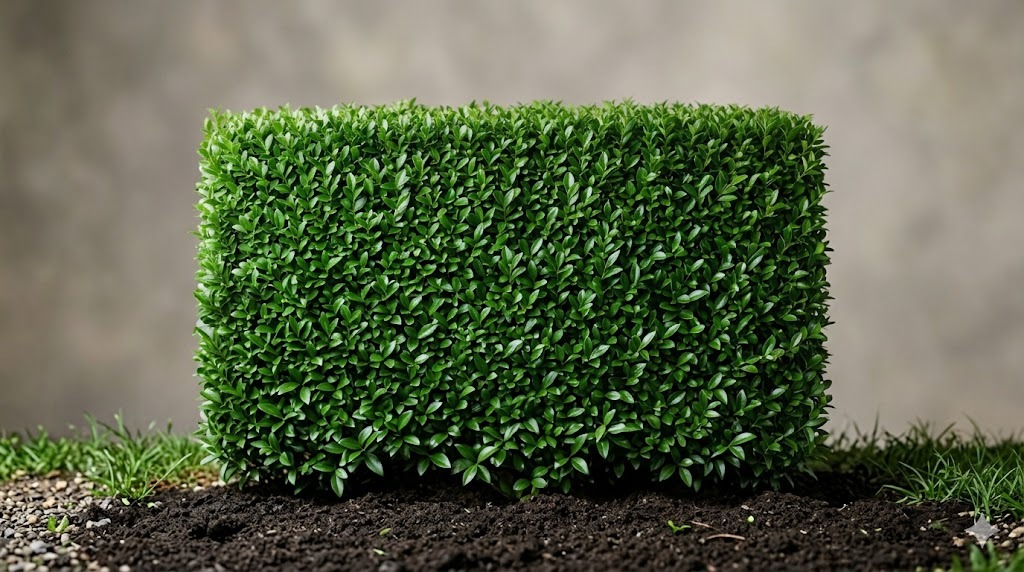
Privet is a dense, twiggy, fast-growing shrub, semi-evergreen to evergreen depending on species and climate (the common oval-leaved privet holds much of its foliage through mild winters but may drop leaves in cold ones; Japanese privet is more reliably evergreen). It has small, oval, glossy green leaves (golden-variegated forms are popular), borne densely on many fine twigs - which is what allows it to be clipped into a solid, neat hedge. Left unclipped, privet produces clusters of small, creamy-white flowers in summer, with a strong, distinctive scent that some find pleasant and others dislike, followed by small black berries.
Why People Grow It - Qualities & Benefits
- Fast, dense hedging: quick to establish a screen, boundary, and privacy.
- Cheap and easy: inexpensive, widely available, and very simple to grow.
- Tough and adaptable: copes with a wide range of soils, sun, shade, and urban conditions.
- Responds well to clipping: the dense twiggy growth takes a neat hedge shape.
- Pollution- and exposure-tolerant: a reliable choice for town and roadside hedges.
- Renovates well: overgrown privet can be cut back hard and will regrow.
- Wildlife value (if allowed to flower): flowers attract pollinators; berries feed birds.
Care
Light & Position
Full sun to part shade - privet is highly adaptable and grows well in a wide range of light conditions, including the partial shade that many hedge sites involve.
Soil
Undemanding - privet tolerates most soils, including poor, dry, and chalky ground, and a wide pH range. It dislikes only permanently waterlogged conditions.
Watering
Water while establishing and during dry spells in the first year or two; established privet is fairly drought-tolerant.
Feeding
A clipped privet hedge is regularly losing leaf to the shears and benefits from a spring feed and mulch to stay dense and well-coloured; privet hedges are also famously hungry and can impoverish the strip of soil they grow in.
Clipping
Privet is fast-growing, so a formal privet hedge needs regular clipping - typically two or three times through the growing season - to keep it neat and dense. This frequent clipping is the main "cost" of a privet hedge. On the plus side, privet regrows readily from old wood, so an overgrown, leggy, or neglected privet hedge can be renovated by hard pruning and will reshoot.
Hardiness & Winter Care
Hardiness varies by species - oval-leaved/garden privet is hardy and semi-evergreen (more deciduous in hard winters); Japanese privet is reliably evergreen but a little less hardy. Most garden privets need no winter protection in moderate climates.
Planting & Propagation
Plant bare-root privet in the dormant season, or container plants year-round, spacing for a hedge. Privet establishes quickly. Propagation is very easy from hardwood or semi-ripe cuttings, which root readily - privet is one of the simplest hedging plants to propagate.
Common Problems & Pests
- Needs frequent clipping: privet's vigour means a formal hedge demands clipping several times a year - a real ongoing commitment.
- Hungry, soil-impoverishing roots: a privet hedge takes a lot of moisture and nutrients from the surrounding soil, making the adjacent strip difficult for other plants.
- Leggy, bare-based growth: neglected privet becomes leggy and thin at the base - renovate by hard pruning.
- Privet thrips, aphids, scale, and leaf miners: can affect privet; honey fungus and leaf spot may also occur.
- Self-seeding / invasiveness: privet can self-seed from its berries, and certain species (notably Chinese and Japanese privets in parts of North America and elsewhere) are classed as invasive - check before planting.
Toxicity & Safety
Privet is toxic. The leaves and especially the berries of Ligustrum contain harmful compounds and are poisonous if eaten by humans, cats, dogs, and horses, causing vomiting, diarrhea, and - in larger quantities - more serious effects; privet has caused poisoning in livestock and is a recognised hazard. The berries are an obvious risk to children. In addition, some people find the scent of privet flowers unpleasant or mildly irritating, and the pollen can be an allergen. Keep children, pets, and grazing animals from eating the foliage and berries.
Pros & Cons
Pros
- Fast, dense, cheap, and easy hedging - quick privacy and boundary.
- Very tough and adaptable; tolerant of poor soil, shade, and urban conditions.
- Clips into a neat hedge; renovates readily from old wood.
- Easy to propagate; wildlife value if allowed to flower and fruit.
Cons
- Vigorous - needs frequent clipping (often several times a year).
- Hungry roots impoverish the adjacent soil.
- Toxic - leaves and especially berries; flower scent disliked by some.
- Some species self-seed and are invasive in certain regions.
Best Suited For
- Fast, practical, formal and informal hedges and screens.
- Boundary and privacy hedging on a budget.
- Town, roadside, and exposed sites; difficult soils.
- Gardeners wanting a quick, dependable, no-nonsense green hedge.
Not ideal for gardeners wanting a low-clipping hedge, regions where privet species are invasive, planting borders right against the hedge (hungry roots), or - given the toxic berries - gardens where small children graze unsupervised.
FAQ
How often do I need to clip a privet hedge? Privet is fast-growing, so a formal privet hedge usually needs clipping two or three times through the growing season to stay neat and dense. This frequent clipping is the main ongoing commitment of a privet hedge - it is the trade-off for how quickly privet gives you a hedge in the first place.
Can I cut back an overgrown privet hedge? Yes - privet regrows readily from old wood, so a leggy, overgrown, or neglected privet hedge can be renovated by hard pruning and will reshoot. This is one of privet's practical advantages.
Is privet poisonous? Yes - privet is toxic. The leaves and especially the berries are poisonous to people, cats, dogs, and horses, causing vomiting and stomach upset, and worse in quantity; privet has poisoned livestock. The berries are a particular risk to children. Keep children, pets, and grazing animals from eating it.
Why won't other plants grow next to my privet hedge? Privet has hungry, vigorous roots that draw a great deal of moisture and nutrients from the surrounding soil, leaving the adjacent strip dry and impoverished and difficult for other plants. Improve and water that soil well, or leave a gap, if you want to plant near a privet hedge.
Is privet invasive? Some species are. While the common European privet is generally well-behaved, certain species - notably Chinese and Japanese privets - are classed as invasive in parts of North America and elsewhere, self-seeding from their berries into the wild. Check what is recommended in your region before planting.