Salvia
Salvia is one of the most useful and rewarding groups of plants in the whole garden - a vast genus that includes spire-flowered border perennials, bushy shrubby types that bloom for months, bedding annuals in fiery reds, and the culinary herb sage.
🗓️ Last reviewed: June 2026
Overview
Salvia is one of the most useful and rewarding groups of plants in the whole garden - a vast genus that includes spire-flowered border perennials, bushy shrubby types that bloom for months, bedding annuals in fiery reds, and the culinary herb sage. This guide focuses on the ornamental garden salvias: the hardy perennial border salvias with their dense vertical spikes of blue, purple, and pink, and the long-blooming shrubby salvias prized for flowering tirelessly from early summer until the first frosts. Salvias are sun-lovers, drought-tolerant, largely pest-free, and irresistible to bees, butterflies, and (where present) hummingbirds - a top-tier plant for color and wildlife with little effort.
Origin & Natural Habitat
Salvia is the largest genus in the mint family, with around 900 species spread across the Americas, the Mediterranean, and Asia. Garden salvias mostly originate from sunny, warm, well-drained habitats - Mediterranean hillsides, Mexican and Central American scrub, and dry grasslands. This sun-and-good-drainage origin defines their care everywhere. Their aromatic foliage, shared with their relative culinary sage, helps them resist heat, drought, and grazing animals.
Appearance
Ornamental salvias are extremely varied, but garden types share upright stems carrying spikes or whorls of two-lipped, tubular flowers. The two main groups:
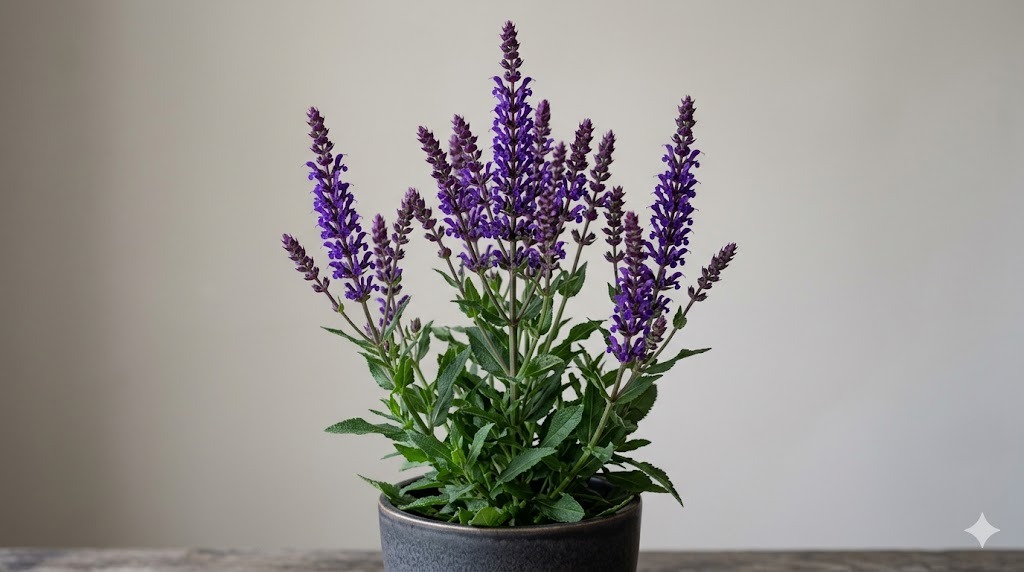
- Hardy herbaceous border salvias (e.g. Salvia nemorosa, S. x sylvestris): clump-forming perennials, 40-80 cm, with dense vertical spikes of violet-blue, purple, or pink in early-to-midsummer; die back in winter.
- Shrubby / half-hardy salvias (e.g. Salvia microphylla, S. greggii, and hybrids like 'Hot Lips'): bushy, semi-woody plants, often with small aromatic leaves, that flower in a huge color range - red, pink, white, purple, bicolors - over an exceptionally long season.
Most have aromatic foliage.
Why People Grow It - Qualities & Benefits
- Exceptionally long bloom: shrubby types flower from early summer to frost.
- Vertical structure: the flower spikes add valuable height and rhythm to borders.
- Outstanding for pollinators: bees, butterflies, and hummingbirds love them.
- Drought-tolerant and tough: thrive in heat and dry, well-drained soil.
- Largely pest- and disease-free: aromatic foliage deters many pests; deer- and rabbit-resistant.
- Huge variety: a salvia for almost every color scheme and situation.
- Easy and rewarding: simple to grow and quick to flower.
Care
Light & Position
Full sun. Salvias need a hot, bright, open position for strong flowering and sturdy growth. Most flower poorly and grow lax in shade. Good air movement suits them.
Soil
Well-drained soil is essential - light, even gritty soil suits them best. Salvias dislike heavy, wet ground, and winter wet is the chief killer of the less-hardy shrubby types. On clay, improve drainage or grow them in pots.
Watering
Water while establishing; thereafter salvias are notably drought-tolerant and need little watering in the ground. Overwatering is more dangerous than underwatering, especially in heavy soil. Pots need more regular watering.
Feeding
Light feeding only. Salvias flower well in lean conditions; rich feeding produces soft, floppy, leafy growth at the expense of flowers.
Deadheading & Pruning
- Border perennials: cut back the spent flower spikes after the first flush - this reliably triggers a strong second flush later in the season.
- Shrubby salvias: deadhead through the season to keep them blooming; prune lightly in spring once new growth shows (not in autumn) to keep them bushy and shapely. Avoid cutting hard into old bare wood.
Hardiness & Winter Care
Hardy border salvias (S. nemorosa and similar) are reliably hardy, commonly to around USDA zone 4-5. Shrubby salvias are less hardy (often zone 7-9) and the main risk to them is winter wet combined with cold - sharp drainage, a sheltered spot, or growing in pots that can be protected all greatly improve survival. Many gardeners overwinter cuttings of tender types as insurance.
Planting & Propagation
Plant in spring, after frost, into warm, well-drained soil. Propagate easily from softwood or semi-ripe cuttings - shrubby salvias root readily, and cuttings are the best insurance against losing a tender plant over winter. Hardy border types can also be divided in spring.
Common Problems & Pests
- Plant lost over winter: usually the less-hardy shrubby types killed by cold, wet soil - improve drainage, shelter, or grow in pots; keep cuttings as backup.
- Floppy, leggy, few flowers: too much shade or soil too rich.
- Bare, woody shrubby salvias: caused by not pruning, or by cutting into old wood; prune lightly each spring into green growth.
- Pests: unusually trouble-free; aromatic foliage deters many pests, though aphids and (in greenhouses) whitefly can occur.
Toxicity & Safety
Ornamental salvias are generally regarded as non-toxic / low-toxicity and are considered safe for cats, dogs, horses, and humans - the genus includes the culinary herb sage, and salvias are widely grown in family and wildlife gardens without concern. They have high pollinator value and are a good, pet-friendly choice. (Note: a few specialty Salvia species grown elsewhere have psychoactive properties, but the ordinary ornamental garden salvias are not a concern.)
Pros & Cons
Pros
- Exceptionally long bloom (shrubby types flower to frost).
- Outstanding for bees, butterflies, and hummingbirds.
- Drought-tolerant, tough, and largely pest-free.
- Pet-friendly; huge variety; vertical border structure.
Cons
- Need full sun and sharp drainage - fail in wet, heavy soil.
- Shrubby types are not very hardy; vulnerable to winter wet.
- Can grow floppy or woody without correct pruning.
- Tender types may need overwintering or replacing.
Best Suited For
- Sunny, well-drained borders; gravel and Mediterranean-style gardens.
- Pollinator and wildlife gardens.
- Pots and containers on hot patios (also easier to overwinter tender types).
- Low-water, low-maintenance planting schemes.
Not ideal for shady gardens, heavy wet soils (without drainage improvement), or cold gardens - for the tender shrubby types.
FAQ
Why did my salvia die over winter? Most often it was one of the less-hardy shrubby salvias killed by cold combined with wet soil. Improve drainage, give it a sheltered spot, or grow it in a pot you can protect - and always keep a few cuttings as insurance.
How do I get my salvia to keep flowering? For hardy border salvias, cut back the spent flower spikes after the first flush to trigger a strong second one. For shrubby salvias, deadhead regularly through the season - they will then flower right up to the first frosts.
When should I prune a shrubby salvia? In spring, once new growth appears - not in autumn. Prune lightly to keep it bushy, and avoid cutting hard into old, bare woody stems, which may not regrow.
Are salvias safe for pets? Yes - ordinary ornamental garden salvias are considered non-toxic to cats, dogs, and horses. The genus includes culinary sage and is widely grown in family gardens.
Are salvias good for pollinators? Excellent - the tubular flowers are a favorite of bees, butterflies, and hummingbirds, and the long bloom season means they provide nectar for months.