Sedum / Stonecrop
Sedum, also called stonecrop, is the ultimate easy plant - a hardy succulent perennial that thrives on the very things that kill fussier plants: heat, drought, and poor soil.
🗓️ Last reviewed: June 2026
Overview
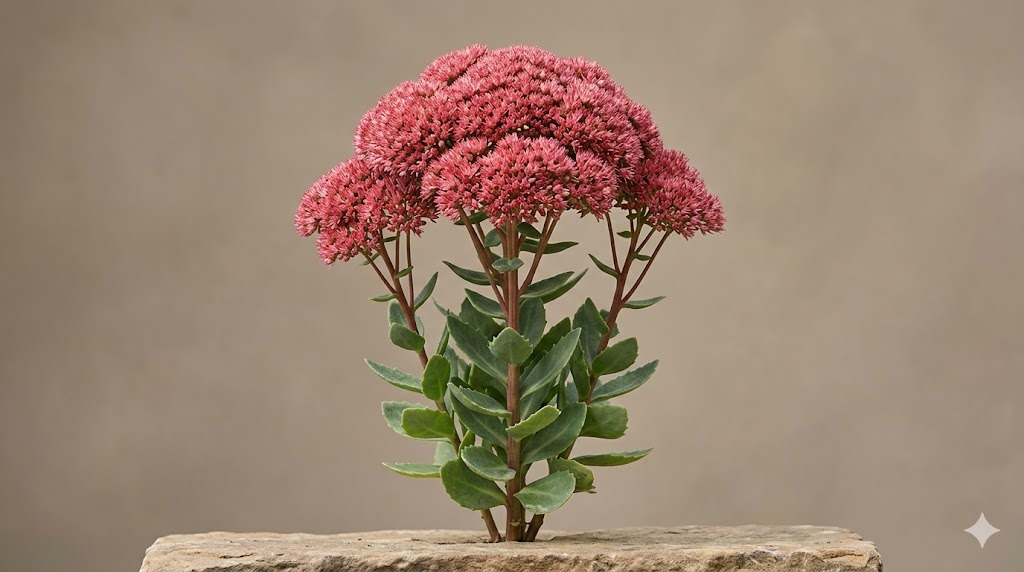
Sedum, also called stonecrop, is the ultimate easy plant - a hardy succulent perennial that thrives on the very things that kill fussier plants: heat, drought, and poor soil. The group falls into two broad personalities. Low, creeping sedums form drought-proof carpets and mats for rockeries, walls, gravel, and green roofs. Tall, upright "border" sedums (such as the classic 'Autumn Joy' / Hylotelephium) build neat fleshy clumps that, late in the year, are topped with broad domed flower heads that turn from green to rose to deep russet - providing some of the most valuable late-season nectar for bees and butterflies. Sedum is a plant for anyone who wants maximum reward for minimum effort.
Origin & Natural Habitat
Sedums are succulents found across the Northern Hemisphere, growing wild on rocky outcrops, cliffs, mountain screes, dry walls, and stony, sun-baked ground - hence the name "stonecrop." They are adapted to drought, heat, intense light, and lean soil, storing water in their thick fleshy leaves. This origin defines their care completely: full sun, sharp drainage, lean soil, and almost no watering. (Botanically, many of the tall border types have been reclassified into the genus Hylotelephium, but gardeners still know them all as sedum.)
Appearance
- Creeping sedums: low ground-hugging plants, only 5-15 cm tall, with small fleshy leaves in green, blue-grey, gold, bronze, or near-red, forming spreading mats; often studded with small starry yellow, white, or pink flowers.
- Upright / border sedums: clump-forming, 30-60 cm tall, with sturdy stems and thick succulent grey-green leaves, topped in late summer and autumn by large flat or domed flower heads that age through pink to rust and then to handsome brown winter seed heads.
Why People Grow It - Qualities & Benefits
- Extreme toughness: drought-, heat-, and poverty-proof; thrives on neglect.
- Late-season flowers: border sedums bloom when much of the garden fades.
- Outstanding for autumn pollinators: a critical late nectar source for bees and butterflies.
- Winter structure: the dried flower heads stand handsomely through winter.
- Versatile: carpets, green roofs, walls, gravel gardens, borders, and pots.
- Year-round foliage interest: attractive succulent leaves in many colors.
- Very easy to propagate: roots from the smallest piece.
Care
Light & Position
Full sun. Sedums need a hot, bright, open position for compact, sturdy growth and good flowering. In shade, especially the tall border types, they grow weak and flop open.
Soil
Poor to average, sharply drained soil - gritty, sandy, or stony ground is ideal. Sedums dislike rich, heavy, or wet soil; winter wet is their main enemy. Rich soil also makes border sedums tall, soft, and floppy.
Watering
Minimal. Water new plants to establish; after that, sedums are exceptionally drought-tolerant and need little or no watering in the ground. Overwatering causes rot and flopping. Even potted sedums need only occasional water.
Feeding
Do not feed. Sedums want lean conditions; feeding produces soft, floppy, weak growth - the classic cause of border sedums splaying open.
Preventing the Flop (border sedums)
Tall border sedums are notorious for splaying open in the middle. Causes are too much shade, too-rich soil, or too much water. The reliable fix is the "Chelsea chop": in late spring, cut the whole clump back by about a third to a half. The plant regrows sturdier, more compact, and self-supporting, flowering slightly later but standing upright.
Seasonal Care
Leave the flower heads standing through winter for structure and wildlife; cut old stems down in late winter or early spring. Shear creeping sedums lightly to tidy them if needed.
Hardiness & Winter Care
Most garden sedums are very hardy, commonly to around USDA zone 3-4, and need no winter protection. The real winter risk is wet soil rotting the crown - sharp drainage matters far more than cold tolerance.
Planting & Propagation
Plant in spring or autumn in full sun and well-drained soil. Propagation could not be easier: creeping sedums root wherever a stem touches soil; border sedums grow readily from stem cuttings, leaf cuttings, or division. A snapped-off piece pushed into gritty soil will usually root.
Common Problems & Pests
- Border sedum flopping open in the centre: the classic problem - too much shade, rich soil, or water; cured by the late-spring Chelsea chop and lean, sunny, dry conditions.
- Rot / mushy stems: caused by wet, heavy soil or overwatering, especially in winter.
- Leggy, weak growth: too much shade.
- Pests: generally trouble-free; vine weevil, aphids, slugs, and mealybugs occur occasionally but rarely seriously.
Toxicity & Safety
The picture is mixed and worth noting. Many sedums are considered low-toxicity, and a few species are even edible - but some sedums contain compounds that can cause mild stomach upset, vomiting, or skin irritation if eaten or handled by pets or people, and certain species are listed as mildly toxic to cats and dogs. As the genus is large and variable, it is sensible to treat garden sedum as potentially mildly toxic: discourage pets and children from eating it, though it is not regarded as a serious poisoning hazard, and it remains an excellent, safe-to-grow wildlife plant.
Pros & Cons
Pros
- Extremely tough - drought-, heat-, and neglect-proof.
- Border types give valuable late-season flowers and winter structure.
- Outstanding autumn nectar for bees and butterflies.
- Very easy to propagate; versatile across many situations.
Cons
- Border sedums flop open without lean conditions or the Chelsea chop.
- Rots readily in wet, heavy soil.
- Needs full sun; weak and leggy in shade.
- Some species are mildly toxic / irritant - caution with pets and children.
Best Suited For
- Hot, dry, sunny gardens; gravel and Mediterranean-style gardens.
- Rockeries, dry walls, green roofs, and ground cover (creeping types).
- Late-season and pollinator borders (upright types).
- Low-water, low-maintenance planting; pots and containers.
Not ideal for wet, heavy, shady gardens, or anyone wanting a lush, rich, well-fed border.
FAQ
Why does my tall sedum flop open in the middle? Almost always too much shade, soil that is too rich, or too much water - all of which produce soft, top-heavy growth. The reliable cure is the "Chelsea chop": cut the whole clump back by a third to a half in late spring, and it will regrow sturdy, compact, and self-supporting.
Do sedums need watering? Very little. Water new plants to establish; after that, sedums are succulents and extremely drought-tolerant, needing little or no watering in the ground. Overwatering causes rot - it is far more dangerous than drought.
Are sedums good for pollinators? Yes - especially the tall border types, whose late-summer and autumn flowers are one of the most important nectar sources for bees and butterflies as the season ends.
Are sedums safe for pets? The genus is variable. Many sedums are low-toxicity, but some species can cause mild stomach upset or skin irritation and are listed as mildly toxic to cats and dogs. Treat garden sedum as potentially mildly toxic and discourage pets from eating it, though it is not a serious poisoning hazard.
How do I make more sedum? Extremely easily - creeping types root where stems touch the soil, and border types grow from stem cuttings, leaf cuttings, or division. A broken-off piece pushed into gritty soil will usually root.