Spirea
Spirea (also spelled spiraea) is one of the most dependable, easy-going flowering shrubs in the garden - the kind of plant that simply works, year after year, with very little from the gardener.
🗓️ Last reviewed: June 2026
Overview
Spirea (also spelled spiraea) is one of the most dependable, easy-going flowering shrubs in the garden - the kind of plant that simply works, year after year, with very little from the gardener. It comes in two broad personalities: graceful spring-flowering types that arch with cascades of white blossom, and compact summer-flowering types that form neat mounds topped with flat pink, rose, or white flower clusters, often with bright yellow, orange, or lime foliage as a bonus. Hardy, adaptable, fast, and almost trouble-free, spirea is a classic "beginner's shrub" - and a good choice for anyone who wants reliable color without fuss.
Origin & Natural Habitat
Spireas are deciduous shrubs in the rose family, with around 80-100 species native across the temperate Northern Hemisphere - especially East Asia, but also Europe and North America. In the wild they grow on open hillsides, woodland edges, scrub, and stream banks in well-drained ground. They are plants of cold-winter climates, fully hardy and undemanding, which is the root of their easy reputation.
Appearance
Spireas are small-to-medium deciduous shrubs, generally 0.5-2.5 m. The two main garden groups:
- Spring-flowering (e.g. Spiraea x vanhouttei, "bridal wreath"): larger, with long arching branches that in spring become wreathed in clusters of small white flowers - a fountain of blossom.
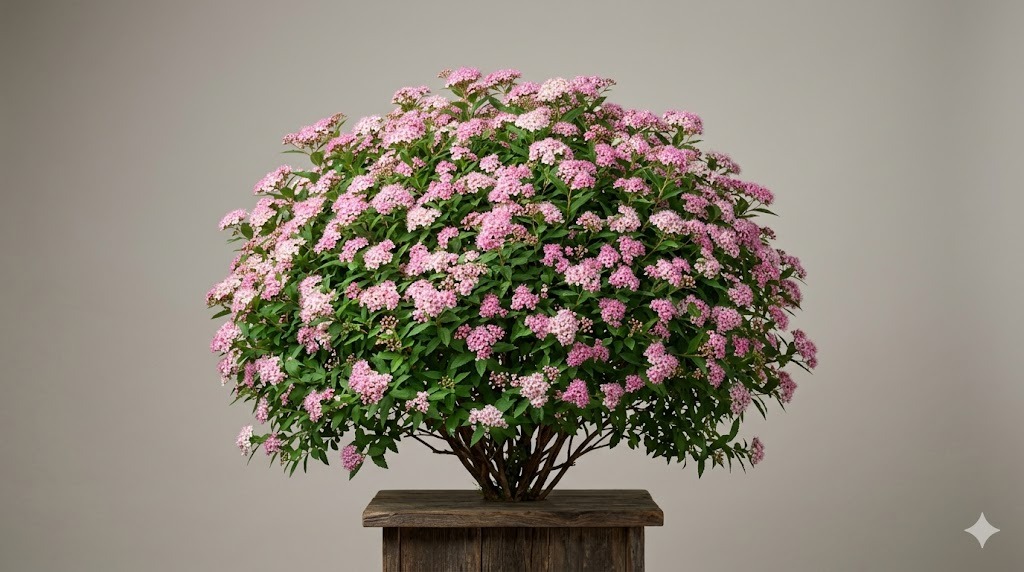
- Summer-flowering (e.g. Spiraea japonica): compact, rounded, mounding shrubs with flat-topped clusters of pink, rose, red, or white flowers through summer; many varieties have colorful foliage (golden, lime, bronze, orange) and good autumn tints.
Why People Grow It - Qualities & Benefits
- Easy and reliable: one of the most foolproof flowering shrubs.
- Long season of interest: flowers plus, in many types, colorful foliage spring to autumn.
- Compact options: japonica types stay small and tidy - ideal for small gardens.
- Fast and adaptable: quick to establish; tolerant of a wide range of conditions.
- Pollinator-friendly: the flowers attract bees and butterflies.
- Versatile: good as low hedging, edging, mass planting, foundation shrubs, and in pots.
Care
Light & Position
Full sun for the best flowering and the brightest foliage color; spirea tolerates light shade but flowers and colors less well there.
Soil
Undemanding - any reasonably fertile, well-drained soil suits it. Spirea tolerates most soil types and pH; it dislikes only permanently waterlogged ground.
Watering
Water while establishing and during dry spells in the first year or two. Established spireas are fairly drought-tolerant and need watering only in prolonged dry weather.
Feeding
Light needs - a spring feed or compost mulch is plenty.
Pruning - depends on the type
The two groups are pruned at opposite times:
- Spring-flowering spireas flower on old wood. Prune them immediately after flowering, cutting back flowered stems and removing some old growth.
- Summer-flowering spireas (japonica) flower on new wood. Prune them in late winter or early spring, cutting back hard for compact shape and strong flowering. A light shear after the first flush of summer flowers often encourages a second flush. Match the pruning time to your type.
Hardiness & Winter Care
Spireas are very hardy - most are reliable to around USDA zone 4 - and need no winter protection. They are deciduous, dying back to bare stems over winter and regrowing freely in spring.
Planting & Propagation
Plant in autumn or spring in sun and well-drained soil. Propagation is easy from softwood or semi-ripe cuttings, and clump-forming types can be divided. Spirea is quick to establish and increase.
Common Problems & Pests
- Few flowers / leggy growth: usually too much shade, or pruning at the wrong time for the type.
- Untidy, overgrown shrub: old spring-flowering types especially can sprawl; renovate with hard pruning after flowering.
- Pests/disease: generally very trouble-free; aphids and occasional powdery mildew or leaf spot may appear but rarely cause serious harm.
- Self-seeding / spreading: some species can spread by seed or suckers; a few (e.g. certain non-native species in parts of North America) are considered locally invasive - check before planting.
Toxicity & Safety
Spirea is generally regarded as non-toxic / low-toxicity to cats, dogs, horses, and humans, and is considered a pet-safe garden shrub. It is widely used in family gardens without concern, and the flowers have good pollinator value.
Pros & Cons
Pros
- Extremely easy, hardy, and reliable - a great beginner's shrub.
- Long interest: flowers plus colorful foliage in many types.
- Compact varieties suit small gardens and containers.
- Pet-friendly and good for pollinators.
Cons
- Pruning time differs by type - easy to get wrong.
- Spring-flowering types can become large and untidy.
- Individually, the flowers are small and the plant is unremarkable out of season.
- Some species can self-seed or spread, and a few are locally invasive.
Best Suited For
- Beginner gardeners and low-maintenance gardens.
- Small gardens and containers (compact japonica types).
- Low hedging, edging, mass planting, and foundation borders.
- Sunny mixed borders wanting easy, dependable color.
Not ideal for deep shade, waterlogged soil, or gardeners wanting a single dramatic specimen plant.
FAQ
When should I prune my spirea? It depends on the type. Spring-flowering spireas bloom on old wood - prune them right after flowering. Summer-flowering (japonica) spireas bloom on new wood - prune them in late winter or early spring. Identify which you have first.
Why isn't my spirea flowering well? Usually too much shade, or pruning at the wrong time for its type. Give it full sun and prune according to whether it is a spring- or summer-flowering type.
Is spirea safe for pets? Yes - spirea is generally considered non-toxic to cats, dogs, and horses.
Can I cut a summer spirea back hard? Yes - summer-flowering japonica spireas respond very well to hard pruning in late winter or early spring, becoming compact, tidy, and free-flowering. Shearing lightly after the first flush often brings a second.
Is spirea a good shrub for beginners? Very much so - it is hardy, adaptable, fast, drought-tolerant once established, and almost trouble-free, making it one of the most reliable flowering shrubs a new gardener can choose.