Strawberry
The strawberry is the easiest, sweetest, most rewarding fruit a beginner can grow - and one of the most delicious.
🗓️ Last reviewed: June 2026
Overview
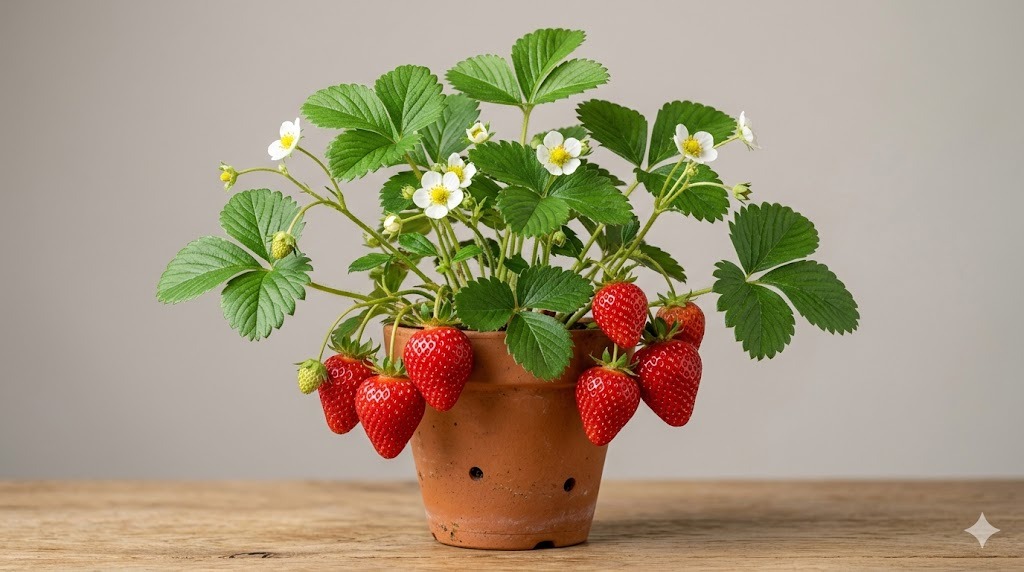
The strawberry is the easiest, sweetest, most rewarding fruit a beginner can grow - and one of the most delicious. A truly ripe, sun-warmed strawberry picked straight from the plant is a different fruit entirely from the firm, pale, under-ripe berries of the supermarket, picked early to survive transport. Strawberries are compact, productive, and adaptable: they thrive in beds, borders, raised beds, pots, hanging baskets, and dedicated strawberry planters, making them ideal even for the smallest garden or a balcony. They are perennials that crop year after year, multiply themselves for free, and ask only for sun, decent soil, and a little protection of the precious ripening fruit.
Origin & Natural Habitat
The wild ancestors of the strawberry - small woodland and alpine species - grow across the temperate Northern Hemisphere in woodland edges, clearings, and grassy banks. The large modern garden strawberry (Fragaria × ananassa) is a hybrid that arose from the chance crossing of two American species in 18th-century Europe. Strawberries are low, spreading perennials that naturally propagate by sending out runners - long stems that root where they touch the ground - a habit that is central to how the garden plant is grown and multiplied.
Appearance
The strawberry is a low, clump-forming herbaceous perennial, generally only 15-30 cm tall, with toothed, trifoliate (three-leaflet) green leaves. It produces clusters of small white (sometimes pink) five-petalled flowers, each of which, once pollinated, swells into the familiar red, seed-studded fruit. The plant spreads by runners - slender stems that arch out and root at their tips to form new plantlets. The main garden types are:
- Summer-fruiting (June-bearing): one concentrated, heavy crop in early-to-midsummer.
- Everbearing / perpetual: smaller crops in several flushes from summer into autumn.
- Alpine strawberries: tiny, intensely flavoured berries over a long season, often grown from seed.
Why People Grow It - Qualities & Benefits
- Superb flavour: a fully ripe home-grown strawberry far surpasses shop-bought.
- Easy and beginner-friendly: one of the simplest, most rewarding fruits to grow.
- Compact and adaptable: thrives in beds, pots, baskets, and small spaces.
- Productive: generous crops from a small area.
- Perennial: crops year after year (though plants are best renewed periodically).
- Free new plants: runners provide an endless supply of new plants at no cost.
- Quick reward: fruit in the first or second season - fast satisfaction for new gardeners.
Care
Light & Position
Full sun for the sweetest, best crop - at least six hours a day. Strawberries fruit in part shade but with smaller, less sweet berries. Good air circulation helps prevent disease.
Soil
Fertile, well-drained soil enriched with compost; slightly acidic to neutral is ideal. Strawberries dislike heavy, waterlogged ground - raised beds and containers, with good drainage, suit them very well.
Planting
Plant in spring or, ideally, late summer/early autumn (for a good crop the following year). Planting depth is important: set the plant so the crown (the central growing point) sits right at soil level - not buried, not exposed. A crown buried too deep rots; a crown set too high dries out and the roots suffer.
Watering
Water regularly and consistently, especially while flowering and fruiting and in dry spells. Water the soil, not the fruit and crown - wet fruit and foliage encourage grey mould (botrytis). Containers and baskets dry out fast and need frequent watering.
Feeding
Feed in spring and during the fruiting period with a high-potassium fertilizer (a tomato-type feed) to promote flowers and fruit rather than leaves.
Protecting the Fruit
Ripening strawberries are vulnerable. Traditionally, straw (or mats) is tucked under the developing fruit to keep the berries off the wet soil - this keeps them clean and reduces rotting and slug damage (and is the origin of the name). Netting is usually essential to protect the ripening crop from birds, which will otherwise take the lot.
Runners
Through summer the plants send out runners with new plantlets. Remove most runners during the cropping season so the plant's energy goes into fruit - but you can peg down a few of the best runners to root as free new plants for renewing your strawberry bed.
Renewing the Bed
Strawberry plants crop best for about three years, after which yield and fruit quality decline and disease builds up. Replace plants on a rolling basis - using runners from healthy plants - and grow the new ones in fresh ground or fresh compost.
Hardiness & Winter Care
Garden strawberries are hardy perennials, dying back somewhat in winter and regrowing in spring; most need no special winter protection in moderate climates. Tidy off old foliage after fruiting.
Planting & Propagation
Plant runners or young plants, crown at soil level, in spring or late summer. Propagation is wonderfully easy: peg the plantlets on runners down into soil or small pots until they root, then sever them from the parent - free new plants every year. Alpine strawberries are easily raised from seed.
Common Problems & Pests
- Birds eating the fruit: the number-one problem - birds will strip a strawberry crop; netting is the essential defence.
- Grey mould (botrytis): fuzzy grey rot on the fruit, worse in damp, crowded, wet conditions - improve air flow, keep fruit off wet soil with straw/mats, water the soil not the fruit.
- Slugs and snails: chew holes in the ripening berries - straw, mats, and slug control help.
- Crown set wrong: a buried crown rots; a too-high crown dries out - plant at exactly soil level.
- Declining crops: old plants (over about three years) yield less and accumulate disease and virus - renew the bed.
- Powdery mildew, vine weevil (especially in pots), and viruses: can also affect strawberries.
Toxicity & Safety
The strawberry is non-toxic and entirely safe - the fruit is a beloved food, and the plant is considered safe for cats, dogs, horses, and humans. It is not a poisoning hazard and is one of the most family- and child-friendly crops to grow; children love picking and eating their own strawberries. A genuinely safe, wholesome garden plant.
Pros & Cons
Pros
- Superb flavour - far better than shop-bought.
- Easy, beginner-friendly, and quick to reward.
- Compact and adaptable - beds, pots, baskets, small spaces.
- Perennial; runners give endless free new plants; non-toxic and child-friendly.
Cons
- Birds will strip the crop - netting is essential.
- Fruit is prone to grey mould and slug damage if not protected.
- Plants decline after about three years and need renewing.
- Needs consistent watering and the crown planted at the correct depth.
Best Suited For
- Beginner and family gardens; growing with children.
- Small gardens, raised beds, pots, hanging baskets, and balconies.
- Sunny vegetable and fruit gardens.
- Anyone who wants quick, easy, delicious home-grown fruit.
Not ideal for deep shade, heavy waterlogged soil, or gardeners unwilling to net against birds or renew the plants every few years.
FAQ
How deep should I plant a strawberry? Plant it so the crown - the central growing point where the leaves emerge - sits exactly at soil level. If the crown is buried too deep it rots; if it is set too high the roots dry out and the plant suffers. Crown at soil level is the rule.
Why are the birds getting all my strawberries? Birds love ripe strawberries and will strip a crop - it is the most common strawberry disappointment. The essential defence is netting: cover the plants with bird-proof netting as the fruit begins to ripen.
What are runners, and what should I do with them? Runners are the long stems strawberry plants send out, with baby plantlets that root where they touch the soil. During the cropping season, remove most runners so the plant puts its energy into fruit - but you can peg down a few of the best ones to root as free new plants for renewing your bed.
How long do strawberry plants last? Strawberry plants crop well for about three years, after which yield and fruit quality decline and disease builds up. Renew the bed on a rolling basis, using rooted runners from healthy plants, and plant the new ones in fresh ground or compost.
Why is my strawberry fruit rotting? Most likely grey mould (botrytis), encouraged by damp, crowded conditions and by fruit lying on wet soil. Tuck straw or mats under the developing berries to keep them off the ground, water the soil rather than the fruit, and ensure good air circulation.