Sunflower
The sunflower is pure summer joy - the tall, golden, beaming giant that turns its great face to the sun and lifts the spirits of everyone who sees it.
🗓️ Last reviewed: June 2026
Overview
The sunflower is pure summer joy - the tall, golden, beaming giant that turns its great face to the sun and lifts the spirits of everyone who sees it. It is one of the most rewarding plants to grow from seed: huge, easy seeds, fast and dramatic growth, and a flower that can tower well over head height in a single season. Sunflowers are a favorite for children, for cut flowers, and for wildlife - bees mob the bloom, and birds feast on the seeds in autumn. Beyond the giant single-stemmed types, there are branching, multi-headed varieties in red, bronze, cream, and chocolate, and compact kinds for pots - but the towering yellow giant remains the classic.
Origin & Natural Habitat
The sunflower (Helianthus annuus) is native to North America, where it was domesticated by Indigenous peoples thousands of years ago as a food and oil crop. Its wild relatives grow in open prairies, plains, and disturbed sunny ground. This origin explains everything about its needs: full, blazing sun, room to grow, and the toughness of a prairie annual. Today the sunflower is a major agricultural crop worldwide for seeds and oil, as well as a beloved garden flower.
Appearance
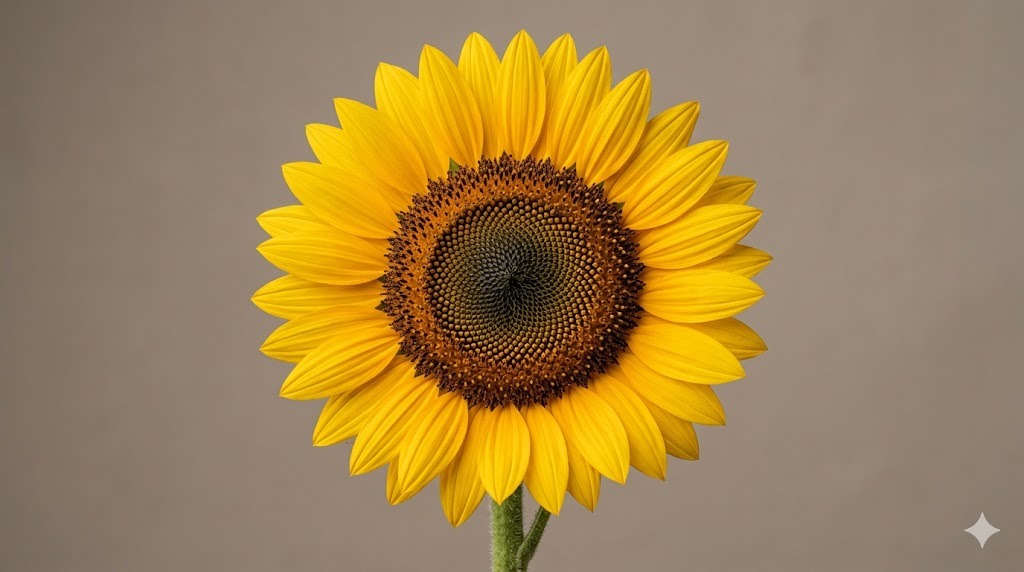
The sunflower is a fast-growing annual with a stout, often hairy stem and large, coarse, heart-shaped leaves. Heights range enormously by variety - from compact 30 cm pot types to giants of 3 m or more. The flower is actually a composite "head" of hundreds of tiny florets: an outer ring of showy ray petals (usually golden yellow, but also red, bronze, cream, and bicolors) around a broad central disc that matures into a packed head of seeds. Single-stemmed giants carry one huge head; branching types carry many smaller blooms over a long season.
Why People Grow It - Qualities & Benefits
- Joyful, dramatic, iconic flowers - instant happiness in the garden.
- The perfect plant for children: big seeds, fast growth, spectacular result.
- Easy and fast from seed: quick, reliable, satisfying germination and growth.
- Excellent cut flowers: branching varieties give armloads for the vase.
- Outstanding for wildlife: bees and pollinators love the flowers; birds feast on the seeds.
- Edible seeds: many varieties produce seeds for people to eat too.
- Height and screening: giants make a fast summer screen or backdrop.
Care
Light & Position
Full sun - the more, the better. Sunflowers need at least six to eight hours of direct sun for strong stems and big blooms. Give tall types a position with some shelter from strong wind, which can snap or topple them.
Soil
Fertile, well-drained soil, improved with compost. Sunflowers are reasonably hungry, especially the giants; they tolerate a range of soils but dislike waterlogging. They have deep taproots and benefit from deep, loose ground.
Watering
Water well, especially while young and during dry spells - sunflowers grow fast and use a lot of water. Deep, regular watering encourages the deep roots that keep tall plants stable.
Feeding
Feed for growth and flowers; a balanced feed suits them, though very high nitrogen can give leafy growth and weaker stems. Compost-enriched soil is usually enough for ordinary types; giant varieties appreciate more.
Support
Tall single-stemmed giant sunflowers, with their heavy heads, often need staking - tie the stem to a sturdy stake as it grows, especially in exposed or windy sites.
Seasonal Care & Seeds
For cut flowers, harvest just as the petals open. To harvest seeds, leave the heads on the plant until the back turns brown and the seeds are plump, then cut and dry them. Or simply leave the heads standing for the birds - a sunflower head is a natural bird feeder.
Hardiness & Winter Care
Sunflowers are frost-tender annuals - they complete their whole life cycle in one season and are killed by frost. (Note: some Helianthus species are perennial, but the classic garden sunflower is an annual.) Sow after the last frost.
Planting & Propagation
Sunflowers are very easy from seed. Sow directly outdoors after the last frost where the plants are to grow, or start in pots indoors a few weeks earlier. The big seeds are simple to handle - ideal for children. Protect emerging seedlings from slugs, snails, and birds, which relish them. Successional sowing extends the display.
Common Problems & Pests
- Slugs, snails, and birds eating seedlings: young sunflowers are very vulnerable - protect them until established.
- Toppling or snapping: tall heavy-headed types in wind or with shallow roots; stake them and water deeply for strong roots.
- Drooping head: a mature seed head naturally becomes heavy and bows down - normal; but a wilting young plant means it needs water.
- Squirrels and birds raiding seed heads: expect competition for ripening seeds.
- Powdery mildew, rust, and sunflower moth: can affect plants, especially when crowded or stressed.
Toxicity & Safety
Sunflowers are generally regarded as non-toxic / low-toxicity and are considered safe for cats, dogs, horses, and humans - the seeds are a well-known human and bird food, and the plant is not a recognized poisoning hazard. A genuinely safe, family- and child-friendly garden plant. (One minor note: sunflower foliage and hulls release substances that can mildly inhibit some other plants nearby, and the hairy foliage may occasionally irritate sensitive skin - but as a garden flower the sunflower is among the safest there is.)
Pros & Cons
Pros
- Joyful, iconic, dramatic flowers; great height and impact.
- The ideal plant for children - easy, fast, spectacular.
- Excellent cut flowers and outstanding for bees and birds.
- Easy and cheap from seed; edible seeds.
Cons
- Frost-tender annual - grown fresh from seed each year.
- Seedlings are vulnerable to slugs, snails, and birds.
- Tall types need staking and can topple in wind.
- Giants take up space and need fertile soil and plenty of water.
Best Suited For
- Children's gardening and family gardens.
- Sunny borders, backs of beds, and fast summer screens.
- Cutting gardens (branching varieties).
- Wildlife gardens - flowers for bees, seed heads for birds.
Not ideal for shady gardens, very windy exposed sites (for the giants, without staking), or anyone wanting a permanent perennial.
FAQ
Why is my sunflower's head drooping? If it is a mature plant with a developed seed head, drooping is normal - the head becomes heavy with seeds and naturally bows down. If a young plant is wilting and drooping, it needs water - sunflowers grow fast and are thirsty.
Do sunflowers really follow the sun? Young sunflower buds and growing tips do track the sun across the sky during the day (a movement called heliotropism). Once the flower head is fully mature, however, it generally settles facing in one fixed direction - often east.
Are sunflowers safe for pets and children? Yes - sunflowers are generally considered non-toxic and are a safe, family- and child-friendly plant. The seeds are a familiar food for people and birds. The hairy foliage may occasionally irritate very sensitive skin.
How do I harvest sunflower seeds? Leave the flower head on the plant until the back of it turns yellow-brown and the seeds look plump and full. Then cut the head, dry it in an airy place, and rub the seeds free. Or simply leave the heads standing in the garden for the birds.
Do tall sunflowers need staking? Often, yes - tall single-stemmed giant varieties carry a heavy head and can be snapped or toppled by wind. Tie the stem to a sturdy stake as it grows, especially in exposed sites, and water deeply to encourage stabilizing deep roots.