Tomato
The tomato is, for countless gardeners, the crop that started it all - the first thing they grew to eat, and the reason they kept gardening.
🗓️ Last reviewed: June 2026
Overview
The tomato is, for countless gardeners, the crop that started it all - the first thing they grew to eat, and the reason they kept gardening. There is a simple, powerful reason: a sun-warmed, home-grown tomato tastes of something that a supermarket tomato simply does not. Tomatoes are productive, rewarding, and well-suited to gardens, pots, growbags, and greenhouses alike. They are not difficult, but they are demanding in a particular way: they need warmth, sun, consistent watering, regular feeding, and - for the most popular kinds - some support and pruning. Master a handful of routines and the tomato repays you with armfuls of fruit all summer.
Origin & Natural Habitat
The tomato (Solanum lycopersicum) originated in western South America and was domesticated in Mexico and Central America, before being carried worldwide. It is a member of the nightshade family (Solanaceae) - the same family as the potato, pepper, aubergine, and the poisonous deadly nightshade - a relationship that explains why the leaves and stems of the tomato are toxic even though the ripe fruit is a beloved food. Its warm-climate origin explains its need for heat and sun and its complete intolerance of frost.
Appearance
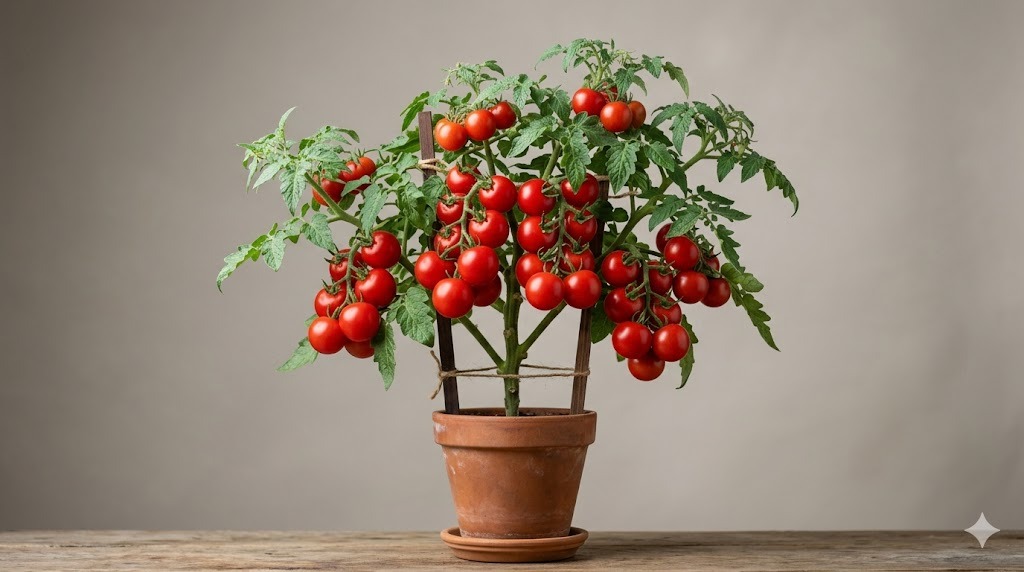
The tomato is a sprawling, soft-stemmed annual (in cultivation) with divided, strongly aromatic green leaves. There are two fundamentally important growth habits:
- Indeterminate ("cordon" / vine) tomatoes: grow as a single main stem (or a few) that keeps extending all season, needing tall support and pruning of side-shoots; they fruit over a long period.
- Determinate ("bush") tomatoes: grow to a set size, bushier and more compact, set most of their fruit over a shorter period, and need little or no pruning - good for pots and for those who want less fuss.
The yellow star-shaped flowers are followed by the fruit, which ranges from tiny cherry tomatoes to large beefsteaks, in red, yellow, orange, purple, green, and striped.
Why People Grow It - Qualities & Benefits
- Unbeatable flavour: a home-grown, vine-ripened tomato far surpasses shop-bought.
- Highly productive: a few plants can supply a household through summer.
- Huge variety: hundreds of varieties - cherry to beefsteak, every colour.
- Versatile growing: beds, borders, pots, growbags, greenhouses, and hanging baskets (trailing types).
- Rewarding and educational: a satisfying, motivating crop - especially for new and young gardeners.
- Good value: a packet of seed yields a season's harvest.
Care
Light & Position
Full sun and warmth - tomatoes need a hot, sunny, sheltered spot (at least six to eight hours of sun). In cooler climates a greenhouse, polytunnel, or a warm sheltered wall greatly improves results.
Soil
Rich, fertile, well-drained soil generously improved with compost or well-rotted manure; or a good-quality potting compost or growbag for containers. Tomatoes are hungry plants.
Watering - consistency is everything
Consistent, regular watering is the single most important tomato routine. Tomatoes need a steady supply of moisture; erratic watering - letting the plant dry out, then drenching it - is the direct cause of several classic problems, including blossom end rot (a dark sunken patch at the base of the fruit, linked to calcium uptake disrupted by irregular watering) and split, cracked fruit. Water deeply and regularly, aiming at the base of the plant, keeping the soil evenly moist; containers and growbags dry out fast and need frequent, often daily, watering in summer.
Feeding
Once the first fruits have set, feed regularly (typically weekly) with a high-potassium fertilizer (a "tomato feed"), which promotes flowering and fruiting rather than leafy growth.
Support & Pruning
- Indeterminate (cordon) tomatoes: must be supported - a tall stake, cane, or string - and tied in as they grow. Pinch out the side-shoots (the shoots that appear in the "armpit" between the main stem and a leaf) regularly, to keep the plant to one or a few main stems and channel energy into fruit. Toward the end of the season, "stop" the plant by pinching out the growing tip so the remaining fruit can ripen.
- Determinate (bush) tomatoes: need little or no side-shooting and only modest support - simpler to grow.
Knowing your type tells you whether to side-shoot or not.
Pollination
Outdoors, wind and insects pollinate tomatoes; under cover, gently shaking the plants or tapping the flower trusses helps fruit set.
Hardiness & Winter Care
Tomatoes are frost-tender and grown as annuals. Sow indoors in early-to-mid spring and plant out only after all danger of frost has passed and the soil and air are warm; the plants are finished by the first autumn frost.
Planting & Propagation
Tomatoes are easy from seed sown indoors in warmth in early spring; grow the seedlings on, harden them off, and plant out after frost - planting them deep (tomatoes can root from the buried stem). Or buy young plants. Choose varieties suited to your space and conditions (greenhouse vs outdoor, bush vs cordon, cherry vs beefsteak).
Common Problems & Pests
- Blossom end rot: a dark, sunken, leathery patch at the base of the fruit - caused by disrupted calcium uptake, which is most often the result of irregular watering. The cure is consistent watering.
- Split / cracked fruit: caused by irregular watering - a sudden surge of water after a dry spell. Again, consistency is the answer.
- Tomato / potato blight: a serious fungal-like disease, especially in warm, wet, humid weather - causing brown patches on leaves, stems, and fruit and rapid collapse; worse on outdoor tomatoes. Grow blight-resistant varieties, ensure air flow, and avoid wetting the foliage.
- Leafy growth, few fruit: too much nitrogen; switch to a high-potassium tomato feed.
- Poor fruit set: too cold, too hot, or poor pollination (help by tapping flowers).
- Pests: aphids, whitefly (especially under glass), and the tomato/tobacco hornworm; various wilts and viruses can also occur.
Toxicity & Safety
This requires a clear distinction. The ripe fruit of the tomato is a safe and nutritious food for humans. However, the leaves, stems, and unripe green fruit contain toxic compounds (including solanine and tomatine, typical of the nightshade family) and are considered toxic to cats, dogs, and horses, and not for human consumption - eating the foliage or large amounts of green plant material can cause drooling, vomiting, diarrhea, and lethargy in pets. So: enjoy the ripe fruit freely, but keep pets from grazing on the foliage, and do not eat the leaves, stems, or unripe fruit. (Green tomatoes are eaten cooked in some cuisines, but the raw foliage and green plant material should be treated as toxic.)
Pros & Cons
Pros
- Outstanding flavour - far better than shop-bought.
- Highly productive; a few plants feed a household.
- Huge variety; grows in beds, pots, growbags, and greenhouses.
- Rewarding, satisfying, and great for new and young gardeners.
Cons
- Frost-tender; needs warmth, full sun, and a long warm season.
- Demanding routines - consistent watering, regular feeding, support, pruning.
- Blight can devastate plants, especially outdoors in wet weather.
- Foliage and green parts are toxic to pets and people.
Best Suited For
- Sunny, sheltered vegetable gardens, beds, and borders.
- Pots, growbags, and containers on patios and balconies.
- Greenhouses and polytunnels (especially in cooler climates).
- New and young gardeners wanting a rewarding first crop.
Not ideal for shady, cold, exposed gardens (without a greenhouse), low-effort gardeners unwilling to water and feed regularly, or homes where pets graze freely on plant foliage.
FAQ
Why do my tomatoes have a dark, sunken patch on the bottom? That is blossom end rot. It is caused by disrupted calcium uptake in the fruit, and the most common underlying cause is irregular watering - letting the plant dry out and then drenching it. The cure is consistent, regular watering that keeps the soil evenly moist.
Why are my tomato fruits splitting and cracking? Splitting is caused by irregular watering - a sudden surge of water (from heavy watering or rain) after the plant has been dry causes the fruit to swell too fast and crack. Consistent, even watering prevents it.
What does "pinching out side-shoots" mean, and do I need to do it? It applies to indeterminate (cordon/vine) tomatoes. Side-shoots are the shoots that grow in the angle between the main stem and a leaf; pinching them out keeps the plant to one or a few main stems and directs energy into fruit. Determinate (bush) tomatoes do not need side-shooting - so identify your type first.
Are tomato plants poisonous to pets? The ripe fruit is safe to eat, but the leaves, stems, and unripe green fruit contain toxic compounds and are considered toxic to cats, dogs, and horses. Eating the foliage can cause drooling, vomiting, and lethargy in pets. Enjoy the ripe tomatoes, but keep pets from grazing on the plants.
Why does my tomato plant have lots of leaves but little fruit? Usually too much nitrogen, which drives leafy growth at the expense of fruit. Once fruit has begun to set, feed with a high-potassium "tomato feed" instead. Poor fruit set can also be caused by temperatures that are too cold or too hot, or by poor pollination.