Tulip
The tulip is the bold, brilliant heart of the spring garden - the bulb that, more than any other, delivers pure, saturated color after a long winter.
🗓️ Last reviewed: June 2026
Overview
The tulip is the bold, brilliant heart of the spring garden - the bulb that, more than any other, delivers pure, saturated color after a long winter. Tulips come in almost every shade except true blue, in an extraordinary variety of forms: classic goblets, elegant lily-flowered points, frilled parrots, doubles like peonies, and delicate species types. They are easy to plant and, for one spring at least, almost guaranteed to perform. The honest catch is what happens after that first spring: many modern hybrid tulips flower spectacularly once and then dwindle, which is why so many gardeners treat the showiest types as a glorious annual display.
Origin & Natural Habitat
Tulips are native to a broad band of central Asia and the surrounding regions - the mountains and steppes of countries from Turkey eastward - where they grow in dry grassland, rocky slopes, and mountain meadows with hot, dry summers and cold winters. Famously, the tulip was carried to the Ottoman Empire and then to the Netherlands, where 17th-century "tulip mania" made it a legend. The wild origin is the key to lasting success: tulips evolved for a hot, dry summer dormancy and a cold winter - and they perennialize best where gardens come closest to that.
Appearance
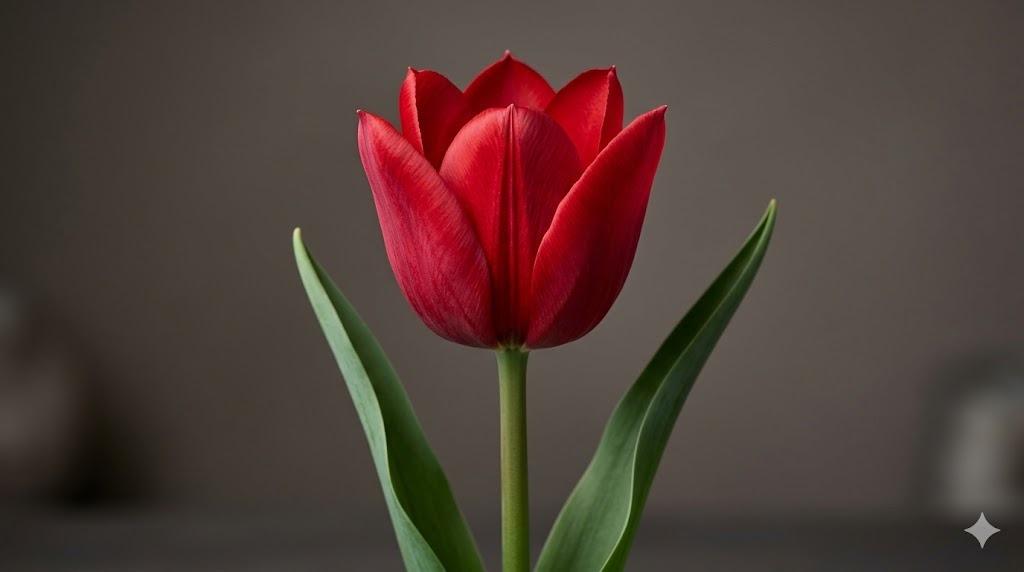
Tulips grow from a teardrop-shaped bulb, producing a few broad, often grey-green leaves and, typically, a single upright flower per stem (some types are multi-flowered). Heights range from 10 cm species tulips to 70 cm tall hybrids. The flower is the classic six-petalled cup, but breeding has produced a huge range: single early, double, triumph, Darwin hybrid, lily-flowered, fringed, parrot, viridiflora, and the small, often more perennial species (botanical) tulips. Flowering spans early to late spring depending on type.
Why People Grow It - Qualities & Benefits
- Bold, saturated spring color: unmatched intensity and range (except true blue).
- Enormous variety: forms, heights, and bloom times for a long, designed display.
- Easy to plant: simple autumn bulb planting; reliable first-spring performance.
- Superb for containers and bedding as well as borders.
- Excellent cut flowers: a florist's staple.
- Species tulips are smaller, charming, and far more reliably perennial.
- Design flexibility: combine early, mid, and late types for weeks of bloom.
Care
Light & Position
Full sun for the best, strongest flowers and to help the bulbs ripen. Tulips tolerate light shade but flower less well and may grow leggy and lean.
Soil
Fertile, well-drained soil is essential. Tulips rot in heavy, wet ground, especially over their summer dormancy. On clay, improve drainage, add grit, or grow them in pots.
Planting Time & Depth
Plant tulip bulbs in autumn - and notably late autumn (cooler weather) is best, which also helps reduce the fungal disease tulip fire. Plant deep - roughly three times the bulb's height (around 15 cm / 6 inches) - pointed end up. Deep planting improves stability and the bulbs' chances of returning.
Watering
Autumn rain usually suffices after planting; water in dry spells during growth. Crucially, tulips need a dry summer dormancy - soggy summer soil rots the bulbs.
Feeding
A balanced bulb fertilizer at planting and again as growth appears in spring supports the bulb. Feeding after flowering helps any chance of perennializing.
After Flowering
Deadhead spent flowers so the plant does not waste energy on seed. Leave the foliage to die down naturally - never cut or knot it green - as the leaves feed next year's bulb. Only remove the leaves once they have yellowed completely.
The Perennializing Question
Many showy modern hybrids flower brilliantly the first spring and then decline. To improve return: choose more perennial types (Darwin hybrids and species tulips are the most reliable), plant deep, in full sun and sharp drainage, deadhead, feed, and let foliage die down. Even so, many gardeners simply treat large-flowered hybrids as a one-season display, lifting and discarding them and replanting fresh bulbs each autumn.
Hardiness & Winter Care
Tulips are hardy and actively require a period of winter cold to flower. In mild, warm-winter climates the bulbs must be pre-chilled in a refrigerator before planting, and are almost always grown as annuals there.
Planting & Propagation
Plant bulbs in late autumn, deep, in well-drained sunny soil or pots. Tulips increase naturally by offset bulbs around the parent, and species types may self-seed, but for the large hybrids, buying fresh bulbs is the usual route to a reliable display.
Common Problems & Pests
- Flowering well once, then dwindling or "going blind": the classic issue - many hybrid tulips are not reliably perennial; bulbs may also be too shallow, in shade, in poor drainage, or weakened by foliage removed too early.
- Tulip fire (Botrytis tulipae): a serious fungal disease causing scorched, distorted, spotted leaves and flowers - destroy affected plants, do not replant tulips in that soil for a few years, and plant in late autumn.
- Bulb rot: caused by wet, poorly drained soil, especially in summer.
- Squirrels, mice, and voles: dig up and eat newly planted bulbs.
- Aphids and slugs: can damage growth and spread virus.
Toxicity & Safety
Tulips are regarded as toxic - they contain irritant compounds (tulipalin and related allergens), concentrated most strongly in the bulb. Ingestion can cause vomiting, drooling, and diarrhea in cats, dogs, and horses, and stomach upset in humans; the bulbs are the most dangerous part and can be mistaken for onions. Handling large quantities of bulbs can also cause an itchy skin reaction ("tulip fingers"). Keep bulbs away from pets and children, store them securely, and wear gloves if handling many.
Pros & Cons
Pros
- Bold, saturated spring color in unmatched variety.
- Easy to plant; near-guaranteed first-spring display.
- Superb in borders, bedding, containers, and as cut flowers.
- Species and Darwin hybrid types can perennialize well.
Cons
- Many showy hybrids decline after the first year - often treated as annuals.
- Need a dry summer dormancy and sharp drainage; rot in wet soil.
- Tulip fire disease and rodents can spoil displays.
- Toxic (especially the bulbs); require winter cold or pre-chilling.
Best Suited For
- Sunny, well-drained borders, bedding schemes, and containers.
- Spring displays designed with early/mid/late types for weeks of color.
- Cutting gardens.
- Rockeries and naturalized areas (species tulips, the most perennial).
Not ideal for wet, heavy, shady soils, mild frost-free climates (without pre-chilling), or gardeners unwilling to either choose perennial types or replant hybrids annually.
FAQ
Why did my tulips flower beautifully the first year but barely the second? Many modern hybrid tulips are simply not reliably perennial - they put on one great show and then dwindle. To improve return, choose Darwin hybrids or species tulips, plant deep, in full sun and well-drained soil, deadhead, feed, and let the foliage die down naturally. Many gardeners just treat large hybrids as a one-season display and replant fresh bulbs each autumn.
When and how deep should I plant tulip bulbs? Plant in autumn - late autumn is best, as cooler soil reduces tulip fire disease. Plant deep, about three times the bulb's height (roughly 15 cm), with the pointed end up.
Are tulips poisonous to pets? Yes - tulips are toxic, with the irritant compounds most concentrated in the bulb. Eating them can cause vomiting and drooling in cats and dogs. Keep bulbs especially away from pets, as they can be mistaken for onions.
Can I cut off the tulip leaves after flowering? Not while they are green. Deadhead the spent flowers, but leave the foliage to die down completely on its own - the leaves feed next year's bulb. Remove them only once fully yellowed.
Can I grow tulips in a mild, frost-free climate? Tulips need winter cold to flower. In mild climates the bulbs must be pre-chilled in a refrigerator for several weeks before planting, and they are almost always grown as annuals there.