Wisteria
Wisteria is one of the most magnificent - and most demanding - plants a gardener can grow.
🗓️ Last reviewed: June 2026
Overview
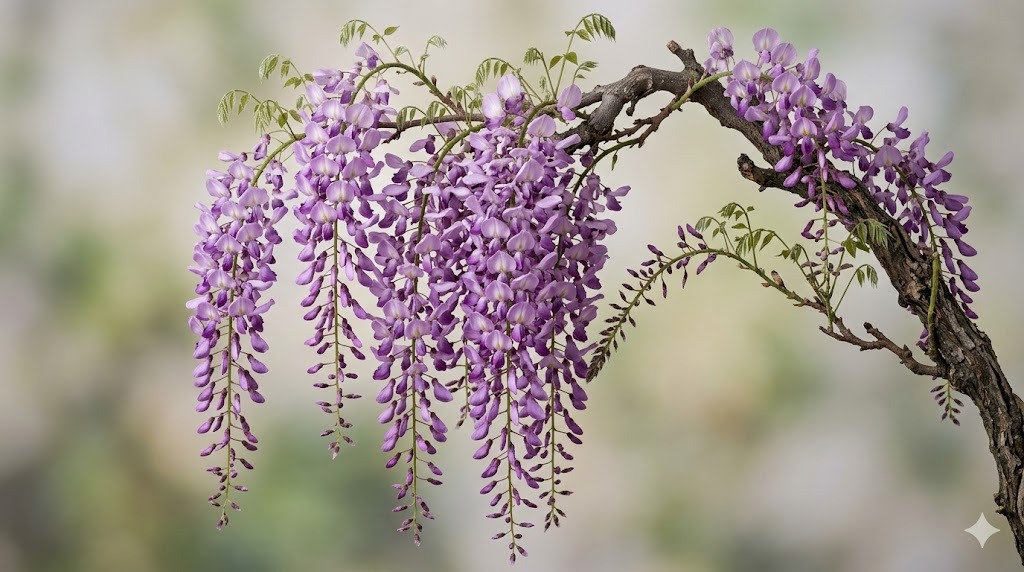
Wisteria is one of the most magnificent - and most demanding - plants a gardener can grow. In late spring it drips with long, pendent racemes of fragrant, pea-like flowers, usually in shades of mauve, violet, blue, pink, or white, draping a house front, pergola, or wall in a curtain of bloom that stops people in the street. But wisteria is a huge, immensely powerful, long-lived woody climber that can lift roof tiles, crush gutters, and engulf a building if neglected. It also has a reputation for sulking - many wisterias take years to flower, or never flower at all, without the right care. Wisteria is a plant for the committed gardener: spectacular, but it must be respected, trained, and pruned with discipline.
Origin & Natural Habitat
Wisteria is native to East Asia (China, Japan, Korea) and the eastern United States. In the wild it is a vigorous woody climber of woodlands and riverbanks, twining up through and over tall trees toward the light. The two main garden species are Chinese wisteria (Wisteria sinensis) and Japanese wisteria (Wisteria floribunda); both are extremely vigorous, long-lived (specimens can live and flower for over a century), and this forest-giant-climbing origin explains both their power and their reach for the sun. Note: the unrelated American "wisterias" and some Asian species can behave invasively in parts of the world.
Appearance
Wisteria is a deciduous, woody, twining climber that, over decades, develops thick, gnarled, trunk-like stems. It can climb 10 m or more and live for generations. The compound leaves are divided into many leaflets, emerging fresh green. The flowers are the glory - long, drooping clusters (racemes) of fragrant pea-family flowers, opening in late spring (Chinese wisteria typically flowers slightly before its leaves; Japanese wisteria has the longest racemes, opening more with the foliage). Flat, often velvety seed pods follow. A note for twining: Chinese and Japanese wisteria twine in opposite directions, a quirk of identification.
Why People Grow It - Qualities & Benefits
- Spectacular flowering: few sights in gardening rival a wisteria in full bloom.
- Fragrance: the flowers are sweetly, beautifully scented.
- Long-lived: a well-grown wisteria can flower for a century or more.
- Architectural drama: the gnarled old framework is sculptural even out of leaf.
- Transforms structures: house fronts, pergolas, walls, and arches become showpieces.
- A garden heirloom: a plant that becomes part of a house's character over generations.
Care
Light & Position
Full sun is essential for good flowering - at least six hours, ideally a warm, sheltered south- or west-facing wall. Wisteria grows in part shade but flowers far less. It needs an extremely strong, permanent support - wisteria is heavy and powerful, and will destroy flimsy structures.
Soil
Fertile, moist but well-drained soil. Wisteria is fairly adaptable but dislikes very alkaline, very poor, or waterlogged conditions.
Watering
Water well while establishing and in dry spells, particularly in summer when next year's flower buds are forming - drought stress at that time can reduce flowering.
Feeding
Feed in spring. Use a fertilizer low in nitrogen and higher in potassium and phosphorus - high-nitrogen feeds (and being grown near a fed lawn) push leafy growth at the expense of flowers. Excess nitrogen is a classic cause of a leafy, non-flowering wisteria.
Pruning - twice a year, essential
Wisteria must be pruned, and pruned twice a year - this is non-negotiable for both flowering and control. The standard regime:
- Summer prune (about two months after flowering): cut back the long, whippy current-season shoots to about five or six leaves. This controls the rampant growth and channels energy into forming flower buds.
- Winter prune (in dormancy): cut those same shoots back further, to two or three buds, tidying the spurs that will carry the spring flowers.
This "five-or-six leaves in summer, two-or-three buds in winter" routine is the key both to making wisteria flower and to stopping it engulfing the house.
Hardiness & Winter Care
Wisteria is hardy (commonly to around USDA zone 5) and needs no winter protection. Late frosts can occasionally damage the early flower buds, so a sheltered position helps.
Planting & Propagation
For best results, buy a named, grafted variety known to be a good flowerer - seed-grown wisterias are notorious for taking many years to flower, or never flowering well, and are a major reason for disappointment. Plant in autumn or spring against a very strong support. Propagate good forms by layering or grafting (cuttings are difficult); avoid raising plants from seed if you want reliable flowering.
Common Problems & Pests
- Won't flower / takes years to flower: the classic, defining problem. Causes: a seed-grown plant (these can take a decade or more, or never flower well - buy a grafted named variety); too much nitrogen; not pruning correctly (no flower buds form without the twice-yearly prune); too much shade; an immature plant; or late-frost damage to buds.
- Engulfing the house, lifting tiles, blocking gutters: wisteria's power - controlled only by disciplined twice-yearly pruning and a strong support, kept away from roofs, gutters, and windows.
- Few pests of note: generally robust; wisteria scale and some fungal issues can occur.
Toxicity & Safety
Wisteria is toxic. All parts contain harmful compounds, with the seeds and seed pods the most dangerous - they are notably poisonous, and because the pods look bean-like, there is a real risk of children eating them. Ingestion can cause vomiting, diarrhea, abdominal pain, and dehydration in humans, cats, dogs, and horses; even a small number of seeds can cause significant illness. Keep children and pets away from the pods and seeds especially, and consider removing seed pods in gardens used by young children.
Pros & Cons
Pros
- Among the most spectacular and fragrant of all flowering plants.
- Extremely long-lived - a true garden heirloom.
- Sculptural framework gives year-round structure.
- Transforms house fronts, pergolas, and walls into showpieces.
Cons
- Demands disciplined twice-yearly pruning and a very strong support.
- Notorious for refusing to flower - especially seed-grown plants.
- Immensely vigorous; can damage buildings if neglected.
- Toxic - seeds and pods especially dangerous; can be invasive in some regions.
Best Suited For
- Strong house walls, sturdy pergolas, and substantial structures in full sun.
- Larger gardens and committed gardeners willing to prune twice a year.
- Heirloom and long-term planting - a plant for decades.
- Warm, sheltered, sunny positions.
Not ideal for small gardens, flimsy structures, shade, low-effort gardeners, or families with young children who might eat the pods (without removing them).
FAQ
Why won't my wisteria flower? This is the defining wisteria problem, and there are several causes. The biggest: a seed-grown plant - these can take a decade or more to flower, or never flower well; always buy a grafted, named variety known to flower. Other causes: too much nitrogen fertilizer (use a low-nitrogen, high-potassium feed); not pruning correctly - wisteria needs its twice-yearly prune to form flower buds; too much shade; an immature plant still settling in; or late frost damaging the buds.
How do I prune a wisteria? Prune twice a year. In summer, about two months after flowering, cut the long whippy new shoots back to about five or six leaves. In winter, while dormant, cut those same shoots back further, to two or three buds. This routine controls the plant's vigor and is essential for forming flowers.
Is wisteria poisonous? Yes - wisteria is toxic, and the seeds and seed pods are the most dangerous part. The bean-like pods are a real risk to children, who may be tempted to eat them. Ingestion causes vomiting, diarrhea, and abdominal pain in people and pets. Keep children and pets away from the pods and seeds.
Can wisteria damage my house? Yes - wisteria is immensely powerful and, if neglected, can lift roof tiles, crush gutters and downpipes, force into windows, and engulf a building. It needs a very strong, permanent support, must be kept away from roofs and gutters, and must be controlled with disciplined twice-yearly pruning.
Should I buy a wisteria grown from seed? No - avoid seed-grown wisterias if you want reliable flowering. They are notorious for taking many years, or failing, to flower. Buy a grafted, named variety known to be a good flowerer.