Yew (Taxus)
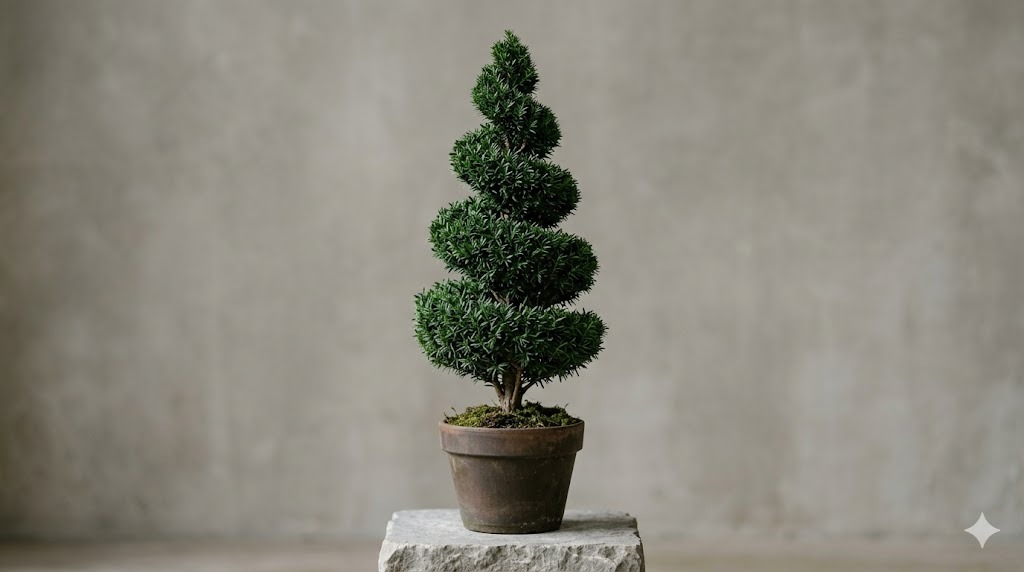
Yew is the great timeless evergreen of gardens - the deep, dark, almost black-green plant behind the finest hedges, the crispest topiary, and the most dignified formal designs.
🗓️ Last reviewed: June 2026
Overview
Yew is the great timeless evergreen of gardens - the deep, dark, almost black-green plant behind the finest hedges, the crispest topiary, and the most dignified formal designs. Slow, dense, and immensely long-lived, it clips into smooth, solid forms that hold their shape for decades and provide a perfect dark backdrop for flowers and pale stone alike. Yew is the classic alternative to box for substantial hedging, and - unlike box - it remains largely free of the blight and caterpillar troubles afflicting that plant. There is, however, one fact about yew that overshadows all others and must be confronted directly: yew is one of the most poisonous plants commonly grown in gardens.
Origin & Natural Habitat
The common or English yew, Taxus baccata, is native to Europe, North Africa, and southwest Asia; related species grow across Asia and North America. In the wild, yew grows in woodland and on chalky and limestone slopes, often as an understorey tree, and is famous for its extraordinary longevity - some ancient yews are believed to be well over a thousand years old, and they have deep cultural and religious associations, often found in old churchyards. This origin explains its tolerance of shade and a wide range of soils, and its slow, dense, enduring growth.
Appearance
Yew is an evergreen conifer - but an untypical one: instead of cones, the female plants bear soft, fleshy, bright red berry-like structures (arils) around a single seed. It has flat, narrow, dark green needle-like leaves arranged along the twigs, and reddish, flaking bark. Left alone, common yew becomes a large, broad, long-lived tree; in gardens it is almost always clipped. Its great virtue for the gardener is that it is dense, slow, and responds superbly to clipping - and, crucially, unlike most conifers, it readily regrows from old, bare wood, which means even an overgrown yew hedge can be cut back hard and renovated.
Why People Grow It - Qualities & Benefits
- The finest hedging and topiary evergreen: clips to a dense, smooth, solid, crisp form.
- Deep dark backdrop: the near-black green sets off flowers and pale stone perfectly.
- Year-round structure: evergreen "bones" for formal and informal gardens alike.
- Extraordinary longevity: a yew hedge or specimen can endure for centuries.
- Renovates from old wood: overgrown yew can be cut back hard and will reshoot - rare among conifers.
- Shade-tolerant and adaptable: grows in sun or shade and most soils.
- Largely free of box's blight and caterpillar problems - the go-to box alternative for larger work.
- Wildlife value: dense growth shelters and nests birds; the arils are eaten by birds.
Care
Light & Position
Full sun to deep shade - yew is remarkably adaptable and one of the best evergreens for shade, which makes it invaluable.
Soil
Adaptable to most soils, including chalky/alkaline and acidic ground, provided drainage is good. The one thing yew genuinely will not tolerate is waterlogged soil, which causes root death - sharp drainage is essential.
Watering
Water well to establish; once settled, yew is reasonably drought-tolerant. The key, again, is to avoid waterlogging rather than to worry about drought.
Feeding
Feed clipped hedging and topiary in spring with a balanced fertilizer to maintain dense, healthy, well-coloured growth; mulch to conserve moisture and improve the soil.
Clipping
Yew is clipped to shape, typically once a year (often late summer), sometimes twice for very crisp formal work. Its slow growth means it holds a shape well and does not need frequent attention. Crucially - and unlike box and most conifers - yew regrows freely from old, bare wood, so an overgrown or misshapen yew hedge can be renovated by hard pruning (often done over a couple of seasons), and it will reshoot and recover.
Hardiness & Winter Care
Common yew is hardy (commonly to around USDA zone 6, with some variation) and fully evergreen, needing no winter protection in moderate climates.
Planting & Propagation
Plant in autumn or spring in well-drained soil. Yew is slow-growing, so hedges take patience to establish, but the result is exceptionally long-lasting. Propagate from semi-ripe cuttings (which root reliably, if slowly) or from seed. Source plants from reputable suppliers.
Common Problems & Pests
- Root death / dieback from waterlogging: yew's main weakness - wet, poorly drained soil causes browning, dieback, and death. Ensure sharp drainage; do not plant yew in wet ground.
- Browning patches: can result from waterlogging, drought stress, or physical damage.
- Yew is comparatively trouble-free otherwise - far less affected than box by serious pest and disease epidemics; scale insects, yew gall, and some root issues can occur but are usually minor.
- Slow establishment: not a problem so much as a fact - yew hedging requires patience.
Toxicity & Safety
This is the single most important point about yew. Yew is extremely poisonous - one of the most toxic plants commonly grown in gardens - and the danger must be taken seriously. Almost all parts of the plant - the leaves (needles), the bark, and the seed inside the berry - contain potent toxic alkaloids (taxines) and are highly poisonous, potentially rapidly fatal, to humans, cats, dogs, horses, and especially livestock. There is often little warning before serious or fatal effects on the heart. Important specific points:
- The dried or wilted clippings are just as toxic - or more so - than fresh growth, and have caused many fatal poisonings of livestock and horses when dumped or blown into pastures. Never let yew clippings reach grazing animals.
- The only part not poisonous is the soft red flesh of the aril - but the seed inside it is highly toxic, so the berries should still be treated as dangerous, especially around children.
- Keep yew well away from pasture, paddocks, and any grazing animals; dispose of clippings safely; keep children and pets from eating any part; and wear gloves when clipping.
Yew is grown safely in countless gardens, but only because its dangers are respected - and they must be.
Pros & Cons
Pros
- The finest evergreen for hedging and topiary - dense, crisp, formal.
- Deep dark backdrop; year-round structure; extraordinary longevity.
- Renovates from old bare wood - overgrown yew can be cut back hard.
- Shade-tolerant, adaptable; largely free of box's blight and caterpillar.
Cons
- Extremely poisonous - potentially fatal to people, pets, and livestock; clippings dangerous.
- Slow-growing - hedges take patience to establish.
- Will not tolerate waterlogged soil.
- Foliage gives structure, not floral colour.
Best Suited For
- Formal hedges, topiary, and the structural framework of gardens - especially larger-scale work.
- A dark evergreen backdrop for borders and pale stone.
- Shady positions where evergreen structure is needed.
- As the classic box alternative for substantial hedging and clipped forms.
Not ideal for gardens with grazing livestock or paddocks nearby; households where the safe disposal of clippings cannot be guaranteed; waterlogged soils; or gardeners wanting fast results.
FAQ
How poisonous is yew? Extremely. Yew is one of the most poisonous plants commonly grown in gardens. The leaves, bark, and the seed inside the berry contain potent toxins and are highly poisonous - potentially rapidly fatal - to humans, cats, dogs, horses, and livestock. It must be grown with full awareness of this danger: keep it from grazing animals, keep children and pets from eating any part, and handle it with care.
Are yew clippings dangerous? Yes - very. Dried or wilted yew clippings are just as toxic as fresh growth, and have caused many fatal poisonings of horses and livestock when clippings were dumped or blown into pastures. Never let yew clippings reach grazing animals; always dispose of them safely and securely.
Can I cut back an overgrown yew hedge? Yes - and this is one of yew's great advantages. Unlike box and most conifers, yew readily regrows from old, bare wood. An overgrown or misshapen yew hedge can be renovated by hard pruning (often done over a couple of seasons), and it will reshoot and recover.
Why is my yew turning brown and dying back? The most common cause is waterlogged soil - yew will not tolerate wet, poorly drained ground, which kills the roots. Browning can also come from drought stress or physical damage. Ensure sharp drainage, and never plant yew in wet ground.
Is yew a good alternative to box? Yes - for substantial hedging and larger clipped forms, yew is the classic alternative to box. It clips superbly, is long-lived, and is largely free of the box blight and box tree caterpillar problems afflicting box. Its drawbacks are its slow growth and, above all, its serious toxicity.