African Violet (Saintpaulia / Streptocarpus)
The African Violet is the small, cheerful classic that can flower almost continuously, all year round.
🗓️ Last reviewed: June 2026
Overview
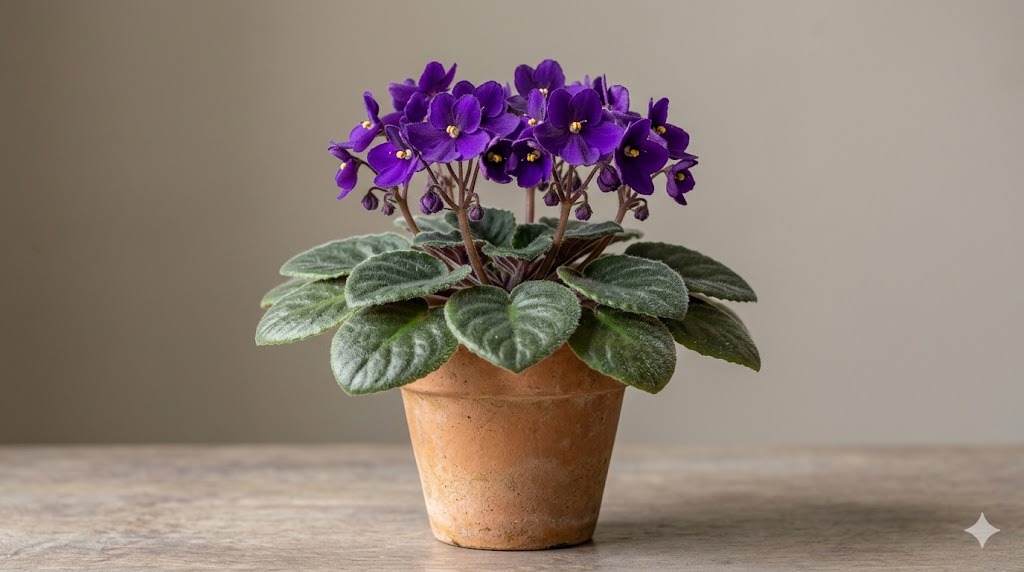
The African Violet is the small, cheerful classic that can flower almost continuously, all year round. Compact enough for any windowsill, it forms a neat rosette of fuzzy leaves topped with clusters of velvety blooms in purple, blue, pink, white, and bicolors. For generations it has been the favorite of windowsill gardeners and collectors - and it is pet-safe. Its care is a little particular (it has firm opinions about water and light), but once you learn its few rules, the African Violet is a reliable, long-blooming joy.
Origin & Natural Habitat
The African Violet is native to the cloud forests of the Eastern Arc Mountains of Tanzania and Kenya, where it grows in shaded, humid, mild conditions on mossy rocks and forest slopes. It is not related to true violets; the resemblance is only in the flower's appearance. Its mild, shaded, humid mountain origin explains its preferences: gentle light, steady warmth, and consistent moisture. (Botanically, Saintpaulia is now classified within the genus Streptocarpus.)
Appearance
The African Violet forms a low, symmetrical rosette of rounded, fuzzy, dark-green leaves. From the center rise short stalks bearing clusters of five-petaled flowers - single or double, often velvety, in shades of purple, violet, blue, pink, red, white, and patterned bicolors. There are thousands of named cultivars, including miniatures barely 8 cm across. Most plants stay 10-20 cm in diameter.
Why People Love It - Qualities & Benefits
- Near-continuous bloom: with good care it flowers for much of the year, unusual among houseplants.
- Compact: fits any windowsill, desk, or small shelf.
- Pet-safe: non-toxic to cats and dogs.
- Huge variety: thousands of flower colors, forms, and leaf types to collect.
- Easy to propagate: a whole new plant grows from a single leaf.
- Long-lived: well-kept plants flower for many years.
Care
Light
Bright, indirect light is essential for blooming - an east or north window is ideal, or a spot near a brighter window out of direct sun. Direct sun scorches the leaves. Too little light gives lush leaves but no flowers. Many enthusiasts grow them very successfully under fluorescent or LED grow lights. Rotate the plant for even, symmetrical growth.
Watering
The key rule: water from below, and keep water off the leaves and crown. Cold water on the fuzzy leaves causes unsightly pale rings and spots, and water sitting in the crown causes rot. Water with room-temperature water, either by pouring into the saucer and letting the plant soak it up, or by gently watering the soil surface without wetting the foliage. Keep the soil lightly moist - not soggy, not bone dry. Self-watering "African Violet pots" (wick-watering) work well.
Soil & Potting
Use a light, airy mix made for African Violets (or a peat-based mix with extra perlite). Drainage holes are essential. They flower best slightly root-bound in a small, shallow pot.
Humidity & Temperature
Likes moderate humidity (around 50%). Loves steady warmth: 18-24 °C. It dislikes cold, drafts, and sudden swings - keep it away from cold windowpanes in winter.
Feeding
Feed regularly during growth with a fertilizer formulated for African Violets (often higher in phosphorus), at the diluted rate on the label, to support continuous blooming.
Repotting & Grooming
Repot once or twice a year into fresh mix to refresh the soil, keeping the same small pot size. Remove spent flowers and any damaged leaves. Keep a single, tidy crown - remove side "suckers" that form, as multiple crowns reduce flowering.
Propagation
The classic, easy method is leaf cuttings: remove a healthy mature leaf with a bit of stalk, and place the stalk in water or moist soil. Within weeks, tiny plantlets form at the base; once they have a few leaves of their own, separate and pot them up. One leaf can yield several new plants. Division of multi-crowned plants also works.
Common Problems & Pests
- No flowers: too little light, too large a pot, over-feeding with high-nitrogen fertilizer, or multiple crowns competing.
- Pale rings or spots on leaves: cold water splashed on the foliage.
- Crown or stem rot: water sitting in the center, or overwatering - water from below.
- Long, stretched leaf stalks reaching up: insufficient light.
- Leaves curling down / tight crown: too cold; curling up can mean too much light.
- Pests: mealybugs, thrips, cyclamen mites (which distort new growth), and fungus gnats.
Toxicity & Safety
Non-toxic and pet-safe. The African Violet is considered safe for cats, dogs, and humans - one of the best pet-safe flowering houseplants.
Pros & Cons
Pros
- Flowers nearly year-round.
- Compact - fits anywhere.
- Non-toxic and pet-safe.
- Thousands of varieties to collect.
- Easy to propagate from a leaf.
Cons
- Particular about watering (no water on leaves/crown).
- Won't bloom without enough light.
- Sensitive to cold and drafts.
- Susceptible to cyclamen mites.
Best Suited For
- Windowsill gardeners who want continuous flowers.
- Small spaces and collectors.
- Pet households wanting a safe flowering plant.
- Anyone happy to follow a few simple watering rules.
Not ideal for dark rooms, cold drafty spots, or anyone who waters carelessly over the foliage.
FAQ
Why won't my African Violet bloom? Most often not enough light - give it bright, indirect light (or a grow light). Other causes: too large a pot, over-feeding with high-nitrogen fertilizer, or the plant having multiple crowns. Use a small pot, a bloom-supporting fertilizer, and keep a single crown.
Why are there pale rings on the leaves? Cold water splashed onto the fuzzy leaves causes pale rings and spots. Always use room-temperature water and avoid wetting the foliage - water from below or onto the soil only.
How do I water an African Violet? With room-temperature water, from below: pour into the saucer and let the plant soak it up, then drain any excess. Keep water off the leaves and out of the crown. Keep the soil lightly moist.
Can I really grow a new plant from one leaf? Yes - that is the classic method. Put a healthy leaf's stalk in water or moist soil; baby plantlets form at the base within weeks, and you separate and pot them up.
Is the African Violet safe for pets? Yes - it is non-toxic and pet-safe.