Air Plant (Tillandsia)
Air Plants are the houseplants that need no soil at all.
🗓️ Last reviewed: June 2026
Overview
Air Plants are the houseplants that need no soil at all. Tillandsias are extraordinary little plants that absorb all their water and nutrients through their leaves, anchoring with their roots only for grip. You can display them in a glass globe, on a piece of driftwood, in a shell, or simply resting on a shelf - pure, sculptural greenery with no pot, no soil, no mess. They are compact, pet-safe, and fascinating. The catch: "Air Plant" is a slightly misleading name. They do not live on air alone - they need regular watering, done a particular way, or they quietly dry out and die.
Origin & Natural Habitat
Tillandsias are native to the forests, mountains, and deserts of Central and South America and the southern United States. They are epiphytes - they grow perched on trees, rocks, and even power lines, never in soil. They absorb moisture and nutrients from the humid air, rain, mist, and dew through specialized scales on their leaves called trichomes (which also give many species their silvery look). Their roots exist only to cling to a surface. This soil-free, air-and-rain epiphyte lifestyle is the entire key to understanding them.
Appearance
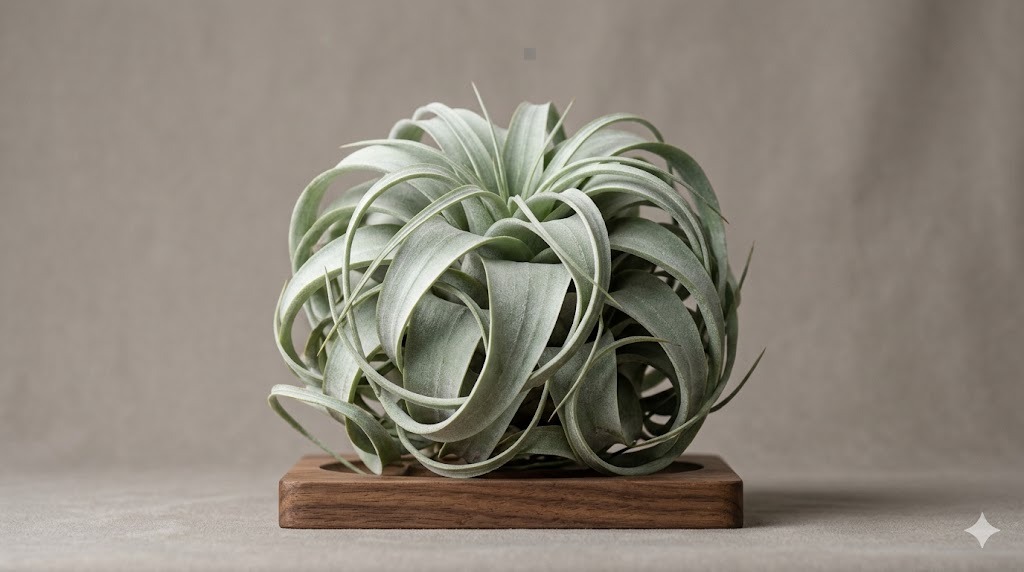
Air Plants are small, usually 5-25 cm, with rosettes of narrow, often curling or arching leaves. Color ranges from silvery-grey-green (the "xeric", drought-adapted types, fuzzy with trichomes) to brighter green ("mesic", forest types with smoother leaves). Many blush red, pink, or purple before flowering and produce a single, surprisingly vivid bloom. After flowering, the parent slowly declines but produces offsets ("pups"). Popular types include Tillandsia ionantha, T. xerographica (large, silver, sculptural), and T. bulbosa.
Why People Love It - Qualities & Benefits
- No soil, no pot, no mess: display them anywhere - globes, driftwood, shells, frames, shelves.
- Sculptural and versatile: endless creative display possibilities.
- Compact: tiny - perfect for desks, small spaces, and grouping.
- Pet-safe: generally considered non-toxic to cats and dogs.
- Fascinating: a genuine conversation piece - a plant that lives on air and rain.
- Striking bloom: many produce one vivid, beautiful flower.
Care
Light
Bright, indirect light is ideal - near a bright window, out of harsh direct sun, which can scorch and dry them out. Greener (mesic) types prefer slightly softer light; silvery (xeric) types tolerate brighter, harsher light. They can also be grown under artificial light.
Watering - the critical part
This is where most Air Plants die - from being treated as if they truly live on air. They need regular watering:
- Soaking (the most reliable method): submerge the whole plant in room-temperature water for about 20-60 minutes, roughly once a week (more in hot, dry conditions; less in cool, humid ones).
- Misting can supplement but is usually not enough on its own.
- Crucial step - drying: after soaking, gently shake off excess water and let the plant dry fully, upside down, in good airflow, within about 3-4 hours. Water trapped in the central rosette is the number-one killer - it causes rot.
- Use rainwater, filtered, or left-out tap water; avoid softened water.
A shriveled, curling, fading plant is thirsty; a soft, mushy center or leaves falling out is rot from trapped water.
Temperature & Air
Comfortable at 15-28 °C; keep above about 7-10 °C. They need good air circulation - especially to dry after watering - so avoid sealed, enclosed containers without airflow.
Feeding
Feed occasionally - about monthly - by adding a specialist Tillandsia/bromeliad fertilizer (or a very dilute balanced fertilizer) to the soaking water.
Propagation
Air Plants propagate by offsets ("pups"). After a plant flowers, it produces pups at its base. Once a pup is about one-third to one-half the size of the parent, it can be gently separated - or left attached to form a clump. The flowered parent gradually dies off as the pups grow. They can also be grown from seed, but this is extremely slow.
Common Problems & Pests
- Rot (soft, mushy base/center; leaves pulling out): water trapped in the rosette after watering - the most common killer. Always dry the plant fully, upside down, in good airflow.
- Shriveled, curled, crispy leaves: underwatering - soak more often.
- Brown, dry leaf tips: dry air, underwatering, or harsh direct sun.
- Parent plant declining: natural - it dies after flowering; look for pups.
- Pests: uncommon; occasionally mealybugs or scale.
Toxicity & Safety
Generally considered non-toxic and pet-safe. Tillandsias are widely regarded as safe for cats and dogs and are not listed as toxic by major pet-poison resources. As with any plant, discourage pets from chewing or batting them around (the plants are small enough to be treated as toys).
Pros & Cons
Pros
- No soil, no pot - endlessly creative display.
- Compact and sculptural.
- Generally pet-safe.
- Fascinating, low-mess, conversation-piece plants.
- Easy to group and propagate.
Cons
- "Air Plant" name misleads people into under-watering them.
- Must be dried fully after watering or they rot.
- Need good airflow - not suited to sealed containers.
- The parent plant dies after flowering.
Best Suited For
- Small spaces, desks, and creative displays.
- Anyone wanting soil-free, low-mess greenery.
- Pet households.
- People who enjoy a quirky, hands-on plant.
Not ideal for anyone who will forget to water (the name is a trap), or who wants them sealed in an airless terrarium.
FAQ
Do Air Plants really live on air? No - that name is misleading. Tillandsias absorb water and nutrients from moisture through their leaves, but they still need regular watering. Treating them as if they live on air alone is the most common way they die.
How do I water an Air Plant? Soak the whole plant in room-temperature water for about 20-60 minutes, roughly once a week. Then - crucially - shake off the excess and let it dry fully upside down in good airflow within a few hours. Misting alone is usually not enough.
Why did my Air Plant rot? Water got trapped in the central rosette and was not allowed to dry. Always shake out excess water after soaking and dry the plant upside down with good air circulation. A soft, mushy center is rot.
Are Air Plants safe for pets? They are generally considered non-toxic and pet-safe. They are not listed as toxic by major pet-poison resources - though, being small, they should be kept from pets that treat them as toys.
My Air Plant flowered and now looks like it's dying - what happened? That is natural. A Tillandsia flowers once, then slowly declines - but before it does, it produces pups (baby plants) at its base. Let the pups grow, and they replace the parent.