Alocasia (Elephant Ear)
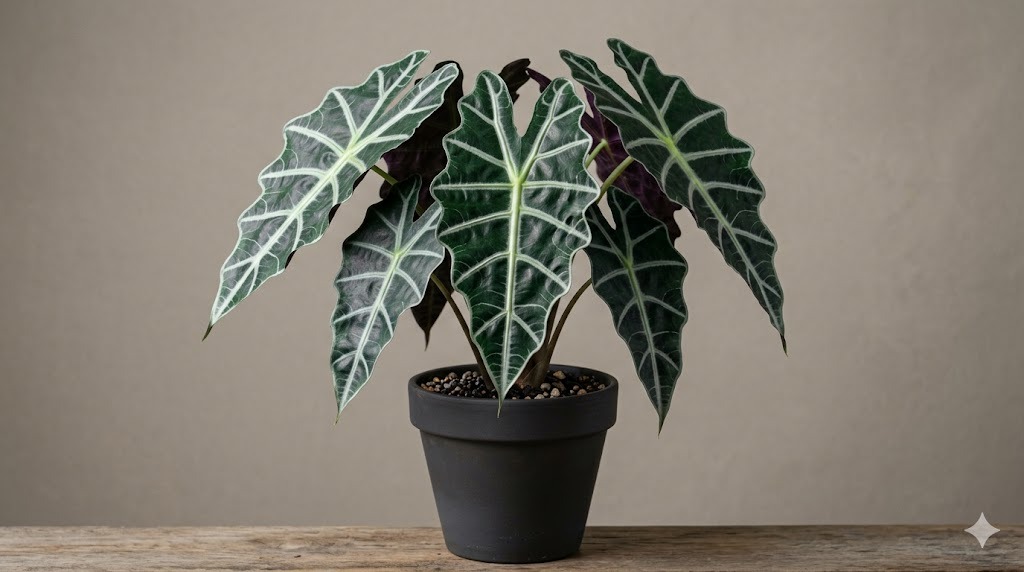
Alocasia plants - the "Elephant Ears" - have some of the most dramatic, sculptural leaves in the entire plant world: huge arrowhead or shield-shaped blades, often deep green with bold pale veins, sometimes glossy black, jagged-edged, or metallic.
🗓️ Last reviewed: June 2026
Overview
Alocasia plants - the "Elephant Ears" - have some of the most dramatic, sculptural leaves in the entire plant world: huge arrowhead or shield-shaped blades, often deep green with bold pale veins, sometimes glossy black, jagged-edged, or metallic. They are showstoppers. They are also among the more demanding popular houseplants - they want bright light, warmth, humidity, and careful watering, and they have a habit of dropping leaves or going dormant when unhappy. For a committed plant lover who wants pure drama, Alocasia is unmatched; for a beginner, it can be a humbling plant.
Origin & Natural Habitat
Alocasias are native to the tropical rainforests of Southeast Asia and eastern Australia. They grow in warm, very humid, brightly-but-indirectly-lit conditions, often near water and in rich, fast-draining ground. Most grow from underground tubers or rhizomes, which lets them go dormant and re-sprout. This warm, humid, bright rainforest origin is the heart of their care - and the tuber explains their dramatic "dying back" behavior.
Appearance
Alocasias produce large, upright, arrow- or shield-shaped leaves on tall stalks. Variety is enormous: Alocasia 'Polly' / amazonica (jagged-edged, dark green with white veins), A. zebrina (slender zebra-striped stems), A. 'Black Velvet' (compact, velvety near-black leaves with silver veins), A. macrorrhizos and A. 'Portora' (giant Elephant Ears). Indoor sizes range from compact 30 cm jewels to floor plants over 1.5 m. The leaves often have a glossy or velvety sheen and dramatic veining.
Why People Love It - Qualities & Benefits
- Spectacular, sculptural leaves: among the boldest, most dramatic foliage of any houseplant.
- Striking variety: from tiny velvety jewels to giant Elephant Ears, glossy black to metallic.
- Architectural presence: upright, statement-making form.
- Fast in good conditions: rewards the right care with rapid, impressive new leaves.
- A rewarding challenge: for experienced growers, a thriving Alocasia is a real achievement.
Care
Light
Bright, indirect light is essential - it drives strong, upright growth and bold leaves. Too little light causes weak, leggy, drooping growth. Avoid harsh direct sun, which scorches the leaves.
Watering
This is where Alocasias are won or lost. Keep the soil lightly and evenly moist during active growth - water when the top 3-5 cm is dry - but never soggy. Alocasias are very prone to root rot from overwatering, and equally unhappy if they dry out completely. Consistency is key. Use room-temperature water; they can be sensitive to chemicals in tap water.
Soil & Potting
Use a chunky, very airy, fast-draining mix - an aroid blend of bark, perlite, and coco coir. Standard dense soil holds too much water and rots the roots. Drainage holes are essential.
Humidity & Temperature
High humidity is important - aim for 60%+. Dry air causes crispy edges, browning, and stress. A humidifier is the most reliable solution. Alocasias love warmth: 18-27 °C, stable, with no cold drafts and nothing below about 15 °C. Cold is a major trigger for leaf loss and dormancy.
Feeding
Feed every 2-4 weeks during active growth (spring/summer) with a balanced fertilizer at half strength. Stop in winter.
Dormancy
Alocasias often go dormant, especially in winter or after stress - leaves yellow and die back, sometimes leaving just the tuber. This is alarming but frequently survivable. If the tuber is firm, keep the soil barely moist, warm, and bright, reduce watering, and wait - it often re-sprouts when conditions improve. Do not throw out a "dead" Alocasia with a healthy tuber.
Propagation
Alocasias are propagated by division of the tuber/rhizome clump, or by separating the small offset tubers ("corms") that form around the parent. Pot up divisions or corms in airy mix, keep warm and humid, and be patient - corms can take weeks to sprout. They do not propagate from leaf cuttings.
Common Problems & Pests
- Yellowing leaves / leaf drop: overwatering and root rot, cold, low humidity, or the natural shedding of old leaves; also a sign of oncoming dormancy.
- Drooping: under- or overwatering - check the soil and roots carefully.
- Crispy brown edges: low humidity.
- Dying back to the tuber: dormancy - keep the tuber warm and barely moist; it may re-sprout.
- Spider mites: Alocasias are notoriously prone to spider mites, especially in dry air - inspect leaf undersides constantly.
- Other pests: mealybugs, scale, thrips.
Toxicity & Safety
Toxic to cats, dogs, and humans. Alocasias contain high levels of insoluble calcium oxalate crystals; chewing causes intense burning and irritation of the mouth and throat, drooling, swelling, and vomiting. They are considered among the more strongly irritating aroids. Keep them well away from pets and children, and wash hands after handling.
Pros & Cons
Pros
- Spectacular, dramatic, sculptural leaves.
- Striking variety, from jewels to giants.
- Architectural statement presence.
- Fast and rewarding in good conditions.
Cons
- Demanding - not a beginner plant.
- Very prone to root rot and to spider mites.
- Needs high humidity and warmth.
- Drops leaves / goes dormant easily.
- Strongly toxic to pets and people.
Best Suited For
- Experienced, committed plant owners.
- Bright, warm, humid rooms (or homes with a humidifier).
- Anyone wanting maximum foliage drama.
Not ideal for beginners, cold or dry homes, low light, or pet households with leaf-chewers.
FAQ
Why did my Alocasia lose all its leaves? Often dormancy - Alocasias naturally die back, especially in winter or after stress, sometimes to just the tuber. If the tuber is still firm, keep it warm, bright, and barely moist, and it will likely re-sprout. Leaf loss can also mean overwatering and root rot, cold, or low humidity.
Why does my Alocasia keep getting spider mites? Alocasias are notoriously prone to spider mites, which thrive in dry air. Raise the humidity and inspect the undersides of the leaves constantly - catching them early is essential.
Why are the leaves yellowing? Most often overwatering and root rot - Alocasias are very sensitive to soggy soil. Check the roots, use an airy mix, and water only when the top few centimeters are dry. It can also signal cold or dormancy.
Is the Alocasia safe for pets? No - Alocasias are toxic to cats, dogs, and humans, and are among the more strongly irritating aroids. Keep them well away from pets and children.
Is the Alocasia a good beginner plant? Not really. It is demanding - fussy about water, humidity, warmth, and prone to pests and dramatic dieback. Beginners are better starting with a Pothos or Snake Plant and working up to Alocasia.