Aralia (Polyscias)
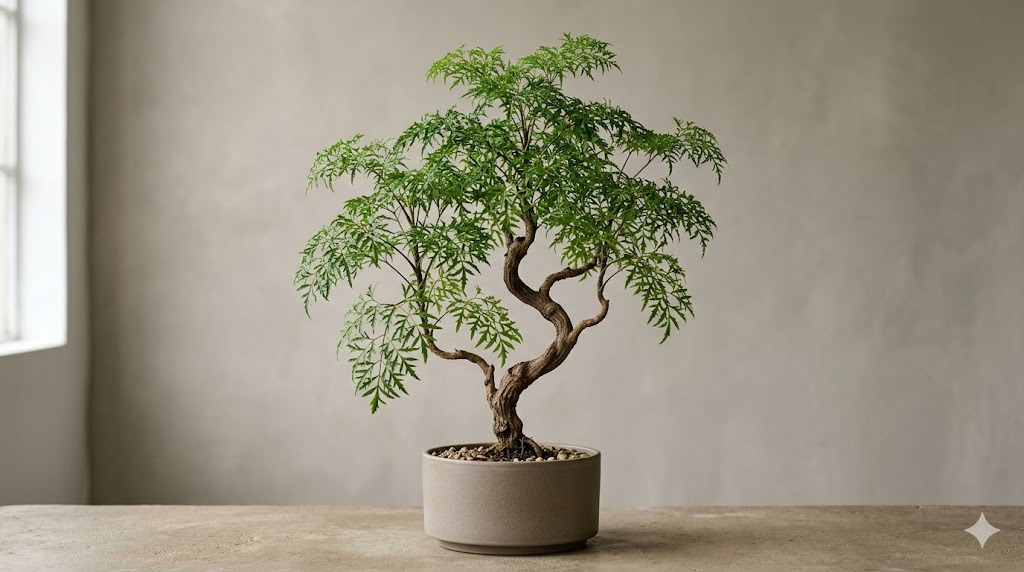
The Aralia - botanically Polyscias - is an elegant, refined, almost bonsai-like indoor shrub or small tree, prized for its finely-textured foliage and graceful, sculptural form.
🗓️ Last reviewed: June 2026
Overview
The Aralia - botanically Polyscias - is an elegant, refined, almost bonsai-like indoor shrub or small tree, prized for its finely-textured foliage and graceful, sculptural form. Depending on the variety, its leaves may be lacy and fern-like, ruffled, or shaped like little curled spoons, in green or cream-variegated forms. It is a sophisticated, characterful plant that brings understated style to a room. It has a reputation for being a touch temperamental - it dislikes change and will drop leaves to protest - but with a stable, warm, humid spot it is a long-lived and rewarding plant.
Origin & Natural Habitat
Polyscias species are native to the tropical regions of Southeast Asia and the Pacific islands. They grow as understory shrubs and small trees in warm, humid, brightly-but-indirectly-lit forest conditions. This warm, humid, stable tropical origin explains both their care needs and their main quirk - they evolved in an unchanging environment and react badly to sudden shifts in light, temperature, or location.
Appearance
Aralias are upright, woody-stemmed shrubs with a naturally elegant, slightly twisting, tree-like form - which is why they are often grown and pruned almost as living bonsai. Foliage varies widely by species: the Ming Aralia (Polyscias fruticosa) has lacy, fern-like, finely divided leaves; the Fabian/Plum Aralia has rounded leaves with purple undersides; the Balfour Aralia has ruffled, coin-like leaflets; and there are cream-variegated forms. Indoors they typically grow 0.6-1.8 m, slowly and gracefully.
Why People Love It - Qualities & Benefits
- Elegant, refined form: a graceful, sculptural, almost bonsai-like presence.
- Distinctive foliage: lacy, ruffled, or spoon-shaped leaves unlike most houseplants.
- Sophisticated style: understated and characterful, suiting refined interiors.
- Long-lived: a well-settled Aralia can thrive for many years.
- Shapeable: responds well to pruning, so it can be sculpted and kept compact.
- Variety: several species and leaf forms to choose from.
Care
Light
Bright, indirect light is ideal - it keeps growth full and the variegation strong. It tolerates medium light. Avoid harsh direct sun, which scorches the foliage. In low light it grows leggy and sparse and may shed leaves.
Watering
Water when the top 3-5 cm of soil is dry, then drain well - typically every 1-2 weeks, less in winter. The Aralia is sensitive about water: overwatering causes root rot and leaf drop (its number-one problem), while letting it dry out too far also triggers leaf drop. Aim for lightly moist, well-drained, and consistent.
Soil & Potting
Use a well-draining potting mix. Drainage holes are essential.
Humidity & Temperature
Prefers moderate to high humidity; dry air contributes to leaf drop and brown edges. Loves warmth: 18-27 °C. It is sensitive to cold - keep it above about 15 °C and well away from cold drafts and sudden temperature changes.
Feeding
Feed every 4-6 weeks in spring and summer with a balanced fertilizer at half strength.
Repotting & Pruning
Repot every 2-3 years in spring. Aralias respond well to pruning and can be shaped and kept compact - part of their bonsai-like appeal. They also dislike root disturbance, so repot gently and not too often.
Stability - the key quirk
The single most important thing to know about an Aralia: it hates change. Moving it, a draft, a drop in temperature, a shift in light or watering - any of these can make it drop leaves, sometimes dramatically. The secret to a happy Aralia is to find one good, stable, warm, bright, draft-free spot and then leave it there. Resist the urge to relocate it.
Propagation
Propagated from stem cuttings. Take a cutting of stem (semi-woody sections work) and root it in moist soil or water with warmth and humidity - a covered, propagator-like environment improves success. Rooting can be slow; patience helps.
Common Problems & Pests
- Leaf drop: the classic Aralia complaint - triggered by change (a move, draft, temperature shift), overwatering, underwatering, or low humidity. Some adjustment drop is normal after purchase.
- Yellowing leaves: usually overwatering and root rot.
- Brown, crispy leaf edges: dry air or inconsistent watering.
- Leggy, sparse growth: too little light.
- Black, mushy stem base: root rot from soggy soil.
- Pests: Aralias are notably prone to spider mites, scale, mealybugs, and aphids - inspect regularly and treat promptly.
Toxicity & Safety
Toxic to cats and dogs. Polyscias/Aralia contains saponins and other irritant compounds; chewing causes mouth irritation, drooling, vomiting, and stomach upset in pets. Keep it away from pets and children.
Pros & Cons
Pros
- Elegant, refined, bonsai-like form.
- Distinctive, finely-textured foliage.
- Long-lived and shapeable.
- Several attractive varieties.
Cons
- Toxic to cats and dogs.
- Dislikes change - drops leaves readily.
- Sensitive to cold and dry air.
- Prone to spider mites and scale.
- Not a beginner plant.
Best Suited For
- Plant owners who can give it a stable, warm, bright spot.
- Refined, stylish interiors.
- People who enjoy a sculptural, bonsai-like plant.
- Those with some plant experience.
Not ideal for cold or dark rooms, drafty spots, frequent rearrangers, beginners, or pet households with leaf-chewers.
FAQ
Why is my Aralia dropping leaves? Almost always a reaction to change - you moved it, a cold draft hit it, the temperature dropped, or its light or watering shifted. Aralias hate change. Overwatering and dry air also cause leaf drop. Find one stable, warm, bright spot and leave it there.
Why are the leaves yellowing? Usually overwatering and root rot. Let the top few centimeters of soil dry before watering, ensure good drainage, and check the roots.
How do I keep my Aralia happy? Stability. Give it one warm, bright, draft-free spot and do not move it. Keep watering and humidity consistent. Aralias reward a calm, unchanging routine more than anything else.
Is the Aralia safe for pets? No - it is toxic to cats and dogs, causing mouth irritation and vomiting if chewed. Keep it away from pets.
Can I shape my Aralia like a bonsai? Yes - Aralias respond well to pruning and have a naturally graceful, woody, tree-like form, so they can be pruned and shaped, and kept compact, much like a bonsai.