Areca Palm (Dypsis lutescens)
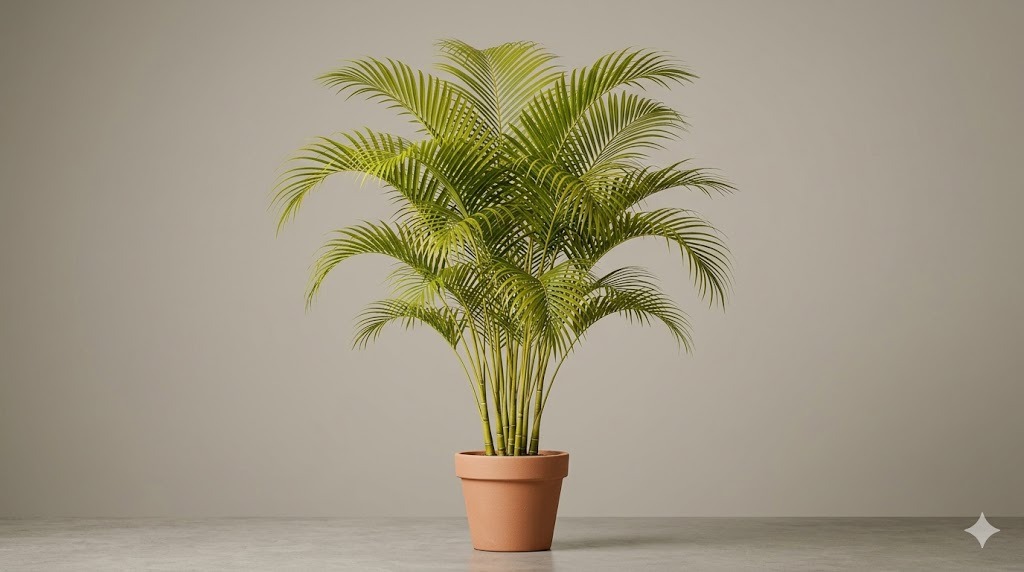
The Areca Palm - also called the Butterfly Palm or Golden Cane Palm - is the soft, feathery, golden-green palm that brings a relaxed, resort-like feel indoors.
🗓️ Last reviewed: June 2026
Overview
The Areca Palm - also called the Butterfly Palm or Golden Cane Palm - is the soft, feathery, golden-green palm that brings a relaxed, resort-like feel indoors. Its arching fronds and clumping stems make a full, graceful plant that softens corners and fills rooms with gentle greenery. It is one of the most popular indoor palms, and one of the few large statement plants that is genuinely pet-safe. The trade-off: it likes bright light, steady moisture, and humidity, and it can be a little fussy about brown tips - but in the right spot it is a lush, family-friendly favorite.
Origin & Natural Habitat
The Areca Palm is native to Madagascar, where it grows in clumps in warm, humid, brightly lit areas - forest edges and clearings. In the wild it is now rare and endangered, even as it is one of the most widely grown ornamental palms in the world. Its warm, humid, well-lit origin defines its indoor care.
Appearance
The Areca Palm grows as a clump of slender, cane-like stems (often yellowish-gold, hence "Golden Cane") topped with long, gracefully arching fronds divided into many narrow, feathery leaflets. Indoors it commonly reaches 1.5-2.5 m. It grows in width as well as height, becoming a full, bushy plant.
Why People Love It - Qualities & Benefits
- Pet-safe: non-toxic to cats and dogs - a rare large, lush, safe statement plant.
- Soft, tropical look: feathery fronds bring a calm, resort-like atmosphere.
- Fills a corner gracefully: full and bushy, it softens hard edges and empty space.
- Adds humidity: transpires moisture, gently humidifying dry rooms.
- Air quality: a strong performer in NASA's Clean Air Study.
Care
Light
Bright, indirect light is ideal - near a bright window, with perhaps a little gentle morning sun. It tolerates medium light but grows slower and thinner. Avoid harsh direct afternoon sun, which scorches the fronds.
Watering
Keep the soil consistently lightly moist - water when the top 2-4 cm is dry. It dislikes drying out completely and equally dislikes soggy, waterlogged soil. Areca Palms are sensitive to fluoride and salts in tap water, which contribute to brown tips; filtered or left-out water helps.
Soil & Potting
Use a well-draining potting mix. Drainage holes are essential.
Humidity & Temperature
Prefers moderate to high humidity; dry air causes brown frond tips. Comfortable at 18-27 °C; keep above about 13 °C and away from cold drafts.
Feeding
Feed every 4-6 weeks in spring and summer with a balanced fertilizer.
Repotting
Repot every 2-3 years; Areca Palms prefer being slightly snug and dislike root disturbance, so do not over-pot.
Propagation
Propagated by division of the clump - separate well-rooted sections at repotting. This can be stressful for the plant; do it carefully. Growing from seed is slow and uncommon at home.
Common Problems & Pests
- Brown frond tips: the most common complaint - low humidity, dry soil, tap-water chemicals, or over-fertilizing.
- Yellowing fronds: overwatering, underwatering, or insufficient light.
- Browning whole fronds: natural aging of the oldest fronds is normal; trim them off.
- Spider mites: very common in dry air - inspect frond undersides regularly.
- Other pests: mealybugs and scale.
Toxicity & Safety
Non-toxic and pet-safe. The Areca Palm is considered safe for cats, dogs, and humans - one of the best large, lush, safe houseplants for a household with pets.
Pros & Cons
Pros
- Non-toxic and pet-safe.
- Soft, full, tropical greenery.
- Fills and softens a corner.
- Humidifies dry air.
Cons
- Brown tips are common.
- Needs steady moisture and humidity.
- Prone to spider mites in dry air.
- Dislikes root disturbance.
Best Suited For
- Pet households wanting a large, safe statement plant.
- Bright rooms with floor space.
- Anyone wanting soft, tropical greenery.
Not ideal for dark or very dry rooms, or anyone unwilling to manage brown tips and watch for mites.
FAQ
Why does my Areca Palm have brown tips? Low humidity, soil drying out, tap-water chemicals, or over-feeding. Raise humidity, keep the soil lightly moist, use filtered water, and feed lightly.
Is the Areca Palm safe for pets? Yes - it is non-toxic to cats and dogs, one of the few large lush plants that is genuinely pet-safe.
Why are whole fronds turning yellow then brown? Some loss of the oldest fronds is natural - just trim them. Widespread yellowing suggests a watering problem or too little light.
Why does my palm keep getting spider mites? Dry air. Raise the humidity and inspect the undersides of the fronds regularly; treat promptly with insecticidal soap.