Cast Iron Plant (Aspidistra elatior)
The Cast Iron Plant earned its name honestly: it is famous as the toughest, most indestructible houseplant there is.
🗓️ Last reviewed: June 2026
Overview
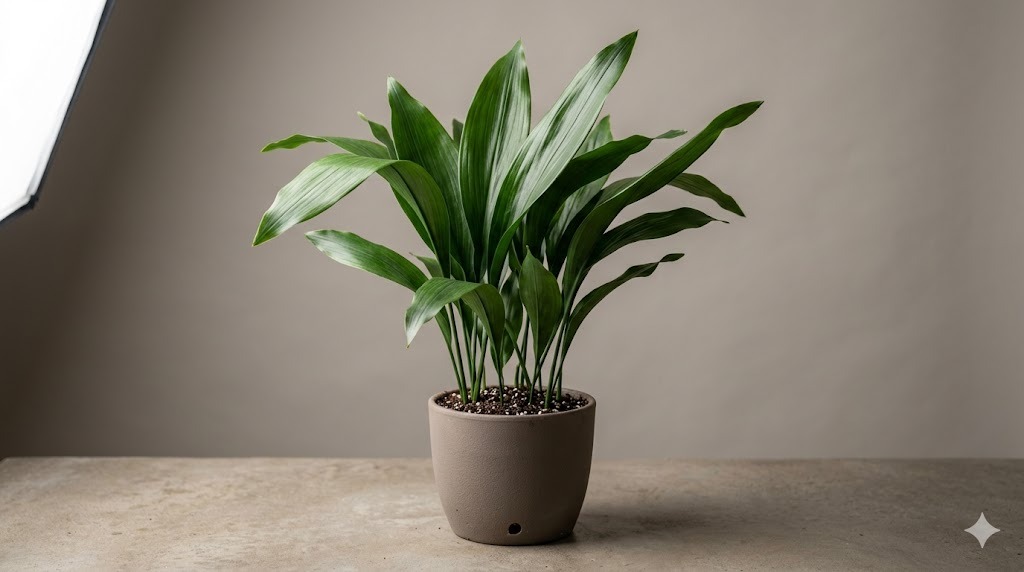
The Cast Iron Plant earned its name honestly: it is famous as the toughest, most indestructible houseplant there is. It survives deep shade, dry air, drafts, irregular watering, temperature swings, and years of neglect - conditions that would kill almost anything else. Its broad, glossy, deep-green leaves bring quiet, classic elegance to the darkest corners of a home. It is also pet-safe. The one trade-off is patience: the Cast Iron Plant is extremely slow-growing. But for a dark, difficult spot - or for a gardener who simply cannot keep plants alive - nothing is more reliable.
Origin & Natural Habitat
Aspidistra elatior is native to the forested islands of Japan and to parts of China and Taiwan, where it grows as a ground-covering plant on the deeply shaded forest floor. It evolved in dense shade, in cool-to-mild, variable conditions - which is exactly why it is so tolerant of the low light and inconsistency of indoor life. It was hugely popular in the dim, gas-lit, draughty parlors of the Victorian era, when few plants could cope; it became a symbol of that age.
Appearance
The Cast Iron Plant produces large, broad, lance-shaped, glossy dark-green leaves that emerge individually directly from the soil on short stalks, growing from an underground rhizome. There are variegated cultivars with white or cream stripes ('Variegata') and speckled forms ('Milky Way', 'Asahi'). Indoors it slowly forms a clump 45-75 cm tall. Small, curious maroon flowers appear at soil level but are usually hidden and rarely seen indoors.
Why People Love It - Qualities & Benefits
- Nearly indestructible: survives deep shade, neglect, drafts, and temperature swings - the ultimate tough plant.
- Thrives in deep shade: grows where almost nothing else will, including dark hallways and north-facing rooms.
- Pet-safe: non-toxic to cats and dogs.
- Classic, elegant foliage: broad glossy leaves with timeless, understated charm.
- Long-lived: can thrive for decades, even generations.
- Low effort: the definition of a low-maintenance plant.
Care
Light
Low to moderate indirect light - it is one of the best plants for genuinely dark spots, dim hallways, and north-facing rooms. It will not thrive in bright direct sun, which scorches and bleaches the leaves. Variegated forms need a little more (still indirect) light to keep their pattern, but lose variegation if over-fed.
Watering
Water when the top few centimeters of soil are dry - typically every 1-2 weeks in summer, less in winter. It tolerates underwatering well; its main weakness, like most tough plants, is overwatering, which causes root rot. When in doubt, wait.
Soil & Potting
Use a well-draining potting mix. Drainage holes are essential.
Humidity & Temperature
Indifferent to humidity - normal room air is fine. Very tolerant of temperature: comfortable anywhere from about 7-27 °C, coping with cool rooms and drafts that bother other plants.
Feeding
Feed sparingly - once or twice in spring and summer with a balanced fertilizer. Over-feeding can cause variegated forms to revert to green.
Repotting
Repot rarely - every 3-5 years at most. The Cast Iron Plant resents root disturbance and is happy being snug; frequent repotting only sets it back.
Propagation
Propagated by division of the rhizome. At repotting, separate the clump into sections, each with several leaves and a piece of rhizome with roots, and pot them up. Division is the only practical method, and because the plant is so slow, divisions establish slowly too. Patience is essential.
Common Problems & Pests
- Brown leaf tips/edges: inconsistent watering, or chemicals/salts in tap water.
- Yellowing leaves: usually overwatering - the main thing that harms this plant.
- Pale, scorched, bleached leaves: too much direct sun.
- Loss of variegation: too little light, or over-feeding.
- Very slow / no growth: normal - the Cast Iron Plant is naturally extremely slow.
- Pests: generally very pest-resistant, but spider mites and scale can occasionally appear.
Toxicity & Safety
Non-toxic and pet-safe. The Cast Iron Plant is considered safe for cats, dogs, and humans - a tough, elegant, pet-safe choice for any home.
Pros & Cons
Pros
- Nearly indestructible - survives extreme neglect.
- Thrives in deep shade.
- Non-toxic and pet-safe.
- Tolerates drafts, cold, and temperature swings.
- Classic, elegant, long-lived.
Cons
- Extremely slow-growing.
- Overwatering is its one real weakness.
- Not a fast or dramatic plant.
- Resents root disturbance.
Best Suited For
- The darkest, most difficult corners of a home.
- "Plant killers" and the busiest, most forgetful owners.
- Pet households.
- Cool rooms, hallways, and north-facing spaces.
Not ideal for anyone wanting fast growth or dramatic change, or a bright sunny windowsill.
FAQ
How much light does a Cast Iron Plant need? Very little - it is one of the best plants for low light and deep shade, including dark hallways and north-facing rooms. Keep it out of bright direct sun, which bleaches and scorches the leaves.
Why is my Cast Iron Plant barely growing? That is completely normal. The Cast Iron Plant is famously, extremely slow-growing - expect only a few new leaves a year. Slow growth is not a problem; it is simply the plant's nature.
Why are the leaves turning yellow? Almost always overwatering. Despite being incredibly tough, the Cast Iron Plant's one real weakness is soggy soil. Let the soil dry between waterings and ensure the pot drains.
Is the Cast Iron Plant safe for pets? Yes - it is non-toxic and pet-safe for cats and dogs.
Can I really keep this plant in a dark corner? Yes - this is the plant for exactly that. It tolerates deep shade better than almost any other houseplant. Just don't overwater it, and it will quietly thrive there for years.