Chinese Evergreen (Aglaonema)
The Chinese Evergreen is one of the best plants for people who want color and easy care at the same time.
🗓️ Last reviewed: June 2026
Overview
The Chinese Evergreen is one of the best plants for people who want color and easy care at the same time. Its broad, patterned leaves come in silver, cream, green, and - in modern cultivars - vivid pink and red, yet it asks for very little: it tolerates low light, irregular watering, and general neglect, making it a favorite for offices and beginners. Tough, attractive, and slow-growing, the Aglaonema is the low-light plant that does not look like a compromise.
Origin & Natural Habitat
Aglaonema is native to the tropical rainforests of Southeast Asia. It grows on the shaded, humid forest floor beneath a dense canopy - which is exactly why it copes so well with low indoor light. It has been cultivated and prized in Asia for centuries and is considered a good-luck plant in several cultures.
Appearance
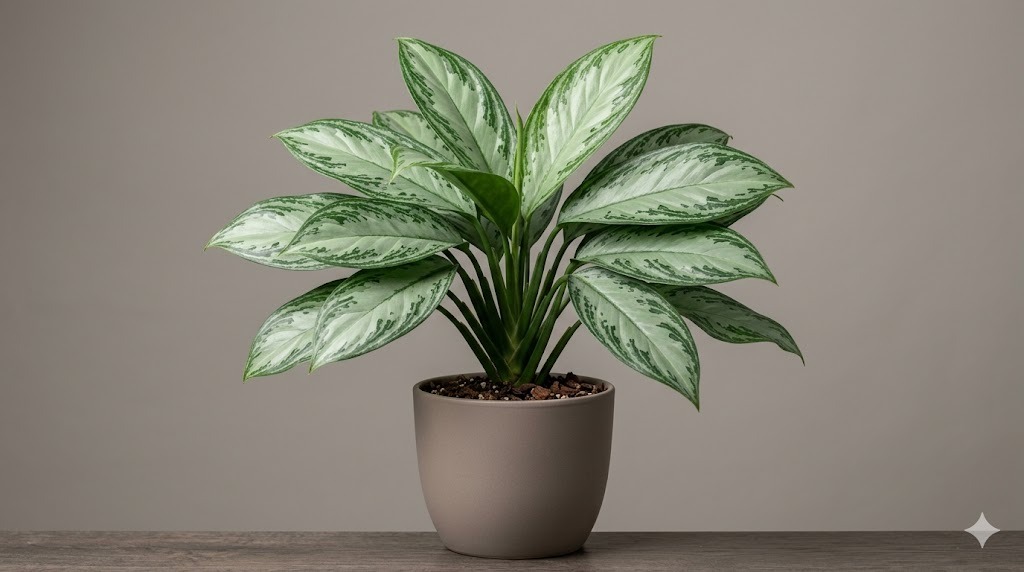
The Chinese Evergreen forms a clump of upright stems with broad, oval to lance-shaped leaves, beautifully marked with silver, grey, cream, or green variegation. Newer cultivars (such as 'Red Siam', 'Pink Dalmatian', and 'Red Valentine') feature striking pink and red coloration. Indoors it typically grows 30-60 cm tall and wide, slowly and tidily. Mature plants may produce a small, Peace-Lily-like flower (spathe), though it is grown chiefly for foliage.
Why People Love It - Qualities & Benefits
- Color in low light: one of the very few genuinely colorful plants that thrive away from bright windows.
- Tough and forgiving: tolerates low light, missed waterings, and neglect.
- Compact and tidy: stays a manageable size; great for desks, shelves, and offices.
- Slow and long-lived: does not outgrow its space; lasts for years.
- Wide variety: from cool silver-green to bold pink and red.
Care
Light
Highly adaptable. The darker green and silver varieties tolerate low to medium light very well - ideal for dim corners and offices. The pink and red cultivars need brighter (still indirect) light to keep their vivid color. Avoid direct sun, which scorches the leaves.
Watering
Water when the top 3-5 cm of soil is dry - typically every 1-2 weeks, less in winter. It tolerates occasional dryness but dislikes soggy soil; overwatering causes yellowing and root rot. When in doubt, wait.
Soil & Potting
Use a well-draining potting mix. Drainage holes are essential.
Humidity & Temperature
Tolerates normal room humidity; appreciates a little extra. Loves warmth: 18-27 °C. It is sensitive to cold - keep it above about 15 °C and well away from cold drafts, which cause grey blotches and leaf damage.
Feeding
Feed every 6-8 weeks in spring and summer with a balanced fertilizer at half strength.
Repotting
Repot every 2-3 years in spring; it is slow-growing and content in a snug pot.
Propagation
Propagated by division of the clump at repotting, or from stem cuttings rooted in water or moist soil. Both are straightforward; division is fastest.
Common Problems & Pests
- Yellowing leaves: overwatering, or natural aging of old leaves.
- Brown leaf tips: dry air, inconsistent watering, or tap-water chemicals.
- Grey or dark blotches: cold damage - move it somewhere warmer.
- Faded color (pink/red types): too little light.
- Curling leaves: underwatering or cold.
- Pests: mealybugs, spider mites, and scale; inspect and treat.
Toxicity & Safety
Toxic to cats, dogs, and humans if chewed. Like other aroids, Aglaonema contains insoluble calcium oxalate crystals; chewing causes mouth and throat irritation, drooling, and vomiting. Keep it away from pets and children.
Pros & Cons
Pros
- Colorful foliage that tolerates low light.
- Tough, forgiving, beginner-friendly.
- Compact, tidy, slow-growing.
- Many varieties, including bold pinks and reds.
Cons
- Toxic to pets and kids if chewed.
- Sensitive to cold.
- Pink/red types need brighter light.
- Slow grower - limited visible change.
Best Suited For
- Beginners and offices.
- Low-light rooms and dim corners.
- Anyone wanting easy color without the fuss.
Not ideal for cold rooms, or pet households with leaf-chewers.
FAQ
Can a Chinese Evergreen really grow in low light? Yes - the green and silver varieties are among the best colorful plants for low light. The pink and red cultivars, however, need brighter indirect light to keep their color.
Why are the leaves yellowing? Most often overwatering - let the soil dry more between waterings. Some yellowing of the oldest leaves is also natural aging.
Why does my Aglaonema have grey blotches? Usually cold damage. Aglaonema is sensitive to cold and drafts - move it somewhere warmer, above 15 °C.
Is the Chinese Evergreen safe for pets? No - it is toxic to cats and dogs if chewed, causing mouth irritation and vomiting. Keep it out of reach.