Christmas Cactus (Schlumbergera)
The Christmas Cactus is a beloved heirloom houseplant - the one that bursts into vivid, exotic blooms right around the winter holidays, year after year, and is often handed down through generations.
🗓️ Last reviewed: June 2026
Overview
The Christmas Cactus is a beloved heirloom houseplant - the one that bursts into vivid, exotic blooms right around the winter holidays, year after year, and is often handed down through generations. Despite the name, it is not a desert cactus: it is a tropical, jungle-dwelling plant with flattened, segmented stems and no spines. It is easy, long-lived, pet-safe, and famously generous with its flowers - once you understand the simple natural triggers that make it bloom.
Origin & Natural Habitat
Schlumbergera is native to the coastal mountain rainforests of southeastern Brazil. It is an epiphyte - it grows on tree branches and in mossy rock crevices, in shaded, humid conditions, not in desert sand. This jungle origin explains everything: it wants more water and humidity than a desert cactus, dappled light rather than blazing sun, and an airy, well-drained root zone. The closely related Thanksgiving Cactus and Easter Cactus bloom at slightly different times and have slightly different segment shapes.
Appearance
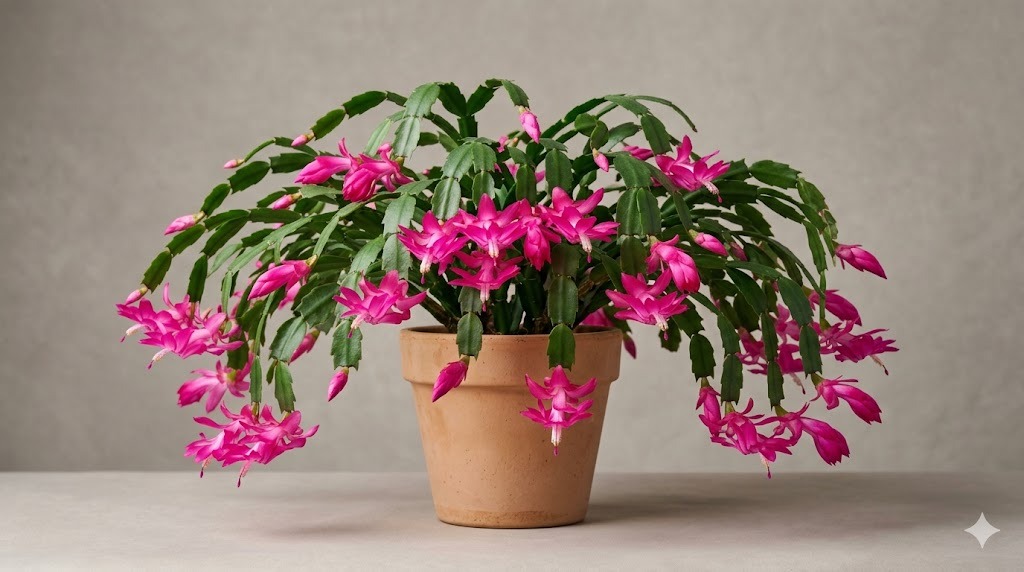
The Christmas Cactus has arching, trailing stems made of flat, glossy, scalloped green segments joined end to end. From the tips emerge tubular, multi-layered flowers in pink, red, white, orange, purple, and salmon. A mature plant becomes a cascading fountain of segmented stems, ideal for hanging pots and shelves. It is long-lived - well-kept plants can survive for decades.
Why People Love It - Qualities & Benefits
- Holiday blooms: flowers reliably in late autumn and winter, exactly when most plants are dormant.
- Pet-safe: non-toxic to cats and dogs.
- Heirloom longevity: lives for decades and is easily passed down - a plant with sentimental value.
- Easy and forgiving: undemanding once you know its bloom triggers.
- Effortless propagation: roots from a single segment.
- Beautiful trailing form: elegant in hanging pots.
Care
Light
Bright, indirect light - it evolved under a forest canopy. Avoid intense direct sun, which can scorch and redden the segments. Medium light is tolerated.
Watering
Unlike a desert cactus, the Christmas Cactus likes regular watering. Water when the top 2-3 cm of soil is dry; keep it lightly moist during growth and budding, and slightly drier (but never bone dry) during its post-bloom rest. Avoid soggy soil, which rots the roots. Do not let it dry out completely while in bud - that causes buds to drop.
Soil & Potting
Use a well-draining mix - a blend of standard potting soil and orchid bark or perlite suits its epiphytic roots. Drainage holes are essential.
Humidity & Temperature
Appreciates moderate humidity. Comfortable at 18-24 °C during active growth, and notably cooler during the bloom-triggering period (see below).
Feeding
Feed every 2-4 weeks from spring through summer with a balanced fertilizer; stop in autumn as bloom season approaches.
Repotting
Repot every 3-4 years; it flowers well slightly root-bound, so do not over-pot.
Getting It to Bloom
The Christmas Cactus blooms in response to two natural triggers in autumn:
- Long nights / darkness: about 12-14 hours of uninterrupted darkness each night for 6-8 weeks. Artificial light at night (even a lamp) can prevent budding.
- Cool temperatures: nights around 10-15 °C during the same period.
Provide both - easily done by placing it in a cool, little-used room with no night lighting through autumn - and buds will form. Once buds appear, stop moving the plant; sudden changes in light, temperature, or position cause bud drop.
Propagation
Extremely easy. Twist or snip off a section of 2-3 joined segments, let the cut end callus for a day or two, then place it in lightly moist soil. It roots within a few weeks. This is the classic way these plants are shared between friends and family.
Common Problems & Pests
- Bud drop: caused by moving the plant, temperature swings, drafts, or letting it dry out while budding - the most common frustration.
- No flowers: insufficient darkness or cool temperatures in autumn, or night-time light exposure.
- Limp, wrinkled, or reddish segments: under- or overwatering; check the soil and roots. Reddening can also be light stress.
- Mushy stems: root or stem rot from soggy soil.
- Pests: mealybugs, fungus gnats, and occasionally spider mites.
Toxicity & Safety
Non-toxic and pet-safe. The Christmas Cactus is considered safe for cats and dogs. (As with any plant, a pet eating large amounts of foliage may get a mild stomach upset, but it poses no poisoning risk.)
Pros & Cons
Pros
- Reliable, vivid winter/holiday flowers.
- Non-toxic and pet-safe.
- Lives for decades - a true heirloom.
- Very easy to propagate and share.
- Easy care once bloom triggers are understood.
Cons
- Bud drop if moved or stressed while budding.
- Needs autumn darkness and cool nights to bloom.
- Rots if overwatered.
Best Suited For
- Anyone wanting reliable winter color.
- Pet households.
- People who love heirloom, sentimental plants.
- Hanging pots and shelves.
Not ideal for anyone unable to give it cool, dark autumn nights, or who frequently moves their plants.
FAQ
Why won't my Christmas Cactus bloom? It needs autumn triggers: about 12-14 hours of complete darkness each night and cool nights (10-15 °C) for 6-8 weeks. Night-time light from a lamp can block budding. Put it in a cool, unused, unlit room through autumn.
Why are the flower buds falling off? Bud drop is caused by moving the plant, temperature swings, drafts, or letting it dry out while in bud. Once buds form, leave the plant exactly where it is and keep the soil lightly moist.
Is it really a cactus? Technically yes, but not a desert one. It is a tropical jungle cactus from Brazilian rainforests - an epiphyte that grows on trees. That is why it wants regular water, humidity, and shade, not desert conditions.
Is the Christmas Cactus safe for pets? Yes - it is non-toxic and pet-safe for cats and dogs.
How do I propagate it? Twist off a piece of 2-3 segments, let the cut callus for a day or two, and pot it in lightly moist soil. It roots easily - this is how these plants are passed down through families.