Croton (Codiaeum variegatum)
The Croton is the most colorful foliage plant you can grow indoors.
🗓️ Last reviewed: June 2026
Overview
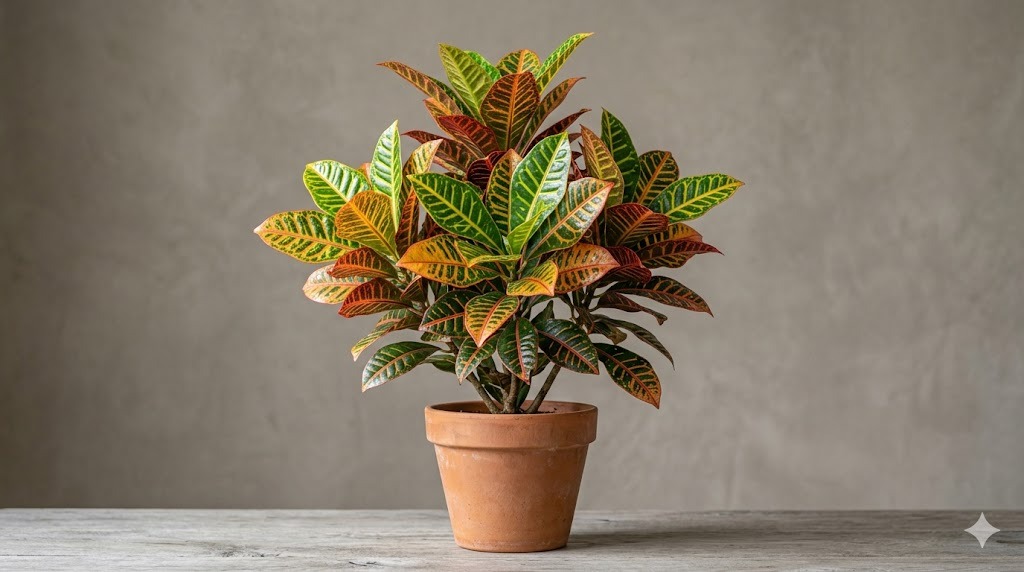
The Croton is the most colorful foliage plant you can grow indoors. Its thick, leathery, glossy leaves are splashed and veined with green, yellow, orange, red, pink, and near-purple - often all on the same plant, like living stained glass. No flowers needed: the Croton is pure foliage drama. It is bold, tropical, and unmistakable. The trade-off is that it is a little particular: it wants plenty of light to keep those colors, dislikes being moved, and is famous for dropping leaves when it sulks. Understand its needs and the Croton is a spectacular, long-lived statement plant.
Origin & Natural Habitat
The Croton is native to the tropical regions of Southeast Asia and the western Pacific islands, including Indonesia and Malaysia. It grows in open forests and scrub in warm, humid, brightly lit conditions - often in spots that get strong, partly direct light rather than deep shade. That bright, warm, humid tropical origin is the key to its care: the more light it gets, the more intense its colors become, and it never wants to be cold or dry.
Appearance
The Croton's appeal is entirely in its leaves: thick, leathery, high-gloss, and astonishingly varied in both color and shape. Leaf forms range from broad ovals to long narrow straps, twisted "corkscrew" shapes, and forked "oak-leaf" outlines. Colors shift as leaves age - new leaves often start green and yellow, then deepen to orange, red, and purple. Veins are frequently a contrasting bright color.
Popular cultivars: 'Petra' (broad multicolored leaves, the most common), 'Gold Dust' (green speckled with gold), 'Mammy' (twisted, curled leaves), and 'Magnificent'. Indoors a Croton typically grows 0.6-1.2 m tall.
Why People Love It - Qualities & Benefits
- Unmatched color: no other common foliage houseplant offers this intensity and range of color - a single plant can carry an entire rainbow.
- No flowers required: year-round color from the leaves alone, with none of the wait or fading of blooms.
- Bold tropical statement: instantly warms and energizes a room; a true focal-point plant.
- Endless variety: dozens of leaf shapes and color combinations to choose from.
- Long-lived: with stable care, a Croton becomes a substantial, lasting plant.
Care
Light
Lots of bright light is essential - this is what powers the color. A Croton in good light, including some gentle direct sun, develops rich reds, oranges, and purples. A Croton in low light loses its color, reverting toward plain green, and grows leggy. If your Croton looks dull and green, it needs more light. Acclimate it gradually to strong direct sun to avoid scorching.
Watering
Keep the soil consistently lightly moist - water when the top 2-4 cm is dry, then drain well. Crotons dislike drying out completely (which triggers leaf drop) and equally dislike soggy, waterlogged soil (which causes root rot). Aim for a steady, even rhythm.
Soil & Potting
Use a rich, well-draining potting mix with some perlite. Drainage holes are essential.
Humidity & Temperature
Loves high humidity (50-70%) - dry indoor air causes brown leaf tips, leaf drop, and invites spider mites. Use a humidifier, group plants, or keep it in a humid room. It loves warmth and hates cold: keep it at 18-27 °C, away from cold drafts and anything below about 15 °C. Sudden cold is a major cause of leaf drop.
Feeding
Feed every 2-4 weeks in spring and summer with a balanced fertilizer. Ease off in winter.
Repotting
Repot every 1-2 years in spring when roots fill the pot.
Propagation
Crotons are propagated from stem-tip cuttings. Cut a tip section with several leaves, let the milky sap stop bleeding, and root it in moist soil (rooting hormone helps), kept warm and humid - a covered, propagator-like environment improves success. Rooting takes several weeks. The sap is a mild irritant; wipe it and wash hands.
Common Problems & Pests
- Leaf drop: the classic Croton complaint - triggered by cold, drafts, being moved, underwatering, or low humidity. Some drop is normal right after you bring a plant home as it adjusts; stabilize conditions and be patient.
- Dull, fading, mostly green leaves: not enough light - move it to a much brighter spot.
- Brown leaf tips and edges: low humidity or inconsistent watering.
- Wilting: underwatering, or root rot from overwatering - check the soil and roots.
- Pests: spider mites are very common, especially in dry air, along with mealybugs and scale. Inspect leaf undersides regularly and treat promptly.
Toxicity & Safety
Toxic to cats, dogs, and humans. The Croton (Codiaeum variegatum) contains irritant compounds, and its milky sap can cause skin irritation; if chewed, all parts cause mouth irritation, vomiting, and stomach upset, and the seeds are considered especially toxic. Keep it away from pets and children, and wash your hands after pruning. (Note: this houseplant Croton is unrelated to the separate genus Croton.)
Pros & Cons
Pros
- The most colorful foliage of any common houseplant.
- Year-round color with no flowers needed.
- Bold tropical statement piece.
- Many leaf shapes and color forms.
- Long-lived with stable care.
Cons
- Drops leaves readily when stressed, moved, or chilled.
- Needs lots of light to keep its color.
- Demands warmth and humidity.
- Toxic to pets and people; sap irritates skin.
- Prone to spider mites.
Best Suited For
- Bright, warm rooms with a sunny window.
- Owners who can provide humidity and a stable spot.
- Anyone wanting a bold, colorful statement plant.
- Plant lovers with a little experience.
Not ideal for dark or cold rooms, drafty spots, frequent rearrangers, pet households with leaf-chewers, or absolute beginners.
FAQ
Why is my Croton dropping leaves? Crotons drop leaves when stressed - common triggers are cold, drafts, being moved, underwatering, or dry air. Some leaf drop is also normal in the first weeks after you bring one home, as it adjusts. Put it in a warm, bright, stable spot, keep the soil evenly moist and the air humid, and stop moving it.
Why has my Croton lost its color and gone green? Not enough light. The vivid reds, oranges, and yellows are powered by bright light. Move your Croton to a much brighter spot - including some gentle direct sun - and new growth will color up.
How much light does a Croton need? A lot. Bright light, with some gentle direct sun, is essential for strong color. Acclimate it gradually to direct sun so the leaves don't scorch.
Why does my Croton keep getting spider mites? Dry air. Spider mites thrive in it, and Crotons are prone. Raise the humidity, inspect the leaf undersides regularly, and treat infestations promptly with insecticidal soap.
Is the Croton safe for pets? No - it is toxic to cats and dogs, and the milky sap irritates skin. Chewing causes mouth irritation and vomiting. Keep it away from pets and children.